Keywords
(Related Items)
To view the complete facsimile of this volume, click here
PUNCH’S POCKET BOOK FOR 1855
containing
RULED PAGES FOR CASH ACCOUNTS AND MEMORANDA
FOR EVERY DAY IN THE YEAR ;
An Almanack ;
and a variety of useful business information.
The Illustrations by John Leech and John Tenniel.
IN TWO PARTS.
PART I.
LONDON : PUNCH OFFICE, 85, FLEET STREET,
AND SOLD BY ALL BOOKSELLERS.
[Price 2s. 6d.]
↑
- 1 -
{f.1}
 PART I.
THE STATE
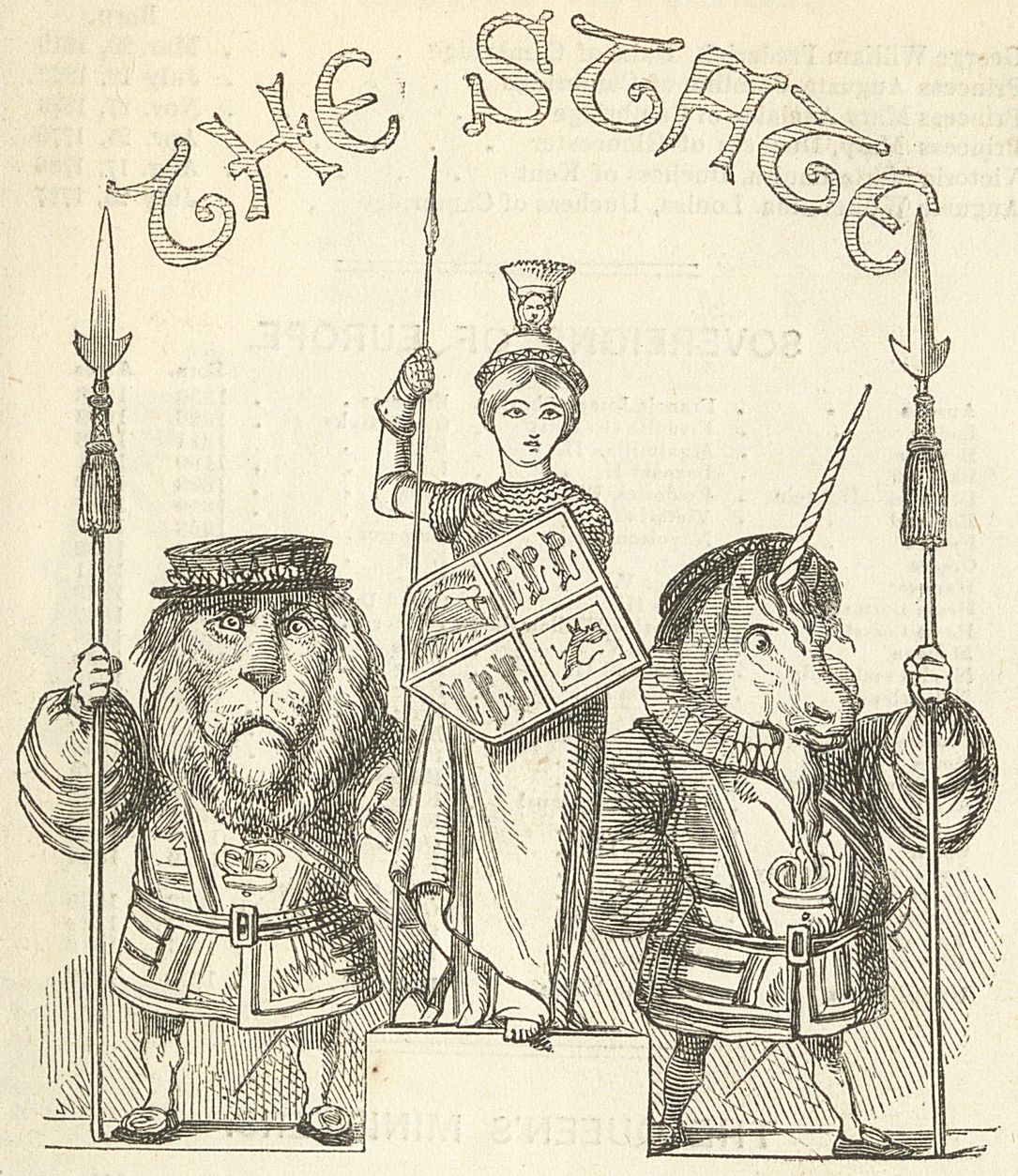
THE ROYAL FAMILY OF ENGLAND.
| Born | |
| QUEEN ALEXANDRINA VICTORIA (Acc. June 20, 1837) | May 24, 1819 |
| Prince Albert Francis Augustus Charles Emanuel | Aug. 26, 1819 |
| Albert Edward, Prince of Wales | Nov. 9, 1841 |
| Albert Ernest Alfred | Aug. 6, 1844 |
| Victoria Adelaide Mary Louisa, Princess Royal | Nov. 21, 1840 |
| Alice Maud Mary | Apr. 25, 1843 |
| Helena Augusta Victoria | May 25, 1846 |
| Louisa Catherine Alberta | Mar. 18, 1848 |
| Arthur William Patrick Albert | May 1, 1850 |
| Leopold George Duncan Albert | Apr. 7, 1853 |
| George Frederick, King of Hanover | May 27, 1819 |
| His Son, Ernest Augustus | Sept. 21, 1845 |
|
- 2 -
↑
{f.2}
| Mar. 26, 1819 |
| Princess Augusta Caroline of Cambridge | July 19, 1822 |
| Princess Mary Adelaide of Cambridge | Nov. 27, 1833 |
| Princess Mary, Duchess of Gloucester | Apr. 25, 1776 |
| Victoria Maria Louisa, Duchess of Kent | Aug. 17, 1786 |
| Augusta Wilhelmina Louisa, Duchess of Cambridge | July 25, 1797 |
SOVEREIGNS OF EUROPE.
| Born. | Acces. | |||
| Austria | Francis Joseph Charles | Emperor | 1830 | 1848 |
| Baden | Frederic (Regent) | Grand Duke | 1826 | 1852 |
| Bavaria | Maximilian II. | King | 1811 | 1848 |
| Belgium | Leopold I. | King | 1790 | 1831 |
| Denmark–Holstein | Frederick VII. | King | 1808 | 1848 |
| England | Victoria | Queen | 1819 | 1837 |
| France | Napoleon III. | Emperor | 1808 | 1852 |
| Greece | Otho | King | 1815 | 1832 |
| Hanover | George V. | King | 1819 | 1851 |
| Hesse Darmstadt | Louis III. | Grand Duke | 1806 | 1848 |
| Hesse Cassel | Frederick William I. | Elector | 1802 | 1847 |
| Modena | Francis V. | Duke | 1819 | 1846 |
| Naples and Sicily | Ferdinand II. | King | 1810 | 1830 |
| Netherlands | William III. | King | 1817 | 1849 |
| Portugal | Pedro V. | King | 1837 | 1853 |
| Prussia–Brandenburg | Frederick Wm. IV. | King | 1795 | 1840 |
| Rome | Pius IX. | Pope | 1792 | 1846 |
| Russia and Poland | Nicholas I. | Emperor | 1796 | 1825 |
| Sardinia | Victor Emmanuel | King | 1820 | 1849 |
| Saxony | John | King | 1801 | 1854 |
| Spain | Isabella II. | Queen | 1830 | 1833 |
| Sweden and Norway | Oscar | King | 1799 | 1844 |
| Switzerland | James Fazy[Comment by BQ] : Considered to be the creator of modern Geneva and author of its 1847 constitution, Swiss politician James Fazy (1794-1878) was instrumental in revolutionizing governmental structures and social services at both federal and canton levels. He served as part of the Swiss Federal Assembly as a member the Council of States (1848-1849, 1851-1854, 1856-1857, 1871-1872) and National Council (1857-1866). For further information on Fazy, see Jean de Senarclens, 'Fazy, James,' Dictionnaire historique de la Suisse (DHS), version 07.02.2018, (in French). | Pres. of the Diet | ||
| Turkey | Abdul Medjid | Grand Signior | 1823 | 1839 |
| Tuscany | Leopold II. | Grand Duke | 1797 | 1824 |
| Wurtemberg | William I. | King | 1781 | 1816 |
| United States[Comment by BQ] : The only state in this list not physically located in Europe. | Franklin Pierce | President | 1810 | 1852 |
THE QUEEN’S MINISTERS.
The preceding form the Cabinet.
↑
- [3] -
{f.3}
 THE QUEEN’S HOUSEHOLD.
PRINCE ALBERT’S HOUSEHOLD.
PRINCE OF WALES’S HOUSEHOLD.
DUCHESS OF KENT’S HOUSEHOLD.
OFFICERS OF STATE IN SCOTLAND.
OFFICERS OF STATE IN IRELAND.
↑
- [5] -
{f.5}
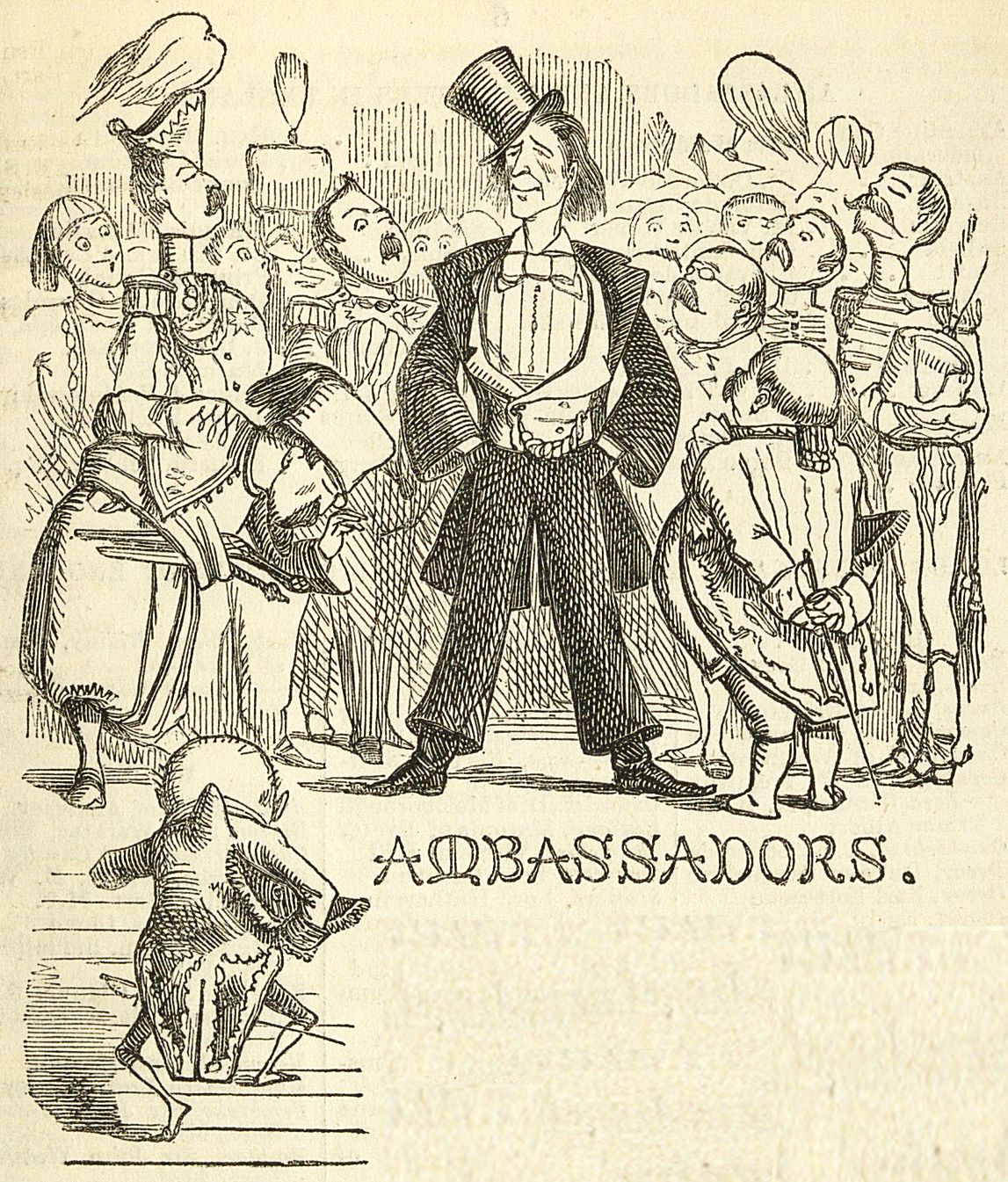
 AMBASSADORS AND MINISTERS ABROAD.
| Argentine Confederation | Hon. R. Gore |
| Austria | Earl of Westmoreland |
| Bavaria | Sir J.R. Milbanke, Bt. |
| Belgium | Lord H. de Walden |
| Brazil | H.F. Howard, Esq. |
| Chili | Hon. Capt. E.J.A. Harris, R.N. |
| Denmark | Andrew Buchanan |
| France | Lord Cowley |
| Germanic Confederation | Sir Alex. Malet, Bt. |
| Greece | Rt. Hon. Sir T. Wyse |
| Guatemala | C.L. Wyke, Esq. |
| Hanover | Hon. J.D. Bligh |
| Mexico | P.W. Doyle, Esq. |
| Morocco | J.H.D. Hay, Esq. |
| Naples | Hon. W. Temple |
| Netherlands | Hon. R. Abercrombie |
| New Granada | Edw. Thornton, Esq. |
| Nicaragua | F. Chatfield, Esq. |
| Persia | Hon. C.A. Murray |
| Peru | S.H. |
| Portugal | Sir Rich. Pakenham |
| Prussia | Lord Bloomfield |
| Russia | |
| Sardinia | James Hudson, Esq. |
| Saxony | Hon. F.R. Forbes |
| Spain | Lord Howden |
| Sweden | A.C. Magenis, Esq. |
| Switzerland | G.J.R. Gordon |
| Turkey | Viscount Stratford de Redcliffe |
| Tuscany | Rt. Hon. Sir H.L. Bulwer |
| United States | J.F. Crampton, Esq. |
| Uruguay | |
| Venezuela | Hon. R. Bingham |
| Wurtemberg | Hon. G.S.S. Jerningham |
↑
- 6 -
{f.6}
 AMBASSADORS AND MINISTERS IN ENGLAND.
| Argentine Confederation | Don M. Moreno |
| Austria | Ct. Colloredo-Wallsee |
| Bavaria | Baron de Cetto |
| Belgium | M. Van de Weyer |
| Bolivia | Gen. Santa Cruz |
| Brazil | Chevalier de Macedo |
| Denmark | Gen. d’Oxholme |
| France | Ct. Colonna Walewski |
| Greece | M. Tricoupi |
| Guatemala | Don F. Molina |
| Hanover | Ct. von Kielmansegge |
| Mexico | Senor de Castello y Lanzas |
| Netherlands | Baron Bentinck |
| Persia | |
| Peru | Gen. Mendiburn |
| Portugal | Count Lavradio |
| Prussia | Count Bernstorff |
| Russia | |
| Sardinia | Marquis d’Azeglio |
| Saxony | Ct. Vizthum-d’Eckstädt |
| Sicilies | Prince di Carini |
| Spain | Don Antonio Gonzales |
| Sweden | Baron von |
| Switzerland | J.L. Prevôt, Esq. |
| Turkey | Musurus Bey |
| Tuscany & Lucca | Prince J. Poniatowski |
| United States | James Buchanan |
| Venezuela | M. Ayala |
| Wurtemberg | Bernard Hebeler, Esq. |
LORDS LIEUTENANT, ETC., OF THE SEVERAL COUNTIES OF ENGLAND
AND WALES.
ENGLAND.
WALES.
GOVERNMENT OFFICES AND OFFICERS.
* For the site and hours of these offices see “Public Offices.”treasury.
Lords Commissioners.
- 7 -
{f.7}
 exchequer.
home office.
foreign office.
colonial office.
war department.
privy council office.
board of control.
privy seal.
irish office.
board of audit.
signet office.
board of trade.
Statistical Department.
Railway Department.
admiralty.
Lords Commissioners.
Civil Department.
Victualling Department.
admiralty court.
com. in chief’s office.
war office.
Senior Clerks.
board of ordnance.
paymaster-general’s
office.
adjutant-general’s
office.
quarter-master-general’s
office.
judge-advocate-general’s
court.
works and public
buildings.
Rangers, Keepers, &c.
queen’s mint.
general post-office.
Money Order Office.
inland revenue office.
custom house.
poor law board.
board of health.
↑
- 9 -
{f.9}
 duchy of lancaster.
duchy of cornwall office.
colonial land and emigration commissioners.
joint stock companies registration office.
copyhold, inclosure, and tithe commission.
metropolis roads.
registry of metropolitan buildings.
state paper office.
general register office of births, marriages, and deaths.
london gazette office.
The Most Noble Order of the Garter.
Was instituted by Edward III. in 1347. The habit and insignia are, The Garter, of dark-blue velvet, inscribed with the motto, Honi soit qui mal y pense ; The Mantle, of blue velvet ; The Hood and Surcoat, of crimson velvet ; The Hat, of black velvet ; The Collar, of gold ; The George, or figure of St. George, suspended from a broad dark-blue riband ; and The Star, of silver. The number of knights is restricted to twenty-five, exclusive of the Sovereign, princes of the blood royal, and foreign princes.
THE SOVEREIGN
↑
- [10] -
{f.10}
 THE LEGISLATURE.
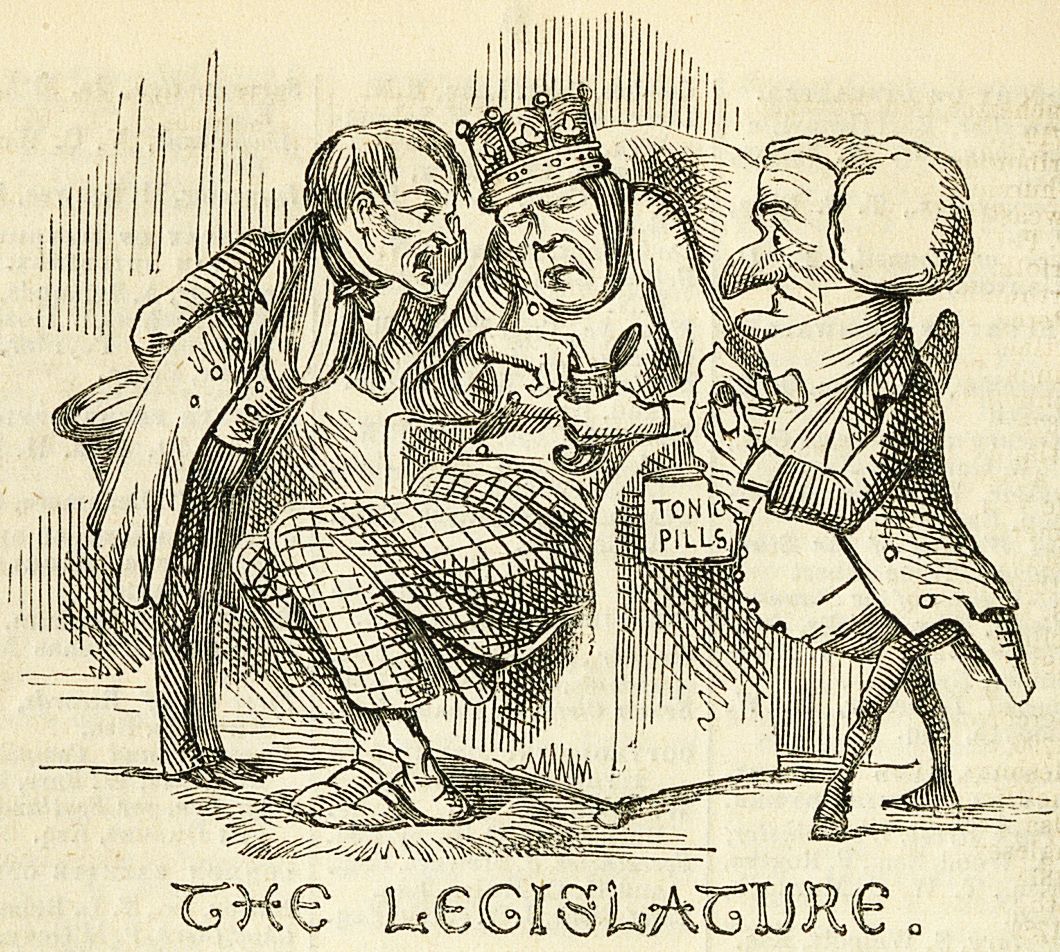
THE HOUSE OF PEERS.
⁂ The Titles here given are those by which the Noblemen sit in the House of Peers.| Princes of the Blood Royal | 3 |
| Dukes | 20 |
| Marquises | 21 |
| Earls | 112 |
| Viscounts | 23 |
| Barons | 195 |
| Peers of Scotland (elected 1852) | 16 |
| Peers of Ireland (elected for life) | 28 |
| English Archbishops and Bishops | 26 |
| Irish representative Archbishop and Bishops | 4 |
| Total Number of Peers | 448 |
Speaker, The Lord High Chancellor.
Chairman of Committee, Lord Redesdale.
royal princes.
archbishops.
dukes.
marquises.
earls.
viscounts.
bishops.
barons.
↑
- 15 -
{f.15}
 PEERESSES.
PEERS WHO ARE MINORS, AND THE YEARS THEY ATTAIN THEIR MAJORITY.
OFFICERS OF THE HOUSE OF PEERS.
↑
- 16 -
{f.16}
 THE HOUSE OF COMMONS.
Speaker, Hon. C.S. Lefevre.
ENGLAND AND WALES.
| English | County Members | 144 | 467 |
| Universities | 4 | ||
| Cities and Boroughs | 319 | ||
| Welsh | County Members | 15 | 29 |
| Cities and Boroughs | 14 | ||
| Scotch | County Members | 30 | 53 |
| Cities and Boroughs | 23 | ||
| Irish | County Members | 64 | 105 |
| University | 2 | ||
| Cities and Boroughs | 39 | ||
| Total Number of Members | 654 |
Sudbury and St. Alban’s disfranchised.
IRELAND.
SCOTLAND.
ALPHABETICAL LIST OF THE HOUSE OF COMMONS.
(The figures refer to the previous list.)
| Acland, Sir T.D., Bart. | 75 |
| A’Court, Major C.H.W. | 267 |
| Acton, Joseph | 265 |
| Adair, H.E. | 120 |
| Adair, R.A.S. | 43 |
| Adderley, C.B. | 223 |
| Alcock, T. | 233 |
| Alexander, John | 290 |
| Anderson, Sir Jas. C., Bt. | 395 |
| Annesley, Earl of | 100 |
| Arbuthnot, Gen. Hon. H. | 378 |
| Archdall, Capt. Mervyn | 311 |
| Arkwright, Geo. | 138 |
| Atherton, W. | 84 |
| Bagge, W. | 173 |
| Bagshaw, J. | 106 |
| Bailey, Crawshay, | 164 |
| Bailey, Sir J., Bart. | 25 |
| Baillie, H.J. | 375 |
| Baines, Rt. Hon. M.T. | 134 |
| Baird, Jas., | 368 |
| Baldock, E.H. | 215 |
| Ball, Edw. | 41 |
| Ball, J. | 289 |
| Bankes, Rt. Hon. G. | 78 |
| Baring, Rt. Hon. Sir F.T., Bart. | 196 |
| Baring, Maj. H.B. | 156 |
| Baring, T. | 118 |
| Baring, Hon. F. | 242 |
| Barnes, T. | 22 |
| Barrington, Visc. | 15 |
| Barrow, W.H. | 182 |
|
- 21 -
{f.21}
| 72 |
| Bateson, Capt. T. | 325 |
| Beach, Sir M.H.H. | 96 |
| Beamish, F.B. | 297 |
| Beaumont, W.B. | 179 |
| Beckett, W. | 203 |
| Bective, Earl of | 261 |
| Bell, James | 102 |
| Bellew, Capt. J.A. | 313 |
| Benbow, John | 81 |
| Bennett, Capt. Philip | 231 |
| Bentinck, Lord H. | 181 |
| Bentinck, G.P. | 173 |
| Beresford, Rt. Hn. Mj. W. | 85 |
| Berkeley, Lt.-Gen. Sir G., Bt. | 74 |
| Berkeley, Hon. Adm. F.H.F. | 31 |
| Berkeley, C.L. Grenville | 87 |
| Berkeley, Adm. M.F.F. | 98 |
| Berkeley, Hon. C.F. | 50 |
| Bernard, Viscount | 287 |
| Bethell, Sir Rich. | 7 |
| Biddulph, Col. M. | 68 |
| Biggs, W. | 171 |
| Blackett, J.F.B. | 170 |
| Blair, Lt.-Col. J.H. | 353 |
| Blake, M.J. | 312 |
| Bland, L.H. | 318 |
| Blandford, Mq. of | 273 |
| Boldero, Capt. H.G. | 55 |
| Booker, T.W. | 110 |
| Booth, Sir Rt. Gore, Bt. | 338 |
| Bouverie, Hon. E.P. | 377 |
| Bowyer, Geo. | 306 |
| Brady, John | 320 |
| Bramston, T.W. | 86 |
| Brand, Hon. H.B.W. | 139 |
| Bright, John | 155 |
| Brocklehurst, J. | 150 |
| Brockman, E.D. | 119 |
| Brooke, Sir A.B., Bart. | 311 |
| Brotherton, Joseph | 208 |
| Brown, H. | 241 |
| Brown, W. | 131 |
| Bruce, C.L.C. | 366 |
| Bruce, Lord E.A.C.B. | 156 |
| Bruce, H.A., | 160 |
| Buck, L.W. | 75 |
| Buckley, Major-Gen. | 209 |
| Bulkeley, Sir R.B.W., Bt. | 3 |
| Buller, Sir J.B.Y., Bart. | 76 |
| Bunbury, Capt. H. | 289 |
| Burghley, Lord | 141 |
| Burke, Sir T.J., Bt. | 313 |
| Burrell, Sir C.M., Bt. | 214 |
| Burroughes, H.N. | 172 |
| Butler, C.S. | 249 |
| Butt, G.M. | 262 |
| Butt, Isaac | 348 |
| Byng, Hon. G. | 240 |
| Cabbell, B.B. | 23 |
| Cairns, H. | 288 |
| Campbell, Sir A.I., Bt., | 352 |
| Cardwell, Rt. Hon. E. | 186 |
| Carnac, Sir J.R., Bt. | 149 |
| Carter, J.B. | 270 |
| Castlerosse, Visc. | 314 |
| Caulfield, Hon. J.H. | 285 |
| Cavendish, Hon. C.C. | 32 |
| Cavendish, Hon. G.H. | 70 |
| Cayley, E.S. | 281 |
| Cecil, Lord R.G. | 226 |
| Challis, Ald., T. | 90 |
| Chambers, M. | 101 |
| Chambers, T. | 113 |
| Cheetham, J. | 131 |
| Chandos, Marquis of | 33 |
| Chaplin, W.J. | 209 |
| Chelsea, Visct. | 79 |
| Child, Smith, | 223 |
| Cholmondeley, Lord W.H.H. | 105 |
| Christopher, Rt. Hon. R.A. | 142 |
| Christy, S. | 169 |
| Clay, Sir W., Bart. | 246 |
| Clifford, Col. H.M. | 111 |
| Clinton, Lord R. | 181 |
| Clinton, Lord C.P.P. | 210 |
| Clive, Robert | 217 |
| Cobbett, J.M. | 184 |
| Cobbold, J.C. | 120 |
| Cobden, R. | 280 |
| Cockburn, Sir A.J.E. | 220 |
| Cocks, T.S. | 201 |
| Codrington, Sir C.W., Bt. | 96 |
| Coffin, W. | 45 |
| Cogan, W.H.F. | 315 |
| Coles, J.H.B. | 2 |
| Collier, R.P. | 193 |
| Colvile, C.R. | 71 |
| Compton, H.C. | 105 |
| Conolly, Thomas | 299 |
| Coote, Sir C.H., Bt. | 335 |
| Corbally, E.M. | 330 |
| Corry, Rt. Hon. H.T.L. | 341 |
| Cotton, Hn. H.W.S. | 291 |
| Cowan, C. | 365 |
| Cowper, Hon. W.F. | 113 |
| Craufurd, E.H.J. | 354 |
| Crook, J. | 22 |
| Crossley, F. | 103 |
| Cubitt, W. | 2 |
| Currie, Raikes | 177 |
| Dalkeith, Earl of | 364 |
| Dalrymple, Visct. | 398 |
| Dashwood, Sir G.H., Bt. | 277 |
| Davie, Sir H.R.F., Bt. | 374 |
| Davies, D.A.S. | 36 |
| Davison, Rich. | 288 |
| Deedes, Wm. | 123 |
| Denison, J.E. | 154 |
| Denison, E.B. | 280 |
| Dent, J.D. | 128 |
| Dering, Sir E.C., Bt. | 123 |
| Devereux, J.T. | 345 |
| Disraeli, Benj. | 32 |
| Divett, Edward | 88 |
| Dod, J.W. | 216 |
| Drax, J.S.W.S.E. | 252 |
| Drumlanrig, Visct. | 361 |
| Drummond, H. | 234 |
| Duckworth, Sir J.T.B., Bt. | 88 |
| Duff, J. | 355 |
| Duff, G.S. | 367 |
| Duffy, C.G. | 332 |
| Duke, Sir J. | 146 |
| Duncan G. | 363 |
| Duncan, Visc. | 370 |
| Duncombe, Cpt. Hon. A. | 279 |
| Duncombe, T.S. | 90 |
| Duncombe, Hon. O. | 281 |
| Duncombe, W.G. | 10 |
| Dundas, Hon. F. | 385 |
| Dundas, Geo. | 383 |
| Dunlop, A.M. | 372 |
| Dunne, Lt.-Col. F.P. | 334 |
| Dunne, Mich. | 335 |
| Dupré, C.G. | 32 |
| East, Sir J.B., Bt. | 270 |
| Egerton, Sir P. de Malpas G., Bart. | 52 |
| Egerton, W.T. | 51 |
| Egerton, E.C. | 150 |
| Elcho, Lord | 373 |
| Ellice, Rt. Hon. E. | 63 |
| Ellice, E., jun. | 351 |
| Elliott, Hon. J.E. | 392 |
| Elmley, Visc. | 275 |
| Emlyn, Visc. | 188 |
| Esmonde, Sir T., Bt. | 343 |
| Euston, Earl of | 242 |
| Evans, Sir G.D.L. | 260 |
| Evelyn, W.J. | 234 |
| Ewart, W. | 362 |
| Fagan, Wm. | 297 |
| Farnham, E.B. | 135 |
| Farrer, J. | 83 |
| Feilden, M.J. | 20 |
| Fellowes, E. | 117 |
| Fergus, J. | 369 |
| Ferguson, J. | 48 |
| Ferguson, Sir R.A., Bt. | 324 |
| Ferguson, Lt.-Col. R. | 379 |
| Filmer, Sir E., Bart. | 124 |
| Fitzgerald, J.M. | 309 |
| Fitzgerald, W.R.S. | 115 |
| Fitzgerald, Sir J., Bt. | 294 |
| Fitzroy, Hon. H. | 139 |
| Fitzwilliam, Hon. G.W. | 191 |
| Fitzwilliam, Hon. W. | 154 |
| Floyer, John | 78 |
| Foley, J.H.H. | 274 |
| Follett, B.S. | 27 |
| Forbes, W. | 394 |
| Forester, Hon. G.C.W. | 258 |
| Forster, C. | 251 |
| Forster, John | 16 |
| Forster, Sir G.M., Bt. | 331 |
| Fortescue, C.S. | 327 |
| Fox, R.M. | 326 |
| Fox, W.J. | 184 |
| Franklyn, G.W. | 195 |
| Freestun, Col. | 262 |
| French, F. | 336 |
| Freshfield, J.W. | 190 |
|
- 22 -
{f.22}
| 235 |
| Fuller, A.E. | 235 |
| Galway, Visct. | 10 |
| Gallwey, Sir W.P., Bt. | 243 |
| Gardner, R. | 137 |
| Gaskell, J.M. | 258 |
| Geach, Chas. | 63 |
| George, J. | 346 |
| Gibson, Rt. Hon. T.M. | 155 |
| Gilpin, Col. R.T. | 13 |
| Gladstone, Capt. J.N. | 73 |
| Gladstone, Rt. Hon. W.E. | 187 |
| Glyn, G.C. | 122 |
| Goddard, A.L. | 64 |
| Goderich, Visc. | 116 |
| Gooch, Sir N.E.S., Bt. | 230 |
| Goodman, Sir G. | 134 |
| Goold, Wyndham | 322 |
| Gordon, Hon. A. | 17 |
| Gore, W.O. | 216 |
| Goulburn, Rt. Hon. H. | 42 |
| Gower, Hon. F.L. | 228 |
| Grace, O.D.J. | 336 |
| Graham, Rt. Hon. Sir J.R.G., Bart. | 48 |
| Graham, Lord, M.W. | 99 |
| Granby, Marquis of | 135 |
| Greaves, Edw. | 256 |
| Green, Thos. | 132 |
| Greene, Capt. J. | 317 |
| Greenall, G. | 253 |
| Gregson, Samuel | 132 |
| Grenfell, C.W. | 271 |
| Greville, Col. F. | 326 |
| Grey, Sir G., Bt. | 167 |
| Grey, Ralph Wm. | 144 |
| Grogan, E. | 303 |
| Grosvenor, Rt. Hn. Ld. R. | 161 |
| Grosvenor, Earl | 53 |
| Guernsey, Lord | 255 |
| Guinness, R.S. | 9 |
| Gwyn, H. | 190 |
| Haddo, Lord | 349 |
| Hadfield, J. | 213 |
| Hale, R.B. | 97 |
| Halford, Sir H., Bart. | 136 |
| Hall, Sir B., Bart. | 158 |
| Hall, Col. J. | 33 |
| Hamilton, G.A. | 304 |
| Hamilton, J.H. | 305 |
| Hamilton, Ld. C. | 341 |
| Hanbury, Hon. C.S.B. | 110 |
| Hankey, T. | 191 |
| Hanmer, Sir J., Bart. | 92 |
| Harcourt, G.G.V. | 185 |
| Harcourt, Col. F.V. | 266 |
| Hardinge, Hon. C.S. | 301 |
| Hastie, Arch. | 386 |
| Hastie, Alex. | 371 |
| Hawkins, W.W. | 60 |
| Hayes, Sir E.S., Bart. | 299 |
| Hayter, Rt. Hon. W.G. | 257 |
| Headlam, T.E. | 170 |
| Heard, J.I. | 319 |
| Heathcoat, J. | 244 |
| Heathcote, Sir G.J., Bt. | 206 |
| Heathcote, G.H. | 23 |
| Heathcote, Sir W., Bt. | 187 |
| Henchy, D. O’C. | 315 |
| Heneage, G.F. | 143 |
| Heneage, G.H.W. | 73 |
| Henley, Rt. Hon. J.W. | 185 |
| Herbert, H.A. | 314 |
| Herbert, Hon. P.E. | 147 |
| Herbert, Rt. Hon. S. | 269 |
| Herbert, Sir T., Bt. | 67 |
| Hervey, Lord A. | 30 |
| Heywood, J. | 130 |
| Heyworth, Laurence | 72 |
| Higgins, G.C. Ouseley | 329 |
| Hildyard, R.C. | 264 |
| Hill, Lord E.A. | 300 |
| Hindley, C. | 6 |
| Hogg, Sir J.W., Bart. | 114 |
| Horsfall, T.B. | 145 |
| Horsman, Edw. | 229 |
| Hotham, Lord | 279 |
| Howard, Hon. C.W.G. | 65 |
| Howard, Lord Edward | 4 |
| Hudson, G. | 232 |
| Hughes, W.B. | 39 |
| Hume, Joseph | 384 |
| Hume, W.F.W. | 347 |
| Hutchins, E.J. | 149 |
| Hutt, William | 94 |
| Ingham, Robt. | 221 |
| Irton, S. | 66 |
| Jackson, W. | 169 |
| Jermyn, Rt. Hon. Earl | 35 |
| Johnstone, James | 359 |
| Johnstone, Sir J.V.B., Bt. | 211 |
| Jolliffe, Sir W.G.H., Bt. | 192 |
| Jones, D. | 36 |
| Jones, Capt. T. | 325 |
| Keating, H.S. | 200 |
| Keating, R. | 342 |
| Kelly, Sir F. | 230 |
| Kendall, N. | 62 |
| Kennedy, T. | 327 |
| Keogh, W. | 286 |
| Ker, D.S. | 300 |
| Kerrison, Sir E.C., Bt. | 89 |
| Kershaw, Jas. | 227 |
| King, J.K. | 110 |
| King, Hon. P.J.L. | 233 |
| Kingscote, R.N. | 97 |
| Kinnaird, Hon. A.F. | 389 |
| Kirk, Wm. | 333 |
| Knatchbull, W.E. | 218 |
| Knight, F.W. | 275 |
| Knightley, R. | 176 |
| Knox, Lt.-Col. B.W. | 157 |
| Knox, Hon. W.S. | 307 |
| Labouchere, Rt. Hon. H. | 239 |
| Lacon, Sir E., Bart. | 278 |
| Laffan, Capt. R.M. | 121 |
| Laing, S. | 397 |
| Langston, J.H. | 186 |
| Langton, W.H.G. | 31 |
| Langton, W.H.P.G. | 219 |
| Lascelles, Hon. E. | 203 |
| Laslett, W. | 276 |
| Laurie, J. | 9 |
| Layard, Dr. A. | 7 |
| Lee, Wm. | 151 |
| Lefevre, Rt. Hon. C.S. | 104 |
| Legh, G.C. | 51 |
| Lemon, Sir C., Bart. | 61 |
| Lennox, Ld. A.F.C.G. | 214 |
| Lennox, Ld. G.C.H.G. | 54 |
| Leslie, C. Powell | 331 |
| Lewis, Rt. Hon. Sir T.F., Bt. | 199 |
| Liddell, G.T. | 179 |
| Liddell, Hon. H.T. | 145 |
| Lindsay, Col. Hon. J. | 265 |
| Lindsay, W.S. | 248 |
| Lisburne, Lord | 46 |
| Littleton, Hon. E.R. | 224 |
| Locke, J. | 114 |
| Lockhart, A.E. | 393 |
| Lockhart, W. | 381 |
| Long, W. | 268 |
| Lovaine, Lord | 178 |
| Loveden, Pryse | 47 |
| Lowe, R. | 125 |
| Lowther, Lt.-Cl. Hn. H.C. | 261 |
| Lowther, H. | 66 |
| Lucas, Fred. | 330 |
| Luce, T. | 153 |
| Lushington, C.M. | 44 |
| Lytton, Sir E.B., Bt. | 112 |
| 302 | |
| Macartney, G. | 283 |
| Macaulay, Rt. Hon. T.B. | 365 |
| 371 | |
| 210 | |
| Mackie, John | 380 |
| Mackinnon, W.A. | 207 |
| 346 | |
| 399 | |
| Maddock, Sir F.H. | 205 |
| Magan, W.H. | 344 |
| Maguire, J.F. | 308 |
| Malins, R. | 250 |
| Mandeville, Viscount | 117 |
| Mangles, Capt. R.D. | 102 |
| Manners, Lord G.J. | 41 |
| Manners, Lord J.J. | 60 |
| March, Earl of | 236 |
| Marjoribanks, D.C. | 16 |
| Marshall, W. | 65 |
| Martin, J. | 241 |
| Massey, W.N. | 171 |
| Masterman, J. | 146 |
| Matheson, Sir Jas., Bt. | 391 |
| Matheson, A. | 376 |
| Maunsell, Col. T.P. | 175 |
| Maxwell, Hon. J.P. | 293 |
| Meagher, T. | 342 |
| Meux, Sir H., Bart. | 112 |
| Miall, E. | 204 |
| Michell, Dr. | 21 |
| Miles, W. | 218 |
| Milligan, R. | 24 |
| Mills, T. | 245 |
| Milner, W.M.E. | 282 |
| Milnes, R.M. | 194 |
|
- 23 -
{f.23}
| 347 |
| Mitchell, T.A. | 29 |
| Moffatt, George | 5 |
| Molesworth, Sir W., Bt. | 222 |
| Moncrieff, Rt. Hon. J. | 382 |
| Monck, Visc. | 196 |
| Monsell, Wm. | 322 |
| Montgomery, Sir G., Bt. | 387 |
| Montgomery, H.L. | 320 |
| Moody, C.A. | 219 |
| Moore, G.H. | 329 |
| Moore, J. Bramley | 152 |
| Moore, R.S. | 284 |
| Morgan, C.O.S. | 163 |
| Morris, D. | 37 |
| Mostyn, Hon. T.E.M.L. | 91 |
| Mowatt, F. | 43 |
| Mowbray, J.R., | 84 |
| Mulgrave, Earl of | 211 |
| Mullings, J.R. | 57 |
| Mundy, W. | 71 |
| Muntz, G.F. | 19 |
| Mure, Col. W. | 390 |
| Murrough, J.P. | 29 |
| Naas, Rt. Hon. Lord | 296 |
| Napier, Rt. Hon. J. | 304 |
| Neeld, John | 64 |
| Neeld, Joseph | 55 |
| Newark, Visc. | 182 |
| Newdegate, Charles N. | 254 |
| Newport, Viscount | 217 |
| Noel, Hon. G.J. | 206 |
| Norreys, Sir C.D.O.J., Bart. | 328 |
| North, Frederick | 107 |
| North, Lt. Col. J.S. | 185 |
| Oakes, J.H.P. | 35 |
| O’Brien, C. | 294 |
| O’Brien, P. | 318 |
| O’Brien, Sir T., Bart. | 292 |
| O’Connell, Dan. | 340 |
| O’Connell, John | 295 |
| O’Flaherty, A. | 312 |
| Oliveira, B. | 194 |
| Osborne, Ralph Bernal | 161 |
| Ossulston, Lord | 178 |
| Otway, A.J. | 225 |
| Owen, Sir J., Bart. | 189 |
| Packe, C.W. | 136 |
| Paget, Lord A.H. | 140 |
| Paget, Lord G.A.F. | 12 |
| Pakenham, Capt. G. | 283 |
| Pakington, Rt. Hon. Sir G. Somerset, Bart. | 80 |
| Palk, Laurence | 76 |
| Palmer, Robt. | 15 |
| Palmer, Roundell | 193 |
| Palmerston, Viscount | 244 |
| Parker, R.T. | 197 |
| Patten, J. Wilson | 130 |
| Peacocke, G.M.W. | 152 |
| Pechell, Capt. Sir G.R. | 30 |
| Peel, F. | 34 |
| Peel, Sir R., Bt. | 238 |
| Peel, Colonel J. | 118 |
| Pellatt, A. | 222 |
| Pennant, Col. Hn. E.G.D. | 38 |
| Percy, Hon. J. | 133 |
| Perry, Sir T.E. | 74 |
| Peto, S.M. | 180 |
| Philips, J.H. | 108 |
| Phillimore, J.G. | 138 |
| Phillimore, J.R. | 240 |
| Phinn, T. | 11 |
| Pigott, F. | 200 |
| Pilkington, J. | 20 |
| Pinney, W. | 148 |
| Ponsonby, Hon. A.J.G. | 57 |
| Portal, Melville | 104 |
| Portman, Hon. W.H.B. | 212 |
| Power, N.M. | 343 |
| Powlett, Lord W.F. | 147 |
| Price, W.P. | 98 |
| Price, Sir Robt., Bart. | 111 |
| Pritchard, J. | 28 |
| Pugh, D. | 166 |
| Ramsden, Sir J.W. Bt. | 239 |
| Repton, G.W.J. | 256 |
| Ricardo, John Lewis | 228 |
| Ricardo, Osman | 276 |
| Rice, Edw. Royd | 79 |
| Richardson, J.J. | 323 |
| Rich, H. | 202 |
| Robartes, T.A.J. | 62 |
| Robertson, P.F. | 107 |
| Roche, E. Burke | 298 |
| Roebuck, J.A. | 213 |
| Rolt, P. | 101 |
| Rothschild, Baron L. de | 146 |
| Rumbold, C.E. | 278 |
| Rushout, Capt. Hon. G. | 274 |
| Russell, W.F. | 321 |
| Russell, Rt. Hon. Ld. J. | 146 |
| Russell, F.C.H. | 13 |
| Sadleir, James | 339 |
| Sadleir, John | 337 |
| Sandars, G. | 249 |
| Sawle, C.B.G. | 21 |
| Scholefield, W. | 19 |
| Scobell, Capt. G.T. | 11 |
| Scott, Hon. F. | 356 |
| Scrope, G. Poulett | 229 |
| Scully, F. | 339 |
| Scully, V. | 298 |
| Seymer, H.K. | 78 |
| Seymour, Lord | 245 |
| Seymour, H.D. | 195 |
| Seymour, W.D. | 232 |
| Seymour, W.D. | 127 |
| Shafto, R.D. | 82 |
| Shee, Serjt. W. | 317 |
| Shelburne, Earl of | 40 |
| Shelley, Sir J.V., Bart. | 260 |
| Sheridan, R.B. | 77 |
| Shirley, E.P. | 255 |
| Sibthorp, Colonel | 143 |
| Smith, Abel | 112 |
| Smith, John Abel | 54 |
| Smith, J.B. | 227 |
| Smith, M. | 124 |
| Smith, M.T. | 277 |
| Smith, Rt. Hn. R. Vernon | 177 |
| Smijth, Sir W.B., Bart. | 86 |
| Smollett, Alexander | 360 |
| Smyth, J.G. | 282 |
| Somerset, Capt. E.A. | 163 |
| Somerville, Sir W. Bart. | 44 |
| Sotheron, T.H.S.B. | 268 |
| Spooner, R. | 254 |
| Stafford, S.A. O’Brien | 175 |
| Stafford, Marq. of | 396 |
| Stanhope, J.B. | 142 |
| Stanley, Lord | 126 |
| Stanley, Hon. W.O. | 53 |
| Starkie, Legendre N. | 58 |
| Steel, John | 59 |
| Stephenson, R. | 263 |
| Stirling, Wm. | 388 |
| Strickland, Sir G., Bt. | 197 |
| Strutt, Rt. Hon. E. | 183 |
| Stuart, Henry | 14 |
| Stuart, Lord Dudley C. | 158 |
| Sturt, H.G. | 77 |
| Sullivan, M. | 316 |
| Sutton, Hon. J. Manners | 168 |
| Swift, R. | 338 |
| Talbot, C.R.M. | 95 |
| Tancred, H.W. | 8 |
| Taylor, Col. T. Edward | 305 |
| Thesiger, Sir Frederick | 226 |
| Thompson, G. | 350 |
| 272 | |
| Thornhill, W.P. | 70 |
| Tollemache, John | 52 |
| Tomline, G. | 215 |
| Townshend, Capt. J. | 238 |
| Traill, George | 358 |
| Trollope, Rt. Hon. Sir John, Bt. | 141 |
| Tudway, R.C. | 257 |
| Tyler, Sir G., Bt. | 95 |
| Tynte, Col. C.J.K. | 27 |
| Tyrell, Sir J.T., Bart. | 85 |
| Urquhart, W.P. | 344 |
| Uxbridge, Earl of | 224 |
| Vance, John | 303 |
| Vane Tempest, Lord A. | 82 |
| Vane, Lord Harry G. | 83 |
| Vansittart, H.G. | 15 |
| Verner, Sir W., Bt. | 285 |
| Vernon, Capt. L. | 49 |
| Vernon, G.E.H. | 168 |
| Villiers, Hon. Chas. P. | 272 |
| Villiers, Hon. F. | 205 |
| Vivian, H. | 247 |
| Vivian, John Ennis | 247 |
| Vivian, John Henry | 237 |
| Vyse, Capt. R.H.R. Howard | 176 |
| Vyvyan, Sir R.R., Bart. | 109 |
| Waddington, D. | 106 |
| Waddington, H.S. | 231 |
| Walcott, Capt. J.E. | 56 |
| Walmsley, Sir J. | 137 |
| Walpole, Rt. Hon. S.H. | 162 |
| Walsh, Sir J.B., Bart. | 198 |
| Walter, J. | 183 |
| Warner, E. | 180 |
|
- 24 -
↑
{f.24}
| 140 |
| Watkin, Col. J.L.V. | 26 |
| Watson, W.H. | 127 |
| Welby, Glynne Earl | 99 |
| Wells, W. | 17 |
| Wellesley, Lord Chas. | 271 |
| West, F.R. | 69 |
| Whatman, James | 151 |
| Whitbread, Samuel | 14 |
| Whiteside, James | 310 |
| Whitmore, H. | 28 |
| Wickham, H.W. | 24 |
| Wigram, L.T. | 42 |
| Wilcox, B.M. | 220 |
| Wilkinson, W.A. | 129 |
| Williams, Mich. | 61 |
| Williams, T.P. | 157 |
| Williams, W. | 129 |
| Willoughby, Sir H.P., Bt. | 87 |
| Wilson, J. | 259 |
| Winnington, Sir T. Bart. | 18 |
| Wise, J.A., | 225 |
| Wodehouse, Edmond | 172 |
| Wood, Rt. Hon. Sir C., Bt. | 103 |
| Woodd, B.T. | 128 |
| Wortley, Rt. Hon. J.A.S. | 357 |
| Wrightson, W. Battie | 174 |
| Wyndham, Henry | 236 |
| Wyndham, Wadham | 269 |
| Wyndham, Lt.-Gen. H. | 59 |
| Wynn, Capt. H.W.W. | 165 |
| Wynn, Sir W.W., Bart. | 68 |
| Wynne, W.W.E. | 159 |
| Wyvill, M. | 202 |
| Yorke, Hon. E.T. | 41 |
| Young, Sir John, Bart., | 293 |
OFFICERS OF THE HOUSE OF COMMONS.
principal clerks :
The Stewardship of the Chiltern Hundreds is an office in the gift of the Crown, which members of the House of Commons are supposed to accept when desirous of resigning their seats ; in former times, the office was one of some emolument, but at present the salary is merely nominal ; and the office is resigned as soon as the seat is vacated.
[Quantities of Taxed Articles]
The following are the quantities, so far as can be given, of the Taxed Articles on which duty was paid for home consumption in 1853 : —
| Great Britain. | Ireland. | ||
| Spirits, Foreign and Colonial | galls. | 4,931,639 | 211,685 |
| Spirits, British | galls. | 16,884,955 | 8,136,362 |
| Sugar, Foreign and Colonial | cwts. | 6,999,884 | 487,705 |
| Sugar, British (Beet Root) | cwts. | … | 1,538 |
| Wine, Foreign and Colonial | galls. | 6,227,022 | 586,809 |
| Tea | lbs, | 51,001,851 | 7,832,236 |
| Tobacco | lbs, | 24,940,555 | 4,624,141 |
| Beer | barrels | 16,543,781 | 640,251 |
| Malt | bushels | 40,362,102 | 1,630,076 |
↑
- [25] -
{f.25}
 COMMERCE
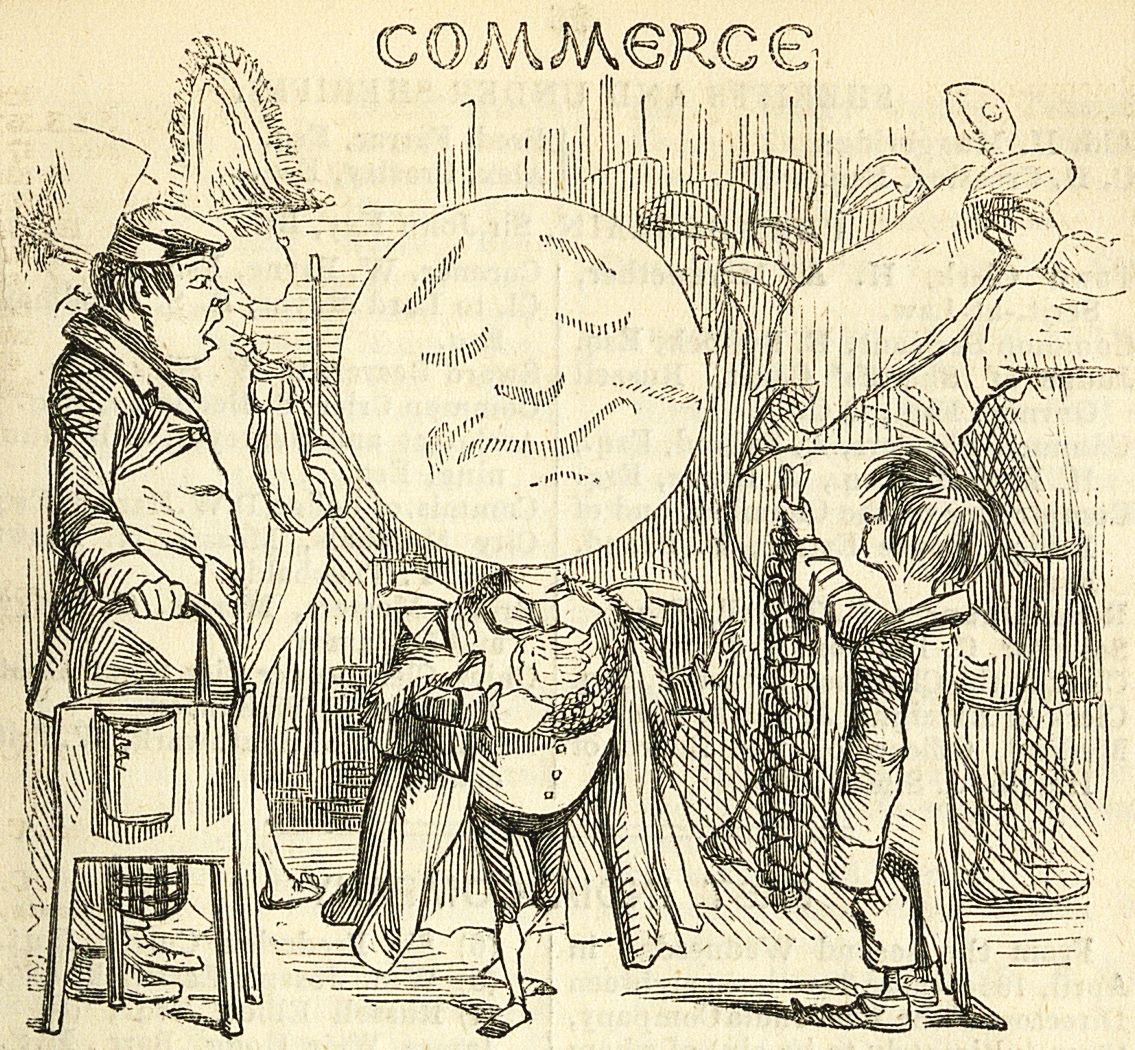
THE CITY CORPORATION.
LORD MAYOR.
ALDERMEN.
RECORDER, The Hon. J.A.S. Wortley, Q.C., M.P.
↑
- 26 -
{f.26}
 SHERIFFS AND UNDER-SHERIFFS.
CHAMBERLAIN, Sir John Key, Bt.
EAST INDIA COMPANY.[Comment by FB] : The Charter Act of 1853 reduced the number of East India Company directors to eighteen and provided that six of these should be nominated by the Crown. Previously, there were twenty-four directors, six of whom were chosen for four years, six for three, six for two and six for one year. For further information, see C. H., and D. Philips, 'Alphabetical List of Directors of the East India Company from 1758 to 1858,' The Journal of the Royal Asiatic Society of Great Britain and Ireland, no. 4 (1941): 325–36.
From the second Wednesday in April, 1854, there have been eighteen Directors of the East India Company, three (ultimately to be six) of whom are appointed by the Crown. Henceforward the change is to be biennial, and each Director will be appointed for four years. The figure prefixed denotes the number of years each has to serve.
directors.
BANK OF ENGLAND.* The changes in the Bank Direction, and those of the East India Company, take place in April.
branch banks of the bank of england.
Birmingham — Bristol — Hull — Leeds — Liverpool — Leicester — Manchester — Newcastle-upon-Tyne — Norwich — Portsmouth — Plymouth — Swansea.
BANKERS IN LONDON AND WESTMINSTER.
In 1853, there were coined of gold 10,597,993 sovereigns, and 2,708,796 half-sovereigns. Of silver there were coined 3,919,950 florins, 4,256,188 shillings, 3,837,930 sixpences, 16,038 fourpences, 36,168 threepences, 4,752 twopences, and 7,920 pence ; the total value of the silver used was £701,544 14s. 3d. Of copper there were coined 1,021,440 pence, 1,559,040 halfpence, 1,028,628 farthings, and 955,224 half-farthings ; the total value of the copper coin was £9,073.
↑
- [29] -
{f.29}
 ARMY AGENTS IN LONDON.
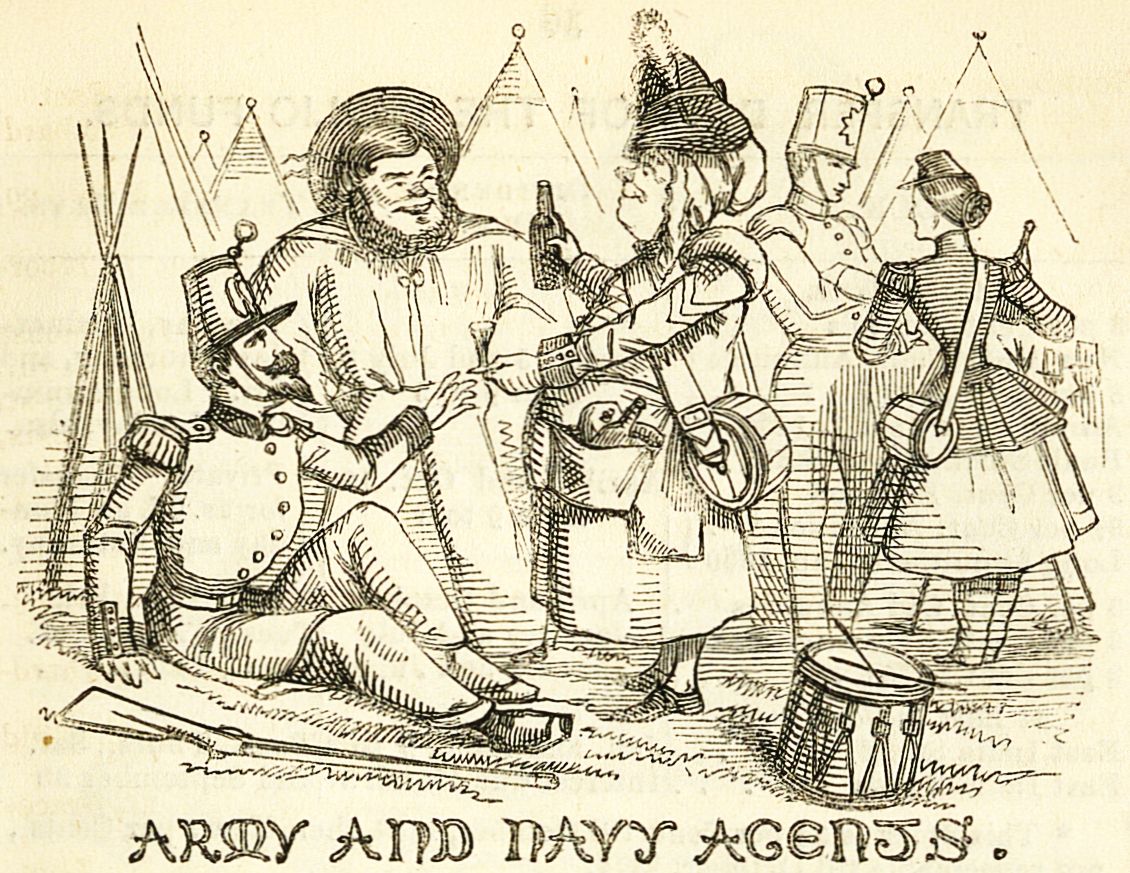
NAVY AND PRIZE AGENTS IN LONDON.
For Petty Officers and Seamen — There are also Agents, who are licensed for three years — for whose addresses see the Navy List.
Marines — Cox & Son, 44, Hatton Garden.
↑
- 30 -
{f.30}
 TRANSFER DAYS OF THE PUBLIC FUNDS.
| STOCK. | Dividends Due. | Transfer Days. |
| At the Bank. | ||
| 3 per Cent. Consols | January 5 and July 5, from 9 to 3 | Tuesday, Wednesday, Thursday, and Fri. Long Annuities Monday, also. |
| New 5 per Cent. Annuities | ||
| 3 per Cent., 1726 | ||
| Annuities to Jan. 7, 1860 | ||
| Bank Stock, 7 per Cent | April 5 and Oct. 10, from 9 to 3 | Private Transfer for 2s. 6d. on Monday and Saturday. |
| 3 per Cent. Reduced | ||
| 3¼ per Cent. Annuities | ||
| Long Annuities to Jan. 1860 | ||
| 3 per Cent. Old Annuities | April and October | Mon., Wed., Fri. |
| 3 per Cent. New Annuities | January and July | Tues., Thurs., Sat. |
| 3 per Cent., 1751 | January and July | Tues., Thurs. |
| At East India House. | ||
| East India Stock | Jan. and June, 9 to 3 | Tues., Thurs., Sat. |
| East India Bonds | Interest due March 31 | and September 30 |
The Dividends are payable three days after they are due.
Tickets for preparing the transfer of Stock must be given in at each office before one o’clock, at the India House before two.
Private transfers may be made at other times than as above, the books not being shut, by paying
At the Bank and India House … 2s. 6d. for each transfer.
Transfers at the Bank must be made by half-past two o’clock, at the India House by three. Expenses of transfer in
| B. Stock for £ 25 and under | 9s. | above that sum | 12s. | ||
| I. Stock for £ 100 and under | £ 1 | 10s. | above that sum | £ 1 | 14s. |
Powers of Attorney for the Sale or Transfer of Stock to be left at the Bank, &c., for examination, before two o’clock the day previous to being acted upon. If for receiving dividends, present them at the time the first dividend is payable.
The expense of a Power of Attorney is £1 1s. 6d. for each Stock ; but for the Bank and India Stocks, £ 1 11s. 6d. If wanted for the same day, half-past twelve o’clock is the latest time for receiving orders ; but instructions should be given as early in the morning as possible. The boxes for receiving Powers of Attorney for sale close at two.
Probates of Wills, Letters of Administration, and other proofs of decease, must be left at the Bank, &c., for registration, from two to three clear days, exclusive of holidays.
The unaltered possession of £ 500 or upwards, Bank Stock, for six months clear, will give the proprietor a vote.
The clear unaltered possession for a year of £1000 India Stock entitles the proprietor to one vote, of £3000 to two votes, of £6000 to three votes, of £10,000 to four votes.
↑
- [31] -
{f.31}
 LAW
LAW
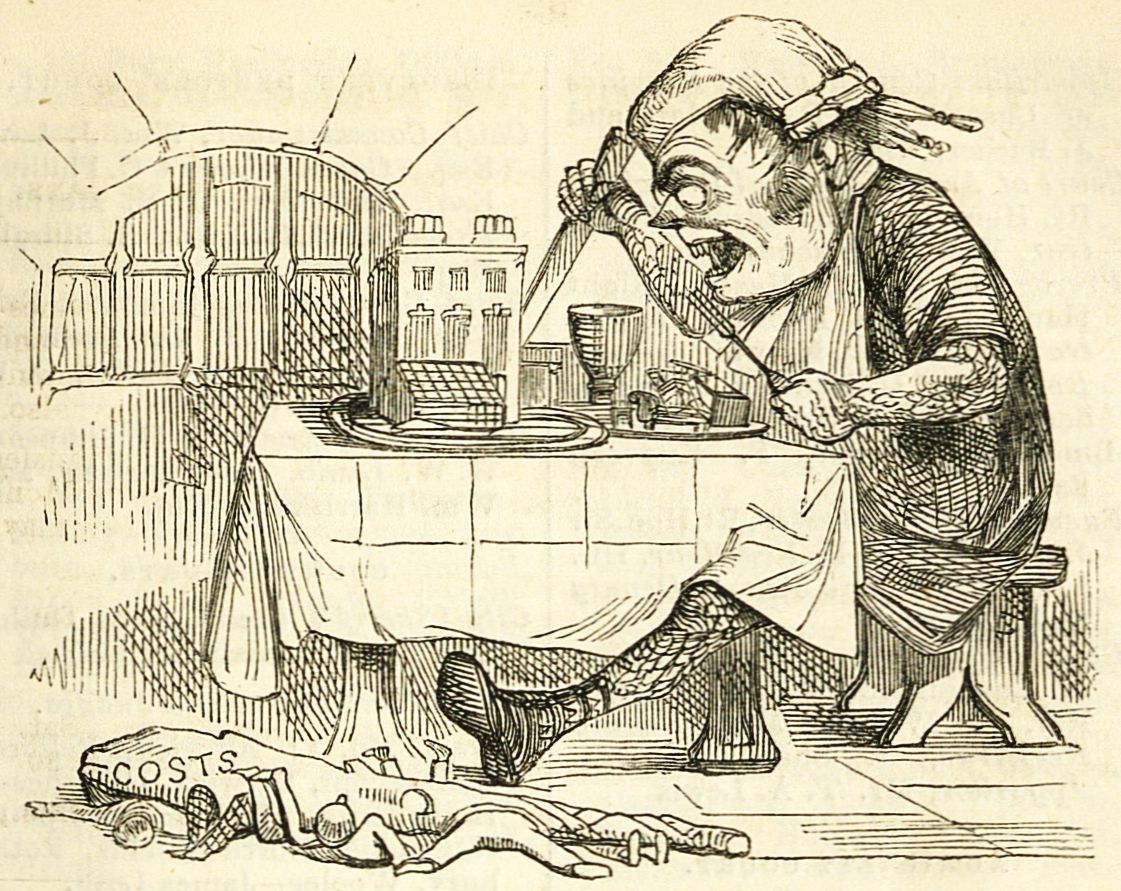
ENGLISH COURTS OF LAW.
court of chancery.
courts of law.
law officers.
ecclesiastical courts.
admiralty court.
court of bankruptcy.
insolvent debtors’ court.
county courts.
District Towns and Judges.
metropolitan police courts.
SCOTTISH COURTS OF LAW.
court of session.
Inner House — First Division.
Second Division.
lord ordinary on teinds.
law officers.
↑
- 36 -
{f.36}
 IRISH COURTS OF LAW.
court of chancery.
court of queen’s bench.
court of common pleas.
court of exchequer.
ecclesiastical courts.
court of admiralty.
bankrupt court.
insolvent debtors’ court.
court for sale and transfer of encumbered estates.
law officers.
GOVERNORS OF BRITISH COLONIES AND POSSESSIONS.
Europe.
↑
- 37 -
{f.37}
 Asia.
Asia.
America.
West India Islands.
Australia.
Africa.
LAW TERMS AND RETURNS.
- 38 -
↑
{f.38}
The first General Return Day for every term is the fourth day before the first day for the term, both days being reckoned in the computation. There were also three other General Return Days in the term upon which certain writs were returnable ; but now by the statute 1 Will. IV. cap. 3, sec. 2, “All writs now usually returnable before any of His Majesty’s Courts of King’s Bench, Common Pleas, or Exchequer, respectively, on General Return Days, that shall be made returnable after the 1st of January, 1831, may be made returnable on the third day exclusive before the commencement of each term, or on any day (not being Sunday) between that day and the third day exclusive before the last day of the term ; and the day for appearance shall, as heretofore, be the third day after such return, exclusive of the day of return ; or in case such third day shall fall on a Sunday, then on the fourth day after such return, exclusive of such day of return.” When the terms themselves commence on a Sunday, the term is dated from such day, although the sittings do not commence till the following day.
ALLOWANCE TO WITNESSES.
RATE OF ALLOWANCE TO WITNESSES ATTENDING THE SUPERIOR
COURTS OF LAW.
| For Attendance and Expenses. | Per day |
| Surgeons, Surveyors, & Attorneys | £ 2 2 0 |
| Merchants | £ 1 1 0 |
| Tradesmen | £ 0 15 0 |
| Journeymen Mechanics | £ 0 7 0 |
| For Travelling (per mile) | £ 0 1 0 |
| The Attorney in the cause | £ 0 1 3 |
ALLOWANCE TO WITNESSES ATTENDING COUNTY COURTS.
| Gentlemen, Merchants, Bankers, and Professional Men | 7s. | 6d. | Per day. |
| Tradesmen, Auctioneers, Accountants, Clerks, and Yeomen | 5 | 0 | Per day. |
| Journeymen, Labourers, and the like | 2 | 0 | Per day. |
| Travelling Expenses, per mile, one way | 0 | 6 | Per day. |
Quarter-Sessions.
By the Act 1 Will. IV. c. 70, it is enacted, that “in the year 1831, and afterwards, the justices of the peace in every county, riding, or division, for which Quarter Sessions of the Peace by law ought to be held, shall hold their General Quarter Sessions of the Peace in the first week after the 11th of October, in the first week after the 28th of December, in the first week after the 31st of March, and in the first week after the 24th of June.”
UNIVERSITY TERMS.
| oxford. | cambridge. | ||||
| Begins. | Ends. | Begins. | Divides. | Ends. | |
| Lent | Jan. 15 | Mar. 31 | Jan. 13 | Feb. 20, noon | Mar. 30 |
| Easter | Apr. 18 | May 26 | April 18 | May 27, midn. | July 6 |
| Trinity | May 30 | July 7 | |||
| Michaelmas | Oct. 10 | Dec. 17 | Oct. 10 | Nov. 12, midn. | Dec. 16 |
| Oxford Act. and Camb. Commencement, July 3rd. |
↑
- 39 -
{f.39}
 PUBLIC OFFICES,
WITH HOURS OF ATTENDANCE.
ECLIPSES OF THE SUN AND MOON.
In the year 1855, there will be two Eclipses of the Sun and two of the Moon. — First, a total Eclipse of the Moon, on the 1st of May, partially visible at Greenwich ; Second, a partial Eclipse of the Sun, on the 15th of May, invisible at Greenwich ; Third, a total Eclipse of the Moon, on the 24th of October, partly visible at Greenwich ; Fourth, a partial Eclipse of the Sun, on the 9th of November, invisible at Greenwich.
SOLAR INGRESSES.
| Spring Quarter begins March | 21 | 4 h 8 m. p.m. |
| Summer Quarter begins June | 22 | 0 h 49 m. p.m. |
| Autumn Quarter begins September | 23 | 3 h 0 m. a.m. |
| Winter Quarter begins December | 22 | 8 h 48 m. p.m. |
TABLE TO CALCULATE WAGES, AND OTHER PAYMENTS.
| Year. | Per Mon. | Per Week. | Pr. Day. | |||||
| £ | £ | s. | d. | £ | s. | d. | s. | d. |
| 1 | 0 | 1 | 8 | 0 | 0 | 4¾ | 0 | 0¾ |
| 2 | 0 | 3 | 4 | 0 | 0 | 9¼ | 0 | 1¼ |
| 3 | 0 | 5 | 0 | 0 | 1 | 1¾ | 0 | 2 |
| 4 | 0 | 6 | 8 | 0 | 1 | 6½ | 0 | 2¾ |
| 5 | 0 | 8 | 4 | 0 | 1 | 11 | 0 | 3¼ |
| 6 | 0 | 10 | 0 | 0 | 2 | 3½ | 0 | 4 |
| 7 | 0 | 11 | 8 | 0 | 2 | 8¼ | 0 | 4½ |
| 8 | 0 | 13 | 4 | 0 | 3 | 0¾ | 0 | 5¼ |
| 9 | 0 | 15 | 0 | 0 | 3 | 5½ | 0 | 6 |
| 10 | 0 | 16 | 8 | 0 | 3 | 10 | 0 | 6½ |
| 11 | 0 | 18 | 4 | 0 | 4 | 2¾ | 0 | 7¼ |
| 12 | 1 | 0 | 0 | 0 | 4 | 7¼ | 0 | 8 |
| 13 | 1 | 1 | 8 | 0 | 5 | 0 | 0 | 8½ |
| 14 | 1 | 3 | 4 | 0 | 5 | 4¼ | 0 | 9¼ |
| 15 | 1 | 5 | 0 | 0 | 5 | 9 | 0 | 10 |
| 16 | 1 | 6 | 8 | 0 | 6 | 1¾ | 0 | 10½ |
| 17 | 1 | 8 | 4 | 0 | 6 | 6¼ | 0 | 11¼ |
| 18 | 1 | 10 | 0 | 0 | 6 | 10¾ | 0 | 11¾ |
| 19 | 1 | 11 | 8 | 0 | 7 | 3½ | 1 | 0½ |
| 20 | 1 | 13 | 4 | 0 | 7 | 8 | 1 | 1¼ |
If the wages be guineas, add one penny for every pound to each month, or one farthing for every pound to each week.
↑
- [43] -
{f.43}
 THEATRES.
- 44 -
{f.44}
 EXHIBITIONS, ETC.
↑
- 45 -
{f.45}
 TAXES.
ASSESSED TAXES.
By 16 & 17 Vict., cap. 88, the following duties, wherever they have been altered from the previous years, are to come into operation from and after April 5, 1854 ; up to that date all will remain as before and those not altered are to continue : —
ARMORIAL BEARINGS. — Any person keeping a coach or other carriage, charged with a duty of not less than £ 3 10, and using or wearing any armorial bearing, to pay annually 2l. 12s. 9d. Any person not so charged, 13s. 2d.
| Per annum. | |||
| CARRIAGES. — For every coach, chariot, landau, chaise, caravan, &c., with four wheels, drawn by two or more horses or mules | £ 3 | 10 | 0 each |
| Carriages drawn by one horse or mule only | £ 2 | 0 | 0 each |
| Carriages with four wheels of less diameter than 30 inches, and drawn by ponies or mules not exceeding 13 hands in height | £ 1 | 15 | 0 each |
| Carriages drawn by one only | £ 1 | 0 | 0 each. |
| Carriages with less than four wheels, drawn by two or more horses or mules | £ 2 | 0 | 0 each |
| Carriages drawn by one only | £ 0 | 15 | 0 each |
| Carriages drawn by one not exceeding 13 hands in height | £ 0 | 10 | 0 each |
| Carriages kept solely to be let to hire | half the above | ||
| Carriages used by common carriers, occasionally carrying passengers for hire, so as not to be liable to the Stage-Coach duties, with four wheels | £ 2 | 6 | 8 each |
| Carriages with less than four wheels | £ 1 | 6 | 8 each |
Exemptions. — Carriages with horses kept solely for the purpose of being let to hire by persons licensed to let horses ; and any
DOGS. — For every dog of whatever description, 12s., but no person to be charged more than £ 39 12s. for any number of dogs, nor more than £ 9 for any number of greyhounds : dogs under six months old are not chargeable, and dogs wholly used in the care of sheep or cattle, not being hounds, spaniels, &c., are exempt.
GAME-DEALERS. — Persons licensed to deal in Game are to take out a certificate, charged with a duty of 2l. ; but certificated persons may sell Game to licensed dealers, if paying the duty of 3l. 13s. 6d.
GAME DUTY (Great Britain). — On a Gamekeeper, acting under a deputation duly registered —
| If assessed as a servant | £ 1 | 5 | 0 |
| If not so assessed | £ 3 | 13 | 6 |
| On every other person using dog, gun, net, or engine, for the taking or killing of Game | £ 3 | 13 | 6 |
HAIR POWDER. — Every person who wears it to pay annually 1l. 3s. 6d.
| HORSES. — For every horse or mule used for riding or drawing carriages chargeable with duty | £ 1 | 1 | 0 each. |
| Horses kept for other purposes | £ 0 | 10 | 6 each. |
|
- 46 -
{f.46}
| Per annum. | ||
| Ponies and mules, not exceeding 13 hands in height, used for riding or drawing carriages chargeable with duty | £ 0 | 10 | 6 each. |
| Horses, &c., kept for other purposes | £ 0 | 5 | 3 each. |
| Race-horses | £ 3 | 17 | 0 each. |
| Clergymen, physicians, surgeons, farmers, and farmers’ bailiffs, keeping only one horse for riding, or drawing any carriage chargeable with duty | £ 0 | 10 | 6 |
Exemptions. — Horses used in husbandry or in gardening, mares kept solely for breeding, or any horse not used for any purpose of labour whatever — all horses otherwise charged with duty ; horses kept by licensed horse-dealers for sale ; horses used by field-officers in volunteer corps, and by field-officers and others employed in Her Majesty’s Service, or in the Militia.
| Horses let for hire, where the person taking out a license keeps but one horse or one carriage | £ 7 | 10 | 0 |
| Not exceeding two horses or two carriages | £ 12 | 10 | 0 |
| Not exceeding four horses or three carriages | £ 20 | 0 | 0 |
| Not exceeding eight horses or six carriages | £ 30 | 0 | 0 |
| Not exceeding twelve horses or nine carriages | £ 40 | 0 | 0 |
| Not exceeding sixteen horses or twelve carriages | £ 50 | 0 | 0 |
| Not exceeding twenty horses or fifteen carriages | £ 60 | 0 | 0 |
| Exceeding fifteen carriages | £ 70 | 0 | 0 |
| Exceeding twenty horses, for every ten or fraction thereof | £ 10 | 0 | 0 |
Exemptions. — Stage-coach and hackney carriage horses.
HOUSE DUTY. — For every Inhabited Dwelling House which, with the Household and other Offices, Yards, and Gardens therewith occupied and charged, is or shall be worth the Rent of Twenty Pounds or upwards, by the Year. Dwelling-houses 9d. in the pound ; shops and farm-houses 6d. in the pound.
INCOME AND PROPERTY TAX. — By an Act of 6 Victoria, an assessment of 7d. in the pound was charged in England on profits arising from property, professions, trades, and offices ; and dividends received by persons resident therein, payable out of the revenue of Foreign States ; and by an Act passed in the session of 1853, the assessment is continued and applied to the whole of the United Kingdom, until the 6th of April, 1855 ; at the same rate till April 5, 1856, then till April 5, 1857 at 6d. in the pound ; and then till April 5, 1860, at 5d. in the pound on all incomes amounting to 100l. a-year ; and on occupiers of farms the half of the above sums on the annual value. All persons whose incomes are between 100l. and 150l. a year, to pay only 5d. in the pound for the whole term ; and persons insuring their lives are allowed to deduct the amount so paid from the return of their incomes. By the 17 Vict. cap. 24, the foregoing rate to be 14d. and 10d. in the pound, from April 5, 1854, and continue until April 5, after the signing of a treaty of peace, when the rates are to revert to the previous scale.
SERVANT-MEN. — For every male servant of the age of eighteen and upwards, 1l. 1s. ; for every such servant under eighteen, 10s. 6d. This duty includes waiters.
Exemptions. — A son or grandson residing with his employer, and under the age of twenty-one ; public-house boys employed to carry out beer though waiting occasionally ; ostlers employed in the stables of a licensed innkeeper ; ostlers or helpers employed in the stables of livery-stable
- 47 -
↑
{f.47}
keepers, horse-dealers, persons licensed to let horses, or to drive stage-coaches or hackney-carriages, and persons employed in training race-horses.
STAGE COACH DUTIES. — For every original license, 3l. 3s. For every supplementary license, 5s. Every stage-carriage is also chargeable with a mileage duty of 1½d. Hackney carriages (England), 1l.
Duties on passengers conveyed for hire by Carriages travelling upon Railways. — 5l. per cent. on the gross amount of fares, Parliamentary trains being exempt.
COMMERCIAL AND OTHER STAMPS.
| Receipts. | s. | d. |
| Receipt or discharge given for any payment whatever of £ 2 or upwards | 0 | 1 |
| Scrip Certificates | 0 | 1 |
Penalty for giving receipts without a stamp £ 10 under £ 100, and £ 20 above that sum.
Penalty for not effectually cancelling or obliterating adhesive stamps when used, £ 10.
Penalty for committing frauds in the use of adhesive stamps, £ 20.
Inland Bill of Exchange, Draft, or Order for the Payment to the Bearer, or to Order, at any time otherwise than on Demand, of any Sum of Money
| £ | s. | d. | ||
| Not exceeding | £ 5 | 0 | 0 | 1 |
| Exceeding £ 5 and not exceeding | £ 10 | 0 | 0 | 2 |
| Exceeding £ 10 and not exceeding | £ 25 | 0 | 0 | 3 |
| Exceeding £ 25 and not exceeding | £ 50 | 0 | 0 | 6 |
| Exceeding £ 50 and not exceeding | £ 75 | 0 | 0 | 9 |
| Exceeding £ 75 and not exceeding | £ 100 | 0 | 1 | 0 |
| Exceeding £ 100 and not exceeding | £ 200 | 0 | 2 | 0 |
| Exceeding £ 200 and not exceeding | £ 300 | 0 | 3 | 0 |
| Exceeding £ 300 and not exceeding | £ 400 | 0 | 4 | 0 |
| Exceeding £ 400 and not exceeding | £ 500 | 0 | 5 | 0 |
| Exceeding £ 500 and not exceeding | £ 750 | 0 | 7 | 6 |
| Exceeding £ 750 and not exceeding | £ 1,000 | 0 | 10 | 0 |
| Exceeding £ 1,000 and not exceeding | £ 1,500 | 0 | 15 | 0 |
| Exceeding £ 1,500 and not exceeding | £ 2,000 | 1 | 0 | 0 |
| Exceeding £ 2,000 and not exceeding | £ 3,000 | 1 | 10 | 0 |
| Exceeding £ 3,000 and not exceeding | £ 4,000 | 2 | 0 | 0 |
| Exceeding £ 4,000 and upwards | 2 | 5 | 0 |
Foreign Bill of Exchange drawn in, but payable out of, the United Kingdom,
If drawn singly or otherwise than in a Set of Three or more, the same Duty as on an Inland Bill of the same Amount and Tenor.
If drawn in Sets of Three or more, for every Bill of each Set,
Where the Sum payable thereby
| £ | s. | d. | ||
| Shall not exceed | £ 25 | 0 | 0 | 1 |
| And where it shall exceed £ 25 and not exceed | £ 50 | 0 | 0 | 2 |
| And where it shall exceed £ 50 and not exceed | £ 75 | 0 | 0 | 3 |
| And where it shall exceed £ 75 and not exceed | £ 100 | 0 | 0 | 4 |
| And where it shall exceed £ 100 and not exceed | £ 200 | 0 | 0 | 8 |
| And where it shall exceed £ 200 and not exceed | £ 300 | 0 | 1 | 0 |
| And where it shall exceed £ 300 and not exceed | £ 400 | 0 | 1 | 4 |
| And where it shall exceed £ 400 and not exceed | £ 500 | 0 | 1 | 8 |
| And where it shall exceed £ 500 and not exceed | £ 750 | 0 | 2 | 6 |
| And where it shall exceed £ 750 and not exceed | £ 1,000 | 0 | 3 | 4 |
| And where it shall exceed £ 1,000 and not exceed | £ 1,500 | 0 | 5 | 0 |
| And where it shall exceed £ 1,500 and not exceed | £ 2,000 | 0 | 6 | 8 |
| And where it shall exceed £ 2,000 and not exceed | £ 3,000 | 0 | 10 | 0 |
| And where it shall exceed £ 3,000 and not exceed | £ 4,000 | 0 | 13 | 4 |
| And where it shall exceed £ 4,000 and upwards | 0 | 15 | 0 |
Foreign Bill of Exchange drawn out of the United Kingdom, and payable within the United Kingdom, the same Duty as on an Inland Bill of the same Amount and Tenor.
Foreign Bill of Exchange drawn out of the United Kingdom, and payable out of the United Kingdom,
- 48 -
{f.48}
but indorsed or negotiated within the United Kingdom, the same Duty as on a Foreign Bill drawn within the United Kingdom, and payable out of the United Kingdom.
Promissory Note for the Payment in any other Manner than to the Bearer on Demand of any Sum of Money,
| s. | d. | ||
| Not exceeding | £ 5 | 0 | 1 |
| Exceeding £ 5 and not exceeding | £ 10 | 0 | 2 |
| Exceeding £ 10 and not exceeding | £ 25 | 0 | 3 |
| Exceeding £ 25 and not exceeding | £ 50 | 0 | 6 |
| Exceeding £ 50 and not exceeding | £ 75 | 0 | 9 |
| Exceeding £ 75 and not exceeding | £ 100 | 1 | 0 |
Promissory Note for the Payment, either to the Bearer on Demand, or in any other Manner than to the Bearer on Demand, of any Sum of Money,
| £ | s. | d. | ||
| Exceeding £ 100 and not exceeding | £ 200 | 0 | 2 | 0 |
| Exceeding £ 200 and not exceeding | £ 300 | 0 | 3 | 0 |
| Exceeding £ 300 and not exceeding | £ 400 | 0 | 4 | 0 |
| Exceeding £ 400 and not exceeding | £ 500 | 0 | 5 | 0 |
| Exceeding £ 500 and not exceeding | £ 750 | 0 | 7 | 6 |
| Exceeding £ 750 and not exceeding | £ 1,000 | 0 | 10 | 0 |
| Exceeding £ 1,000 and not exceeding | £ 1,500 | 0 | 15 | 0 |
| Exceeding £ 1,500 and not exceeding | £ 2,000 | 1 | 0 | 0 |
| Exceeding £ 2,000 and not exceeding | £ 3,000 | 1 | 10 | 0 |
| Exceeding £ 3,000 and not exceeding | £ 4,000 | 2 | 0 | 0 |
| Exceeding £ 4,000 and upwards | 2 | 5 | 0 |
Licence to Demise Copyhold Lands, Tenements, or Hereditaments, or the Memorandum thereof if granted out of Court, and the Copy of Court Roll of any such Licence if granted in Court : — Where the clear yearly Value of the Estate to be demised shall be expressed in such Licence and shall not exceed £ 75, — the same Duty as on a Lease at a yearly Rent equal to such yearly Value, under the Act of the 13 & 14 Vict. c. 97.
| And in all other Cases | £ 0 | 10 | 0 |
Lease or Tack of any Lands, Tenements, Hereditaments, or Heritable Subjects, for any Term of Years exceeding Thirty-five, at a Yearly Rent, with or without any Sum of Money by way of Fine, Premium, or Grassum paid for the same, the following Duties in respect of such yearly Rent,
| If the term shall not exceed 100 years. | If the term shall exceed 100 years. | |||||
| £ | s. | d. | £ | s. | d. | |
| Where the yearly Rent shall not exceed £ 5 | 0 | 3 | 0 | 0 | 6 | 0 |
| And where the same shall exceed £ 5 and not exceed 10 | 0 | 6 | 0 | 0 | 12 | 0 |
| And where the same shall exceed £ 10 and not exceed 15 | 0 | 9 | 0 | 0 | 18 | 0 |
| And where the same shall exceed £ 15 and not exceed 20 | 0 | 12 | 0 | 1 | 4 | 0 |
| And where the same shall exceed £ 20 and not exceed 25 | 0 | 15 | 0 | 1 | 10 | 0 |
| And where the same shall exceed £ 25 and not exceed 50 | 1 | 10 | 0 | 3 | 0 | 0 |
| And where the same shall exceed £ 50 and not exceed 75 | 2 | 5 | 0 | 4 | 10 | 0 |
| And where the same shall exceed £ 75 and not exceed 100 | 3 | 0 | 0 | 6 | 0 | 0 |
| And where the same shall exceed £ 100 then for every £ 50, and also for any fractional part of £ 50 | 1 | 10 | 0 | 3 | 0 | 0 |
And where any such Lease or Tack as aforesaid shall be granted in consideration of a Fine, Premium, or Grassum, and also of a yearly Rent, such Lease or Tack shall be chargeable also, in respect of such Fine, Premium, or Grassum, with ad valorem Stamp Duties.
Conveyance of any Kind or Description whatsoever in England or Ireland, and Charter, Disposition, or Contract containing the first original Constitution of Feu and Ground Annual Rights in Scotland (not being a Lease or Tack for Years), in consideration of an annual sum payable in perpetuity or for any indefinite Period, whether
- 49 -
{f.49}
Fee Farm or other Rent, Feu Duty, Ground Annual, or otherwise, — the same Duties as on a Lease or Tack for a Term exceeding 100 years, at a yearly Rent equal to such annual Sum.
Leases or Tacks and Grants respectively, for a Life or Lives not exceeding three, are chargeable with the Stamp Duties to which the same were subject and liable before the passing of the Act 16 & 17 Vict. c. 63.
Every such Lease or Tack, and every Conveyance, Charter, Disposition, or Contract as aforesaid hereby charged with Duty, and the Duplicate or Counterpart thereof respectively, shall be chargeable with the respective Stamp Duties made payable by the 13 & 14 Vict. cap. 97.
Bonds and Mortgages.
| s. | d. | ||
| Not exceeding | £ 50 | 1 | 3 |
| Exce. £ 50 & not ex. | £ 100 | 2 | 6 |
| Exce. £ 100 & not ex. | £ 150 | 3 | 9 |
| Exce. £ 150 & not ex. | £ 200 | 5 | 0 |
| Exce. £ 200 & not ex. | £ 250 | 6 | 3 |
| Exce. £ 250 & not ex. | £ 300 | 7 | 6 |
And where the same shall exceed £ 300, then for every £ 100, and also for any fractional part of £ 100, two shillings and sixpence. With a progressive duty on words, for every entire 1080 words above the first 1080.
Apprentices’ Indentures.
| £ | s. | d. | ||
| When the premium is under | £ 30 | 1 | 0 | 0 |
| If 30 and under | £ 50 | 2 | 0 | 0 |
| If 50 and under | £ 100 | 3 | 0 | 0 |
| If 100 and under | £ 200 | 6 | 0 | 0 |
| If 200 and under | £ 300 | 12 | 0 | 0 |
| If 300 and under | £ 400 | 20 | 0 | 0 |
| If 400 and under | £ 500 | 25 | 0 | 0 |
| If 500 and under | £ 600 | 30 | 0 | 0 |
| If 600 and under | £ 800 | 40 | 0 | 0 |
| If 800 and under | £ 1000 | 50 | 0 | 0 |
| If 1000 and upwards | 60 | 0 | 0 | |
| If no premium | 0 | 2 | 6 |
Duties on Succession and Legacies.
Of the Value of 20l. or upwards, out of Personal Estate, or charged upon Real Estate, or on 100l., if in direct succession, &c. ; and upon every share of Residue :
To a child or parent, or any lineal descendant or ancestor of the deceased, 1l. per cent. — To a brother or sister, or their descendants, 3l. per cent. — To an uncle or aunt, or their descendants, 5l. per cent. — To a great uncle or great aunt, or their descendants, 6l. per cent. — To any other relation, or any stranger in blood, 10l. per cent. — Legacy to husband or wife, exempt.
Agreements.
Of the value of 20l., or upwards, and not containing more than 1080 words, 2s. 6d. ; and for every 1080 words over and above the first 1080 words a progressive duty of 2s. 6d.
Appraisements.
| s. | d. | ||
| Appraisement of Estate and Effects when the value does not exceed | £ 50 | 2 | 6 |
| Above £ 50 & not exceed. | £ 100 | 5 | 0 |
| Above £ 100 & not exceed. | £ 200 | 10 | 0 |
| Above £ 200 & not exceed. | £ 500 | 15 | 0 |
| Above £ 500 & not exceed. | — | 20 | 0 |
Life and Fire Assurances.
Policy of Assurance made upon any life, or upon any event or contingency depending upon any life, where the sum assured shall not exceed 500l., for every 50l. or fractional part of 50l., 6d. ; above 500l., and not exceeding 1000l., 1s. for every 100l. or fractional part of 100l. ; above 1000l., 10s. for every 1000l. or fractional part of 1000l.
Policy of Assurance for loss or damage by fire, 1s. And for every 100l. insured for a year, and for every fractional part of 100l., 3s. per cent. per annum.
↑
- 50 -
{f.50}
 Marine Insurances.
| £ | s. | d. | |
| Where the premium or consideration for such insurance does not exceed the rate of 10s. per cent. on the sum insured | 0 | 0 | 3 |
| Exceeding 10s. and not exceeding 20s. per cent. | 0 | 0 | 6 |
| Exceeding 20s. and not exceeding 30s. per cent. | 0 | 1 | 0 |
| Exceeding 30s. and not exceeding 40s. per cent. | 0 | 2 | 0 |
| Exceeding 40s. and not exceeding 50s. per cent. | 0 | 3 | 0 |
| Exceeding 50s. per cent. | 0 | 4 | 0 |
| If the separate interests of two or more persons be insured by one policy, the duties to be charged for each | £ | s. | d. |
| Charter Party | 0 | 5 | 0 |
Stamps are also now used instead of payments by fees in proceedings in Bankruptcy and Insolvency, and in all proceedings in Chancery.
Sundries.
| Affidavits | 0 | 2 | 6 |
| Awards | 1 | 15 | 0 |
| Bills of Lading | 0 | 0 | 6 |
| Protest | 0 | 5 | 0 |
| Charter Party | 0 | 5 | 0 |
| Warrant of Attorney, when given by a Prisoner | 0 | 5 | 0 |
| General Release | 1 | 15 | 0 |
| Powers of Attorney | 1 | 10 | 0 |
| Railway Proxies | 0 | 2 | 6 |
HACKNEY COACH AND CAB FARES.[Comment by FB] : 'A Cabman’s Lament' in this volume provides an amusing answer to this informative section on fares.
If a hackney coach or cab is hired by time, then the legal fares are, for a cab, an hour, 2s. ; and for all stoppages, 6d. for every complete fifteen minutes ; if by distance, 6d. per mile for two persons, and 6d. extra for each person beyond two for the whole distance. For hackney coaches the fare is one-third more.
If the driver of any hackney carriage refuses to go with any person hiring his carriage, for the legal and proper fare allowed by the Act 1 & 2 Vic. cap. 22, clause 22, or if such driver refuses to drive with all proper expedition, or if he shall exact or demand for the hire of such carriage more than the proper sum limited by the said Act, he is liable to a penalty of 40s.
If a hackney coach or cab be discharged beyond a circle of four miles from Charing Cross, the full fare is to be paid back to the nearest point of the four mile circle.
Property left in hackney carriages to be taken to the nearest Police-Office, and deposited there under a penalty of ten pounds for default.
Luggage is not to be charged for except more than two persons ride, and there is not room for it inside, then 2d. per package may be charged for what is carried outside.
Railways.
The length of railway open on Jan. 1, 1853, was 6,336 miles. On Dec. 31, it was 6,640 miles. The number of passengers conveyed in the year was, in England and Wales, 84,222,961 ; in Scotland, 10,999,223 ; in Ireland, 7,074,475 ; total number, 102,296,659. In England and Wales considerably less than one-half of the passengers were parliamentary and third-class ; in Scotland, two-thirds ; and in Ireland, about one-half. The total receipts for the year were 10,035,875l., of which 8,623,146l. were received from passengers. In England the receipts from the goods traffic somewhat exceeds those from the passenger traffic ; in Scotland they generally double the passenger traffic ; and in Ireland they amount only to about two-thirds of the passenger traffic. The total number of miles travelled by passengers in the year was 1,500,589,041 miles, giving an average of nearly 15 miles to each passenger.
↑
- [51] -
{f.51}
 POST AND TRANSIT
POST OFFICE REGULATIONS.
At the Receiving Houses, letters can be posted until ½ past 5, and will also be taken until 6 o’clock, on payment of a fee of one penny by stamp affixed to letter.
At the Branch Offices at Charing Cross, Old Cavendish-street, and Blackman-street, Borough, letters can be posted until 6 o’clock, and with an extra fee of one penny, paid by stamp affixed to letter, until ¼ to 7.
At St. Martin’s-le-Grand and Lombard-street, letters can be posted until 6 o’clock ; until 7 o’clock with a penny extra fee and postage paid in advance ; and until ½ past 7 o’clock by payment of postage, by stamps affixed, and a fee of 6d. in money.
For the Morning Mails. — The Letter Boxes at the Receiving Houses are open till seven a.m. for newspapers, and 7.45 a.m. for letters ; and those at the Branch Offices, Charing Cross, Old Cavendish-street, and the Borough, for the reception of newspapers until half-past seven a.m., and for letters until eight a.m. At the General Post Office and the Branch Office in Lombard-street, the boxes will close for newspapers at a quarter before eight a.m., and for letters at half-past eight a.m. Mail despatched at half-past nine a.m. Letters and newspapers for Ireland, posted at any Receiving Office before two, or any Branch Office before three, or at St. Martin’s-le-Grand by half-past three, are despatched at five, and reach Dublin early on the following morning.
There are ten deliveries daily in London ; but at the following places
- 52 -
{f.52}
there are only six deliveries daily ; namely, Camden Town, Camberwell, Dalston, Hackney, Holloway, Islington, Kentish Town, Kennington, Kingsland, Newington, Butts, Old Kent Road, Pentonville, Shacklewell, South Lambeth, Somers’ Town, Vauxhall, and Walworth.
The following are the times at which letters are forwarded for delivery to all other places within three miles from the General Post Office, St. Martin’s-le-Grand : —
If posted at Receiving-houses in the morning —
If posted at the Principal Office, St. Martin’s-le-Grand, in the morning —
These deliveries occupy about one hour and a half from the time of despatch.
Newspapers, to go the same day, must be put into the General Post-Office before six o’clock ; but those put in before half-past seven o’clock will go the same evening by paying a halfpenny with each. In the Branch Offices they must be put in before half-past 5, and at the Receiving Houses before 5. They must be sent in covers, open at the sides, and, to go free, no words or communication must be printed on such paper after the same shall have been published, nor any writing or marks upon such printed paper, or the cover thereof, other than the name and address of the person to whom it is sent ; but, by affixing a stamp conspicuously on the cover, the paper itself may be written on, but this exemption does not apply to papers sent abroad. If addressed to persons who have removed, they may be re-directed, and sent free of extra charge. Failure in these conditions subjects the paper to the same rate of postage as an unpaid letter. Within the London District (three miles from the Post-Office) the postage is a penny each.
British newspapers sent to foreign countries (where they are permitted to go free through the foreign post) go free : but if otherwise, they are charged a British postage of 2d. each ; or a rate equivalent to the foreign rate. French and Belgian newspapers are subject to a postage in England of one halfpenny. English papers pay in France a postage of 5 centimes.
Newspapers to and from the Colonies are transmitted free (unless sent by private ships), and must be posted within a week of their publication.
Books and printed sheets may be sent by post in Great Britain, at the rate of 6d. if not exceeding half-a-pound, and 1s. per lb. (every fraction over a pound being charged as a pound) prepaid by stamps and open at the ends ; single books may be sent at the same rate to the British East and West Indies, British North America, Newfoundland, Bermuda, Ceylon, Hong-Kong, Cape Town, Gibraltar, Malta, the Ionian Islands, and Heligoland.
Rates of Postage. — From and to all parts of the United Kingdom — the Channel Islands, and the Isle of Man, if pre-paid, and not exceeding,
| Half an Ounce | One Penny. |
| One Ounce | Twopence. |
| Two Ounces | Fourpence. |
| Three Ounces | Sixpence. |
| And so on, adding Twopence for each Ounce. |
- 53 -
{f.53}
By the 10th and 11th Vic. c. 85, letters transmitted through the Post-Office to Bankrupts are to be delivered by the Post-Office authorities to the Assignees, for the period of three months after the issuing of the Fiat.
Money-Order Office. — The Money-Order Office No. 1, Aldersgate-street, nearly opposite the General Post-Office, where Orders are granted and payable from 10 to 4.
Money Orders for sums under Five Pounds are granted by every post-town upon every other post-town in the United Kingdom, on application at the various offices ; and also by and upon certain offices in the metropolis, of which the postmasters are furnished with a list. Orders for sums under Two Pounds, are charged Threepence ; not exceeding Five Pounds, Sixpence ; and above that sum no order is granted.
Money Orders are paid only to the person for whom they were obtained ; but he may depute another person to receive the money by signing the order, and giving his deputy the Christian and surname, the address and occupation of the person who originally obtained the order. Where parties have several Christian names, one of such Christian names only is required, and they may be made payable to and signed for a firm. They must be presented for payment within the second calendar month after their issue, or a fresh order will be charged for, and within the twelfth calendar month, or they will not be paid at all. Post-Office Orders are recommended for small sums ; and, if neither that nor registration be adopted, that all bills, notes, &c., be cut in halves, and sent by different posts ; the numbers, dates, &c., should also be carefully taken. No money orders are issued or paid on a Sunday.
All Unpaid Letters are charged double, and all letters can be prepaid only by affixing stamps thereon.
Parcels sent by Post are not restricted as to weight, but the charge is twopence per ounce, which must be prepaid by money or stamps, and the parcel must not exceed two feet in length.
Letters to persons who cannot be found, are returned to the Dead Letter Office, opened by the proper Officer, and returned to the writer ; and all dead letters bearing on the seal the name and address of the sender will be returned unopened.
Letters directed to the Post-office to be left until called for, are sent to the Paid Letter Window in St. Martin’s-le-Grand, and may be had upon application between 10 and 4 ; if not applied for within a reasonable time they are sent to the Dead Letter Office, and are then opened and returned to the writer.
Registration of Letters. — Letters may be registered between the hours of 10 and 4, on payment of a fee of Sixpence, which, with the post, must be paid in advance.
Overcharged Letters. Overcharges are returned between the hours of 10 and 5, on application at the window of the hall in St. Martin’s-le-Grand ; the letter or envelope marked with the overcharge must be produced. The letter may be sent to the Office by the district letter-carrier, and the overcharge will be returned in the course of two days. Overcharges may likewise be obtained at the Branch Office in Lombard-street.
All letters containing improper enclosures, such as razors, scissors, knives, forks, &c., or any thing which by pressure might prove injurious, will be detained at the Office where posted, and the party to whom sent must apply there for it.
↑
- [54] -
{f.54}
 GENERAL NOTES OF THE YEAR
| Golden Number | 13 |
| Epact | 12 |
| Dominical Letter | G |
| Solar Cycle | 16 |
| Epiphany | Jan. 6 |
| Sundays after Epiphany | 4 |
| Septuagesima Sunday | Feb. 4 |
| Lent begins | Feb. 5 |
| Good Friday | April 6 |
| Easter Sunday | April 8 |
| Rogation Sunday | May 13 |
| Ascension Day | May 17 |
| Whit Sunday | May 27 |
| Trinity Sunday | June 3 |
| Sundays after Trinity | 25 |
| Advent Sunday | Dec. 2 |
The year 5616 of the Jewish era commences on Sept. 13, 1855.
Ramadan (Month of Abstinence observed by the Turks) commences on May 18, 1855.
The year 1272 of the Mohammedan era commences on Sept. 13, 1855.
↑
- [55] -
{f.55}
 CALENDAR.
| Full Moon 3 day at 8 19 morn. | ||||
| Last Quarter 11 day at 0 13 after | ||||
| New Moon 18 day at 8 37 morn. | ||||
| First Quarter 25 day at 1 39 morn. | ||||
| Days of the | Sundays and Remarkable Days. | Moon’s Age. | ||
| m. | w. | y. | ||
| 1 | M | 1 | Circumcision. | 13 |
| 2 | Tu | 2 | Sun rises 8h. 8m. | 14 |
| 3 | W | 3 | Sun sets 4h. 1m. | F |
| 4 | Th | 4 | 16 | |
| 5 | F | 5 | 17 | |
| 6 | S | 6 | Epiphany. Old Christ. Day | 18 |
| 7 | S | 7 | 1 Sun. aft. Epiph. | 19 |
| 8 | M | 8 | 20 | |
| 9 | Tu | 9 | 21 | |
| 10 | W | 10 | 22 | |
| 11 | Th | 11 | Hil. Term begins | 23 |
| 12 | F | 12 | 24 | |
| 13 | S | 13 | Cam. Lent T. beg. | 25 |
| 14 | S | 14 | 2 Sun. aft. Epiph. | 26 |
| 15 | M | 15 | Oxford Lent T. b. | 27 |
| 16 | Tu | 16 | 28 | |
| 17 | W | 17 | 29 | |
| 18 | Th | 18 | N | |
| 19 | F | 19 | 1 | |
| 20 | S | 20 | 2 | |
| 21 | S | 21 | 3 Sun. aft. Epiph. | 3 |
| 22 | M | 22 | 4 | |
| 23 | Tu | 23 | 5 | |
| 24 | W | 24 | 6 | |
| 25 | Th | 25 | Con. of St. Paul | 7 |
| 26 | F | 26 | 8 | |
| 27 | S | 27 | Sun rises 7h. 49m. | 9 |
| 28 | S | 28 | 4 Sun. aft. Epiph. | 10 |
| 29 | M | 29 | Sun sets 4h. 41m. | 11 |
| 30 | Tu | 30 | K. Charles Mar. | 12 |
| 31 | W | 31 | Hilary Term ends | 13 |
| Full Moon 2 day at 3 41 morn. | ||||
| Last Quarter 10 day at 3 0 morn. | ||||
| New Moon 16 day at 6 48 after. | ||||
| First Quarter 23 day at 5 34 after. | ||||
| Days of the | Sundays and Remarkable Days. | Moon’s Age. | ||
| m. | w. | y. | ||
| 1 | Th | 32 | Sun rises 7h. 42m. | 14 |
| 2 | F | 33 | Purif. Candlem. | F |
| 3 | S | 34 | Sun sets 4h. 50m. | 16 |
| 4 | S | 35 | Septuages. Sun. | 17 |
| 5 | M | 36 | 18 | |
| 6 | Tu | 37 | 19 | |
| 7 | W | 38 | 20 | |
| 8 | Th | 39 | Half.-quar.-Day | 21 |
| 9 | F | 40 | 22 | |
| 10 | S | 41 | 23 | |
| 11 | S | 42 | Sexagesima Sun. | 24 |
| 12 | M | 43 | 25 | |
| 13 | Tu | 44 | 26 | |
| 14 | W | 45 | Valentine | 27 |
| 15 | Th | 46 | 28 | |
| 16 | F | 47 | N | |
| 17 | S | 48 | 1 | |
| 18 | S | 49 | Quinqua. Sun. | 2 |
| 19 | M | 50 | 3 | |
| 20 | Tu | 51 | Shrove Tu. Cam. Lent T.d.n. | 4 |
| 21 | W | 52 | Ash Wednesday. | 5 |
| 22 | Th | 53 | 6 | |
| 23 | F | 54 | 7 | |
| 24 | S | 55 | St. Matthias. | 8 |
| 25 | S | 56 | 1 Sun. in Lent | 9 |
| 26 | M | 57 | Sun rises 6h. 55m. | 10 |
| 27 | Tu | 58 | Sun sets 5h. 34m. | 11 |
| 28 | W | 59 | Ember Week | 12 |
| Full Moon 3 day at 10 8 after. | ||||
| Last Quarter 11 day at 1 59 after. | ||||
| New Moon 18 day at 4 45 morn. | ||||
| First Quarter 25 day at 11 25 morn. | ||||
| Days of the | Sundays and Remarkable Days. | Moon’s Age. | ||
| m. | w. | y. | ||
| 1 | Th | 60 | St. David | 13 |
| 2 | F | 61 | Sun rises 6h. 46m. | 14 |
| 3 | S | 62 | Sun sets 5h. 41m. | F |
| 4 | S | 63 | 2 Sun. in Lent | 16 |
| 5 | M | 64 | 17 | |
| 6 | Tu | 65 | 18 | |
| 7 | W | 66 | 19 | |
| 8 | Th | 67 | 20 | |
| 9 | F | 68 | 21 | |
| 10 | S | 69 | 22 | |
| 11 | S | 70 | 3 Sun. in Lent | 23 |
| 12 | M | 71 | 24 | |
| 13 | Tu | 72 | 25 | |
| 14 | W | 73 | 26 | |
| 15 | Th | 74 | 27 | |
| 16 | F | 75 | 28 | |
| 17 | S | 76 | St. Patrick | 29 |
| 18 | S | 77 | 4 S. in Lent. Ps. Lou. b. 1848 | N |
| 19 | M | 78 | 1 | |
| 20 | Tu | 79 | 2 | |
| 21 | W | 80 | Spring Quar. com. | 3 |
| 22 | Th | 81 | 4 | |
| 23 | F | 82 | 5 | |
| 24 | S | 83 | 6 | |
| 25 | S | 84 | 5 Sun. in Lent. Lady-Day | 7 |
| 26 | M | 85 | 8 | |
| 27 | Tu | 86 | 9 | |
| 28 | W | 87 | Sun rises 5h. 48m. | 10 |
| 29 | Th | 88 | Sun sets 6h. 25m. | 11 |
| 30 | F | 89 | Camb. Lent Ter. e. | 12 |
| 31 | S | 90 | Oxf. Lent Term e. | 13 |
| Full Moon 2 day at 2 28 after. | ||||
| Last Quarter 9 day at 9 36 after. | ||||
| New Moon 16 day at 3 5 after. | ||||
| First Quarter 24 day at 5 57 morn. | ||||
| Days of the | Sundays and Remarkable Days. | Moon’s Age. | ||
| m. | w. | y. | ||
| 1 | S | 91 | Palm Sunday | 14 |
| 2 | M | 92 | Sun rises 5h. 36m. | F |
| 3 | Tu | 93 | Sun sets 6h. 34m. | 16 |
| 4 | W | 94 | 17 | |
| 5 | Th | 95 | 18 | |
| 6 | F | 96 | Good Friday. Old Lady D. | 19 |
| 7 | S | 97 | P. Leop. b. 1853 | 20 |
| 8 | S | 98 | Easter Sunday | 21 |
| 9 | M | 99 | Easter Monday | 22 |
| 10 | Tu | 100 | 23 | |
| 11 | W | 101 | 24 | |
| 12 | Th | 102 | 25 | |
| 13 | F | 103 | 26 | |
| 14 | S | 104 | 27 | |
| 15 | S | 105 | Low Sunday. Easter Term beg. | 28 |
| 16 | M | 106 | N | |
| 17 | Tu | 107 | 1 | |
| 18 | W | 108 | Oxf. & Cam. Eas. Term beg. | 2 |
| 19 | Th | 109 | 3 | |
| 20 | F | 110 | 4 | |
| 21 | S | 111 | 5 | |
| 22 | S | 112 | 2 Sun. af. Easter | 6 |
| 23 | M | 113 | St. George | 7 |
| 24 | Tu | 114 | 8 | |
| 25 | W | 115 | St. Mark. Prss. Alice b. 1843 | 9 |
| 26 | Th | 116 | 10 | |
| 27 | F | 117 | 11 | |
| 28 | S | 118 | Sun rises 4h. 41m. | 12 |
| 29 | S | 119 | 3 Sun. af. Easter | 13 |
| 30 | M | 120 | Sun sets 7h. 18m. | 14 |
| Full Moon 2 day at 4 3 morn. | ||||
| Last Quarter 9 day at 3 2 morn. | ||||
| New Moon 16 day at 2 13 morn. | ||||
| First Quarter 24 day at 0 2 morn. | ||||
| Full Moon 31 day at 2 48 after. | ||||
| Days of the | Sundays and Remarkable Days. | Moon’s Age. | ||
| m. | w. | y. | ||
| 1 | Tu | 121 | St. Phil. & St. Ja. P. Ar. b. 1850. | 15 |
| 2 | W | 122 | F | |
| 3 | Th | 123 | Sun rises 4h. 31m. | 17 |
| 4 | F | 124 | Sun sets 7h. 25m. | 18 |
| 5 | S | 125 | 19 | |
| 6 | S | 126 | 4 Sun. af. Easter | 20 |
| 7 | M | 127 | 21 | |
| 8 | Tu | 128 | East. Term ends | 22 |
| 9 | W | 129 | Hf.-Qu. Day. | 23 |
| 10 | Th | 130 | 24 | |
| 11 | F | 131 | 25 | |
| 12 | S | 132 | 26 | |
| 13 | S | 133 | 5 Sun. aft. East. Rogation Sun. | 27 |
| 14 | M | 134 | 28 | |
| 15 | Tu | 135 | 29 | |
| 16 | W | 136 | N | |
| 17 | Th | 137 | Ascension Day. Holy Thurs. | 1 |
| 18 | F | 138 | 2 | |
| 19 | S | 139 | 3 | |
| 20 | S | 140 | Sun. aft. Ascen. | 4 |
| 21 | M | 141 | 5 | |
| 22 | Tu | 142 | Trin. Term beg. | 6 |
| 23 | W | 143 | 7 | |
| 24 | Th | 144 | Q. Vict. b. 1819 | 8 |
| 25 | F | 145 | P. Helena b. 1846 | 9 |
| 26 | S | 146 | Oxf. East. Term e. | 10 |
| 27 | S | 147 | Whit Sun. Cam. East. T. div. m. | 11 |
| 28 | M | 148 | 12 | |
| 29 | Tu | 149 | K. Chas. II. res. | 13 |
| 30 | W | 150 | Oxf. Trin. T. be. Ember Week | 14 |
| 31 | Th | 151 | F |
| Last Quarter 7 day at 7 48 morn. | ||||
| New Moon 14 day at 2 29 after. | ||||
| First Quarter 22 day at 4 52 after. | ||||
| Full Moon 29 day at 11 14 after. | ||||
| Days of the | Sundays and Remarkable Days. | Moon’s Age. | ||
| m. | w. | y. | ||
| 1 | F | 152 | Sun rises 3h. 51m. | 16 |
| 2 | S | 153 | Sun sets 8h. 6m. | 17 |
| 3 | S | 154 | Trinity Sunday. | 18 |
| 4 | M | 155 | 19 | |
| 5 | Tu | 156 | 20 | |
| 6 | W | 157 | 21 | |
| 7 | Th | 158 | Corpus Christi. | 22 |
| 8 | F | 159 | 23 | |
| 9 | S | 160 | 24 | |
| 10 | S | 161 | 1 Sun. aft. Trin. | 25 |
| 11 | M | 162 | St. Barnabas | 26 |
| 12 | Tu | 163 | Trin. Term ends. | 27 |
| 13 | W | 164 | 28 | |
| 14 | Th | 165 | N | |
| 15 | F | 166 | 1 | |
| 16 | S | 167 | 2 | |
| 17 | S | 168 | 2 Sun. aft. Trin. | 3 |
| 18 | M | 169 | 4 | |
| 19 | Tu | 170 | 5 | |
| 20 | W | 171 | Queen’s Access. 1837 | 6 |
| 21 | Th | 172 | Longest Day | 7 |
| 22 | F | 173 | Sum. Qr. begins | 8 |
| 23 | S | 174 | 9 | |
| 24 | S | 175 | 3 Sun. aft. Trin. | 10 |
| 25 | M | 176 | Mids. Day. St. John Bapt. | 11 |
| 26 | Tu | 177 | 12 | |
| 27 | W | 178 | Sun rises 3h. 46m. | 13 |
| 28 | Th | 179 | Queen’s Cor. 1838 | 14 |
| 29 | F | 180 | St. Peter | F |
| 30 | S | 181 | Sun sets 8h. 16m. | 16 |
| Last Quarter 6 day at 1 28 after. | ||||
| New Moon 14 day at 4 1 morn. | ||||
| First Quarter 22 day at 7 50 morn. | ||||
| Full Moon 29 day at 6 20 morn. | ||||
| Days of the | Sundays and Remarkable Days. | Moon’s Age. | ||
| m. | w. | y. | ||
| 1 | S | 182 | 4 Sun. aft. Trin. | 17 |
| 2 | M | 183 | Sun rises 3h. 49 m. | 18 |
| 3 | Tu | 184 | Ox. Act & Cam. C. | 19 |
| 4 | W | 185 | Sun sets 8h. 17m. | 20 |
| 5 | Th | 186 | 21 | |
| 6 | F | 187 | Camb. East. T. e. Old Midsum. Day | 22 |
| 7 | S | 188 | Oxf. Trin. T. ends | 23 |
| 8 | S | 189 | 5 Sun. aft. Trin. | 24 |
| 9 | M | 190 | 25 | |
| 10 | Tu | 191 | 26 | |
| 11 | W | 192 | 27 | |
| 12 | Th | 193 | 28 | |
| 13 | F | 194 | 29 | |
| 14 | S | 195 | N | |
| 15 | S | 196 | 6 Sun. aft. Trin. St. Swithin | 1 |
| 16 | M | 197 | 2 | |
| 17 | Tu | 198 | 3 | |
| 18 | W | 199 | 4 | |
| 19 | Th | 200 | 5 | |
| 20 | F | 201 | 6 | |
| 21 | S | 202 | 7 | |
| 22 | S | 203 | 7 Sun. aft. Trin. | 8 |
| 23 | M | 204 | 9 | |
| 24 | Tu | 205 | 10 | |
| 25 | W | 206 | St. James | 11 |
| 26 | Th | 207 | 12 | |
| 27 | F | 208 | 13 | |
| 28 | S | 209 | 14 | |
| 29 | S | 210 | 8 Sun. aft. Trin. | F |
| 30 | M | 211 | Sun rises 4h. 21m. | 16 |
| 31 | Tu | 212 | Sun sets 7h. 48m. | 17 |
| Last Quarter 4 day at 9 21 after. | ||||
| New Moon 12 day at 6 52 after. | ||||
| First Quarter 20 day at 8 33 after. | ||||
| Full Moon 27 day at 1 21 after. | ||||
| Days of the | Sundays and Remarkable Days. | Moon’s Age. | ||
| m. | w. | y. | ||
| 1 | W | 213 | Lammas. | 18 |
| 2 | Th | 214 | Sun rises 4h. 26m. | 19 |
| 3 | F | 215 | Sun sets 7h. 44m. | 20 |
| 4 | S | 216 | 21 | |
| 5 | S | 217 | 9 Sun. aft. Trin. | 22 |
| 6 | M | 218 | P. Alf. b. 1844 | 23 |
| 7 | Tu | 219 | 24 | |
| 8 | W | 220 | 25 | |
| 9 | Th | 221 | 26 | |
| 10 | F | 222 | 27 | |
| 11 | S | 223 | Half Quarter-Day | 28 |
| 12 | S | 224 | 10 Sun. af. Trin. | N |
| 13 | M | 225 | Grouse shooting b. | 1 |
| 14 | Tu | 226 | 2 | |
| 15 | W | 227 | 3 | |
| 16 | Th | 228 | 4 | |
| 17 | F | 229 | Ds. of K. b. 1786 | 5 |
| 18 | S | 230 | 6 | |
| 19 | S | 231 | 11 Sun. aft. Trin. | 7 |
| 20 | M | 232 | 8 | |
| 21 | Tu | 233 | 9 | |
| 22 | W | 234 | 10 | |
| 23 | Th | 235 | 11 | |
| 24 | F | 236 | St. Bartholomew | 12 |
| 25 | S | 237 | 13 | |
| 26 | S | 238 | 12 Sun. af. Trin. P. Albt. b. 1819 | 14 |
| 27 | M | 239 | F | |
| 28 | Tu | 240 | 16 | |
| 29 | W | 241 | 17 | |
| 30 | Th | 242 | Sun rises 5h. 10m. | 18 |
| 31 | F | 243 | Sun sets 6h. 48m. | 19 |
| Last Quarter 3 day at 8 24 morn. | ||||
| New Moon 11 day at 10 52 morn. | ||||
| First Quarter 19 day at 7 1 morn. | ||||
| Full Moon 25 day at 9 25 after. | ||||
| Days of the | Sundays and Remarkable Days. | Moon’s Age. | ||
| m. | w. | y. | ||
| 1 | S | 244 | Part. sh. begins | 20 |
| 2 | S | 245 | 13 Sun. af. Trin. | 21 |
| 3 | M | 246 | Sun rises 5h. 16m. | 22 |
| 4 | Tu | 247 | Sun sets 6h. 39m. | 23 |
| 5 | W | 248 | 24 | |
| 6 | Th | 249 | 25 | |
| 7 | F | 250 | 26 | |
| 8 | S | 251 | 27 | |
| 9 | S | 252 | 14 Sun. af. Trin. | 28 |
| 10 | M | 253 | 29 | |
| 11 | Tu | 254 | N | |
| 12 | W | 255 | 1 | |
| 13 | Th | 256 | 2 | |
| 14 | F | 257 | 3 | |
| 15 | S | 258 | 4 | |
| 16 | S | 259 | 15 Sun. af. Trin. | 5 |
| 17 | M | 260 | 6 | |
| 18 | Tu | 261 | 7 | |
| 19 | W | 262 | Ember Week | 8 |
| 20 | Th | 263 | 9 | |
| 21 | F | 264 | St. Matthew | 10 |
| 22 | S | 265 | 11 | |
| 23 | S | 266 | 16 Sun. aft. Trin. Autumnal Qr. b. | 12 |
| 24 | M | 267 | 13 | |
| 25 | Tu | 268 | F | |
| 26 | W | 269 | 15 | |
| 27 | Th | 270 | Sun rises 5h. 55m. | 16 |
| 28 | F | 271 | Sun sets 5h. 44m. | 17 |
| 29 | S | 272 | St. Mich. Mich. D. | 18 |
| 30 | S | 273 | 17 Sun. af. Trin. | 19 |
| Last Quarter 2 day at 11 4 after. | ||||
| New Moon 11 day at 3 24 morn. | ||||
| First Quarter 18 day at 3 38 after. | ||||
| Full Moon 25 day at 7 27 morn. | ||||
| Days of the | Sundays and Remarkable Days. | Moon’s Age. | ||
| m. | w. | y. | ||
| 1 | M | 274 | Pheas. sh. begins | 20 |
| 2 | Tu | 275 | Sun rises 6h. 3m. | 21 |
| 3 | W | 276 | Sun sets 5h. 31m. | 22 |
| 4 | Th | 277 | 23 | |
| 5 | F | 278 | 24 | |
| 6 | S | 279 | 25 | |
| 7 | S | 280 | 18 Sun. af. Trin. | 26 |
| 8 | M | 281 | 27 | |
| 9 | Tu | 282 | 28 | |
| 10 | W | 283 | Ox. & C.M.T. b. | 29 |
| 11 | Th | 284 | Old Mich. Day | N |
| 12 | F | 285 | 1 | |
| 13 | S | 286 | 2 | |
| 14 | S | 287 | 19 Sun. af. Trin. | 3 |
| 15 | M | 288 | 4 | |
| 16 | Tu | 289 | 5 | |
| 17 | W | 290 | 6 | |
| 18 | Th | 291 | St. Luke | 7 |
| 19 | F | 292 | 8 | |
| 20 | S | 293 | 9 | |
| 21 | S | 294 | 20 Sun. af. Trin. | 10 |
| 22 | M | 295 | 11 | |
| 23 | Tu | 296 | 12 | |
| 24 | W | 297 | 13 | |
| 25 | Th | 298 | Eclipse of Moon. | F |
| 26 | F | 299 | 15 | |
| 27 | S | 300 | 16 | |
| 28 | S | 301 | 21 Sun. af. Trin. St. Sim. & S. Jude | 17 |
| 29 | M | 302 | 18 | |
| 30 | Tu | 303 | Sun rises 6h. 51m. | 19 |
| 31 | W | 304 | Sun sets 4h. 34m. | 20 |
| Last Quarter 1 day at 5 17 after. | ||||
| New Moon 9 day at 7 31 after. | ||||
| First Quarter 16 day at 11 15 after. | ||||
| Full Moon 23 day at 7 51 after. | ||||
| Days of the | Sundays and Remarkable Days. | Moon’s Age. | ||
| m. | w. | y. | ||
| 1 | Th | 305 | All Saints | 21 |
| 2 | F | 306 | All Souls. Mich. T.b. | 22 |
| 3 | S | 307 | Sun rises 6h. 58m. | 23 |
| 4 | S | 308 | 22 Sun. af. Trin. | 24 |
| 5 | M | 309 | Gunp. Plot 1605 | 25 |
| 6 | Tu | 310 | Sun sets 4h. 23m. | 26 |
| 7 | W | 311 | 27 | |
| 8 | Th | 312 | 28 | |
| 9 | F | 313 | P. of W. b. 1841 Ld. Mayor’s Day | N |
| 10 | S | 314 | 1 | |
| 11 | S | 315 | 23 Sun. af. Trin. St. Martin. Hf.-q. | 2 |
| 12 | M | 316 | Cam. M.T. div. m. | 3 |
| 13 | Tu | 317 | 4 | |
| 14 | W | 318 | 5 | |
| 15 | Th | 319 | 6 | |
| 16 | F | 320 | 7 | |
| 17 | S | 321 | 8 | |
| 18 | S | 322 | 24 Sun. af. Trin. | 9 |
| 19 | M | 323 | 10 | |
| 20 | Tu | 324 | 11 | |
| 21 | W | 325 | Prs. Roy. b. 1840 | 12 |
| 22 | Th | 326 | St. Cecilia | 13 |
| 23 | F | 327 | F | |
| 24 | S | 328 | 15 | |
| 25 | S | 329 | 25 Sun. af. Trin. | 16 |
| 26 | M | 330 | Mich. Term ends | 17 |
| 27 | Tu | 331 | 18 | |
| 28 | W | 332 | Sun rises 7h. 41m. | 19 |
| 29 | Th | 333 | Sun sets 3h. 54m. | 20 |
| 30 | F | 334 | St. Andrew | 21 |
| Last Quarter 1 day at 2 11 after. | ||||
| New Moon 9 day at 10 18 morn. | ||||
| First Quarter 16 day at 6 56 morn. | ||||
| Full Moon 23 day at 10 39 morn. | ||||
| Last Quarter 31 day at 0 4 after. | ||||
| Days of the | Sundays and Remarkable Days. | Moon’s Age. | ||
| m. | w. | y. | ||
| 1 | S | 335 | Sun rises 7h. 45m. | 22 |
| 2 | S | 336 | Advent Sunday | 23 |
| 3 | M | 337 | Sun sets 3h. 52m. | 24 |
| 4 | Tu | 338 | 25 | |
| 5 | W | 339 | 26 | |
| 6 | Th | 340 | 27 | |
| 7 | F | 341 | 28 | |
| 8 | S | 342 | Grouse sh. ends | 29 |
| 9 | S | 343 | 2 Sun. in Advent | N |
| 10 | M | 344 | 1 | |
| 11 | Tu | 345 | 2 | |
| 12 | W | 346 | 3 | |
| 13 | Th | 347 | 4 | |
| 14 | F | 348 | 5 | |
| 15 | S | 349 | 6 | |
| 16 | S | 350 | 3 Sun. in Advent Cam. Mich. T. e. | 7 |
| 17 | M | 351 | Oxf. Mich. T. ends | 8 |
| 18 | Tu | 352 | 9 | |
| 19 | W | 353 | Ember Week | 10 |
| 20 | Th | 354 | 11 | |
| 21 | F | 355 | St. Thomas Shortest Day | 12 |
| 22 | S | 356 | Winter Qu. b. | 13 |
| 23 | S | 357 | 4 Sun. in Advent | F |
| 24 | M | 358 | 15 | |
| 25 | Tu | 359 | Christmas Day | 16 |
| 26 | W | 360 | St. Stephen | 17 |
| 27 | Th | 361 | St. John | 18 |
| 28 | F | 362 | Innocents | 19 |
| 29 | S | 363 | Sun rises 8h. 8m. | 20 |
| 30 | S | 364 | 1 Sun. af. Christ. | 21 |
| 31 | M | 365 | Sun sets 3h. 58m. | 22 |
↑
- 61 -
{f.61}
 MEMORANDA FOR 1856.
BEGINNINGS OF THE MONTHS AND SUNDAYS.
| Jan. 1, | Tuesday |
| Jan. 6, | Sunday |
| Jan. 13, | Sunday |
| Jan. 20, | Sunday |
| Jan. 27, | Sunday |
| Feb. 1, | Friday |
| Feb. 3, | Sunday |
| Feb. 10, | Sunday |
| Feb. 17, | Sunday |
| Feb. 24, | Sunday |
| Mar. 1, | Saturday |
| Mar. 2, | Sunday |
| Mar. 9, | Sunday |
| Mar. 16, | Sunday |
| Mar. 23, | Sunday |
| Mar. 30, | Sunday |
| April 1, | Tuesday |
| April 6, | Sunday |
| April 13, | Sunday |
| April 20, | Sunday |
| April 27, | Sunday |
| May 1, | Thursday |
| May 4, | Sunday |
| May 11, | Sunday |
| May 18, | Sunday |
| May 25, | Sunday |
| June 1, | Sunday |
| June 8, | Sunday |
| June 15, | Sunday |
| June 22, | Sunday |
| June 29, | Sunday |
| July 1, | Tuesday |
| July 6, | Sunday |
| July 13, | Sunday |
| July 20, | Sunday |
| July 27, | Sunday |
| Aug. 1, | Friday |
| Aug. 3, | Sunday |
| Aug. 10, | Sunday |
| Aug. 17, | Sunday |
| Aug. 24, | Sunday |
| Aug. 31, | Sunday |
| Sept. 1, | Monday |
| Sept. 7, | Sunday |
| Sept. 14, | Sunday |
| Sept. 21, | Sunday |
| Sept. 28, | Sunday |
| Oct. 1, | Wednesday |
| Oct. 5, | Sunday |
| Oct. 12, | Sunday |
| Oct. 19, | Sunday |
| Oct. 26, | Sunday |
| Nov. 1, | Saturday |
| Nov. 2, | Sunday |
| Nov. 9, | Sunday |
| Nov. 16, | Sunday |
| Nov. 23, | Sunday |
| Nov. 30, | Sunday |
| Dec. 1, | Monday |
| Dec. 6, | Sunday |
| Dec. 13, | Sunday |
| Dec. 20, | Sunday |
| Dec. 27, | Sunday |
| Dec. 31, | Wednesday |
MOVEABLE FEASTS.
| Septuagesima Sunday | Jan. 20 |
| Quinq. Shrove Sunday | Feb. 3 |
| Ash Wednesday | Feb. 6 |
| Quad. 1st Sunday in Lent | Feb. 10 |
| Palm Sunday | March 16 |
| Good Friday | March 21 |
| Easter Sunday | March 23 |
| Low Sunday | March 30 |
| Rogation Sunday | April 27 |
| Ascen. Day. Holy Thurs. | May 1 |
| Whit Sunday | May 11 |
| Trinity Sunday | May 18 |
| Corpus Christi | May 22 |
| 1st Sunday in Advent | Nov. 30 |
MOON’S PHASES.
| h. | m. | |
| Jan. 7 New | 11 | 17 a. |
| Jan. 22 Full | 3 | 29 m. |
| Feb. 6 New | 10 | 36 m. |
| Feb. 20 Full | 9 | 40 a. |
| Mar. 6 New | 8 | 39 a. |
| Mar. 21 Full | 4 | 5 a. |
| April 5 New | 5 | 53 m. |
| April 20 Full | 9 | 14 m. |
| May 4 New | 2 | 42 a. |
| May 19 Full | 11 | 57 a. |
| June 2 New | 11 | 40 a. |
| June 18 Full | 11 | 52 m. |
| July 2 New | 9 | 30 m. |
| July 17 Full | 9 | 31 a. |
| July 31 New | 9 | 8 a. |
| Aug. 16 Full | 5 | 55 m. |
| Aug. 30 New | 11 | 14 m. |
| Sept. 14 Full | 2 | 8 a. |
| Sept. 29 New | 3 | 48 m. |
| Oct. 13 Full | 10 | 59 a. |
| Oct. 28 New | 9 | 54 a. |
| Nov. 12 Full | 8 | 55 m. |
| Nov. 27 New | 4 | 1 a. |
| Dec. 11 Full | 8 | 13 a. |
| Dec. 27 New | 8 | 45 m. |
↑
- 62 -
{f.62}
 CASH ACCOUNT.
To see the entirety of this section, click here.
- 86 -
{f.86}
 [CASH ACCOUNT [Summary].]
To see the entirety of this section, click here.
↑
- 87 -
{f.87}
 [DIARY AND MEMORANDA.]
To see the entirety of this section, click here.
- [139v] -
{f.139v}
 [MARKETING TABLE]
To see the entirety of this section, click here.
↑
- [140] -
{f.140}
 Part II.
CONTENTS.
CONTENTS.
↑
- [141] -
{f.141}
 PART II.
A PRIZE BABY SHOW.[Comment by FB] : Author: Not credited in the Bradbury & Evans ledger for 1854/55. Many of the stories in this section of the 1855 Pocket Book were written by Mark Lemon, Gilbert Abbott à Beckett, William Makepeace Thackeray, Percival Leigh, Horace Mayhew, Sterling Coyne, and others of the staff.
The rival exhibition to which we have alluded is that most interesting and touching display, “A Prize Baby Show.” We are convinced that even the poultry, including the whole family of Cochin China fowls, will be compelled to show the white feather and retreat before those delightful little ducks that are to be brought into competition by those who have had the interesting task of rearing them. Who would not turn away in disgust from the aspect of a pile of greasy, wheezy, uneasy mutton, in favour of one of those lambs that one may expect to meet with in a prize baby show. We can imagine the very interesting catalogue that would be made up from a
- 142 -
{f.142}
collection of infants reared by all the various modes of nourishment which are adopted in the numerous nurseries of our mother country. We will suggest a few extracts which will be found more worthy of paper and ink, than the contents of those pens which constitute the material of a Christmas Cattle Show.
Class I. — Male, one year old, infant, reared in the nursery on natural diet — First Prize.
Class II. — Stout, short-legged, male infant, fed on natural diet with tops and bottoms.
Class III. — Woolly-headed infant, fattened on mutton-chops, milk, and arrow-root.[Comment by FB] : The text compares the newly introduced baby contests with livestock shows like the Smithfield annual exhibition, which took place between 5-8 December 1854.
If we were to be allowed to criticise this imaginary show, we should call attention to No. I. as a beautiful specimen of the effects of natural diet, unalloyed by those extraneous substances which produce podginess without plumpness, and achieve a sort of unwholesome expansion of bulk at the cost of solidity.
In speaking of No. II., we should object to a slight touch of pudding about the head, which we should attribute to the excess of farinaceous food, which also imparts a decided dash of paste to the whole countenance.
No. III. we might object to on account of the tendency to bone, which may be traced to the injudicious abundance of mutton-chops ; and a slight inclination about the legs, which appear to be verging on the bow, from a possible overloading of the system with the root of the arrow.
In a collection of infants such as might be found at a Baby Show, we should of course meet with some objectionable specimens, as long as ignorance will purchase, and knavery is allowed to sell, those poisons advertised to set infants to sleep, and which perform their office only too effectually, by producing sleep of a kind that there is frequently no waking from. The soothing syrup system has done much to damage the breed of British babies, but we believe an infant show in the present day would furnish comparatively few specimens of those languid-looking objects, with the jaws of a lantern, unilluminated by any light in the eye, which, a few years ago, were to be met with in some of the “best of families.”
- 143 -
↑
{f.143}
We are afraid there are still a sufficient number of babies to make a very frightful show of the effects of drink and dirt on the growth and health of infancy.[Comment by FB] : Strongly reminiscent of Beer Street and Gin Lane (1751) by William Hogarth (1697-1764). Published as a pair, Beer Street and Gin Lane contrasted the health and productivity benefits of drinking beer with the vice of gin drinking. See Beer Street and Gin Lane, 1751, etching and graving, 34.8 x 29.8cm, Royal Academy of Art. Such a show would exhibit few specimens of more than one year old ; for a twelvemonth is above the maximum age of those specimens of minimum growth, which are the result of parental neglect on one hand, and poisonous narcotics on the other.
In giving encouragement to the “Prize Baby Show” we do not wish to throw cold water on the cattle ; but while the agricultural stock is being fattened to the utmost size, we think the family stock deserves also to be made much of. While Paterfamilias attends to his farming stock, Materfamilias may give her attention to the more interesting chickens ; and we are sure that this arrangement will not be objected to by the most enthusiastic husbandman, if he happens to be at the same time a man and a husband.
HOME-MADE WINE.
My wife, desirous to combine
Prudence with pleasure, said, How cheap
’Twould be if we drank home-made wine !
We bought some fruit, some sugar bought,
(All the expense of course was mine)
And brandy — which you’d scarce have thought
Has to be put in home-made wine.
Came to some shillings eight or nine,
Or thereabouts, a dozen, less
Than one would pay for foreign wine.
But when we came the cask to tap,
What was the cause I can’t define,
’T had all turned sour by some mishap ;
We could not drink our home-made wine !
↑
- 144 -
{f.144}
 THE CLOAK IN THE WINDOW.
S CENE — Towzery House, the Emporium of Messrs. Foister & Hook, Haberdashers. Shop-Walker, Cashier, Foreman, Assistants, and Stranger.Enter Ellen De —— from street-door to Assistant behind Counter.Ellen.You have a velvet cloak there marked Two Pounds.Assist.A velvet cloak at two, Miss, did you say ?Ellen.Yes ; in the window there.Assist.Directly, Miss.A Velvet, Two !Shouting up-stairs.Ellen.The cloak I wish to seeIs that one in the window.Assist.All alike,Enter Youth from staircase, with Cloaks.Miss, I assure you, on my honour’s word.Displays Cloak.Ellen.Hm ! let me look.Examines Cloak.Assist.Superior article.Ellen.I like it not.Assist.Show you another, Miss.Shows another Cloak.Ellen.Nor this, nor this, nor this, nor this, nor this !The cloak within the window I might like,If you would show me that.Assist.Oh ! certainly.Retires up shop, and whispers Foreman.Ellen.Yes ; they would catch their bird, and save their bait :Keep their show cloak, and sell their worthless ware.But they’ll not sell me. I am too well schooledBy the wise counsels of a shrewd mamma,Who taught my young idea how to shop.Assist.- 145 - {f.145}(returning with cloak.)We should not recommend you this, indeed.Compared to these it is an articleDecidedly inferior.
Ellen.My fancy doth that velvet cloak affectFar above all the rest. Two pounds ? One — two.So put it in a parcel up for me.Puts down money.Never mind.Assist.Well ; as you please, Miss — and — ahem ! — and what Is the next article ?Ellen.I want no other :Only that cloak : wherewith I would be gone.Assist.We have some nice barèges and delaines,Merinos, of superior quality,Superb Cashmeres, rich damasks, splendid twills,Tartans reshershy, poplins very chaste,Velvets.Ellen.No velvet, thank you, save that cloak.Assist.Light glassy bonnets.Ellen.Bonnet me no bonnets,And glacez me no glace ; but, if you please,Cloak me that cloak with all the speed you can.Assist.Shall we send this — where ?Makes up Cloak in parcel.Miss, in one moment.Ellen.Thank you — I’ll take it with me.Takes hold of parcel.Assist.Oh ! dear, no,We could not think of such a thing as that —Send it for you to any part of Town,Or Country.Takes hold of parcel also.Ellen.I’ll not trouble you.Assist.No trouble.A pleasure !Ellen.Thank you ; you are very good.But I prefer to take it in a cab.Assist.Oh ! really — really !They pull at the Cloak together.Ellen.Let me have it, Sir !Stranger- 146 - {f.146}(coming forward).Yes, Sir ; hands off that purchase, I request.That garment is the lady’s property,And I attest the sale. A vehicleThat shall convey it wheresoe’er she will,Stands at the door. That vehicle is mine.Upon its panel is a coronet,I am the Earl of Knightsbridge !
The Shopmen assume attitudes of devotion.Ellen.My lord, your lordship — really is — I’m sure —Too — really — this is such an — honour — thatI feel quite — if your lordship would excuse —I think I’d rather — with a thousand thanks —Take my cloak in a cab.Knights.Stay, lady, stay.The strength of mind, which I, in this affair,Whilst I was cheapening an Opera tie,Saw you evince, hath, with your charms combined,Quite won my heart ; which here I offer you,Together with my title and my coach.Kneels.Ellen.Oh ! my lord — rise — this sudden — it is so ! —I know not what to say.Knights.And in that silence let me read assent.My lady, let me drive you to your home.Rising, takes her handBe silent then.Ellen.Your lordship is beyond all measure kind.Your pleasure be my will !Knights.Then let us go.Shop-Walker.Your ladyship — my lord — I beg your pardon,Hope we shall have the honour to supplyHer ladyship’s trousseau ?Knights.My own — what ? — Mary Anne ?(not minding him).Come, dearest, come,Ellen.Ellen, my lord.Knights.Come, Ellen, dearest, and the wedding cakeWe’ll order Gunter instantly to make.Ellen.Let us forget not one thing ere we go.Knights.What thing, my love ?Ellen.My velvet cloak, you know.Knights.- 147 - ↑ {f.147}Assistant gives parcel.Points to Ellen.Timely remembrance. Ho there, sirrah Doo !Give me that cloak — that velvet cloak at Two.Thus prize and winner both I bear away.This is of all my life the happiest day.Add to the heart of woman, quick to feel,A brain as sharp to bargain and to deal ;And for a wife you have the very girl.Match for a haberdasher — and an Earl !
the curtain falls.
A SMALL CHAPTER ON PARADOXES.
not let us, in our superior ignorance, despise any Paradox — for who knows but what the Paradox we are laughing at to-day may be the honoured Truth of to-morrow — as in fact most of the Truths of to-day — high-placed Truths, that every man lifts his hat to, and is only too proud to be seen in their company — were only yesterday nothing better than poor wandering outcast Paradoxes, that every one turned away from his heart with no more compunction than he would turn away a beggar from his door. Paradoxical as it may appear there is no such thing as a Paradox ! — By a Great Lover of Paradoxes.
PARLOUR MAGIC.
And take your Margaret for an evening stroll.Ere long the dews will fall.M ARGARET.Dear Henry, lay aside that wise, dull book,Henry.The dews don’t fall(As I have told my Margaret twenty times) ;They form, by reason of the temperatureOf earth ——Marg.O yes ! I know. How you do loveTo keep correcting of me.Hen.Drop the “of,”And take my arm. I’d have you more exactIn thought and speech, my Margaret. Come along.They walk out.Marg.How fast the sun goes down behind yon waves.Hen.I understand you, dear ; but why not sayHow fast our side of earth turns from yon sun.Marg.Bother ! And there’s the moon — the dear new moon.Give me some money, Henry, quick.Hen.My purseIs yours, dear girl, or rather what is in it.But why this need ?- 149 - {f.149}The moon, and I must turn a coin and wish,Or we shall have no luck.Marg.’Tis the first time I’ve seen
Hen.You silly child !What’s the connection ’twixt this piece of goldAnd yonder sphere ? and how can it affectOur fortune ?Marg.I don’t know, but there, I’ve done it,And wished.Hen.And, baby, what’s your wish ?Marg.No, no,I must not tell it, or it will not happen.Hen.Indeed. More likely that it should, if told,And if a husband has the power to aid it.Marg.I’ll tell you by and by. Eyeough ! (recoils) Eyeieigh !Hen.Strange sounds. Have they a meaning ?Marg.Kill it then —A horrid earwig. It was on my bonnet.See where it runs — you’ll let it go.Hen.I will.Poor harmless creature, far more scared at youThan you at it, but it had far most cause.Marg.A dreadful thing. Suppose that it had gotInto my ear, and eaten up my brain.Hen.The creature never does such things, the chargeIs an exploded folly. If he crawledUpon your dress it was by accident.Nay, were he in your ear, how could he passUnto the brain you fancy you possess.First there’s the drum, about whose region liesA substance —(aside)I fear me a slight dinner. Nonsense, Madge.Marg.There, now don’t be disagreeable,I tell you I hate earwigs. Henry ! hark !How that dog howls. A sign that somebody —Hen.Has shamefully forgot the poor dog’s supper.Marg.Don’t be so wicked. When poor Grandmamma —Hen.Talking of her, have you begun the slippers- 150 - {f.150}Your Grandpapa expressed a wish to have ?He’s rich, and he deserves the warm affectionYou bear him. — Don’t neglect the widower’s whims.
Marg.No, I’ll begin the work on Saturday :I have the Berlin wool.Hen.Why not to-morrow ?Marg.To-morrow’s Friday — nothing I’ll beginOn that unlucky day. He would not like them,Or they would throw him down, or I should prickMy finger to the bone in working them.Hen.And fifty and two days in every year,One year of every seven, you sacrificeTo this absurdity.Marg.It’s no use talking.You but confuse my thoughts. I’m very silly,And you are very clever, and my mind,Between mydullnessdulness and your intellectHangs, quivering, like the coffin of the ProphetMohammed, dangling between heaven and earth.Hen.Your illustration, darling, is so neat,And does you so much credit, that I blushTo tell you there’s no coffin of the kind,Mohammed, dying in six thirty-one,Was buried at Medina, and his tomb,(When in Arabia, dear, I went to see it)Surmounts a coffin fairly fixed in earth :But take all honour for your pretty speech.Marg.I’m glad you’re pleased with me, at least a little,For I am so unhappy.Hen.You, my love.Let a fond husband share your grief. What is it ?Marg.To day I — I — I — broke a looking-glass.It’s such bad luck.Hen.Why, yes, for glass is dear,Though cheaper than it was since good Sir RobertTook off the duty, in the year — let’s see,Yes — eighteen forty-five.[Comment by BQ] : Sir Robert Peel’s government repealed the glass tax, originally introduced in 1746 and amended multiple times, in 1845. A large glass, love ?Marg.(sobs).The one you shave by.- 151 - {f.151}It cost me five-and-sixpence, in the daysI little thought to scrape a husband’s cheek.Come, ’tis a blow we’ll hope we may survive.Hen.That ! Ha ! ha ! I think
Marg.But the bad fortune that the thing will bring.Hen.Unless you cut your fingers with the pieces,(Which, as I hope, your maid has swept away,)I see not how a nine-inch square of glass,Smeared on one side with an amalgam, whichMakes it reflective, can, or smashed or whole,Trouble or you or me. How very brightThat crescent moon is.Marg.Yes. It comforts meTo think I see it for the first time, love,Out in the open air, and not through glass.Hen.Glass seems (excuse the joke) to be your pane,But since you are consoled, I’ll not ask why,But ask you in to supper, where we’ll hopeNo knife and fork may cross, no salt be shed,No table crack, by way of awful warning,No large black cat come in, (which you’re afraidTo drive away, lest so you drive out luck),No winding sheet within the candle thicken,[Comment by BQ] : The sheet that wraps a corpse for burial or mass of drippings on the side of a candle that resembles this piece of cloth, thought to be an omen of death. Punch magazine frequently mocks superstitions such as those listed here.No coffin pop from out our cheerful fire,(A purse we’ll pardon), and if we may addA trust no after-dreams may vex your rest,And cause you to set down to inspirationWhat is but indigestion —Marg.But I was taught this faith in early childhood,And cannot shake it off.(plaintively).Laugh at me ;Hen.Entering your chamber hastily, I sawPopped in a drawer a tiny cap and frock —And yet, methinks, you are too old for dolls.(slyly).I think, to-day,Marg.(smiling).You have no right to think.Hen.No more I will.But should there ever be — such things will happen — - 152 - ↑ {f.152}One whose first lesson must be taught by you —I’d pray your course of training might excludeMatters like those whereof we’ve talked to-night.What ho ! Shellfishes red, and bottled aleFrom Caledonia ! Sit, fair Superstition,And we’ll sup full on lobsters, not on horrors.
MARRIAGE CEREMONIES OF THE GREAT BRITONS.
(Translated from the Chinese.)
The people of this island appear to subsist principally upon a bitter weed called law, which grows in rank luxuriance upon commons. The Commons of Great Britain are like other uncultivated pastures, appropriated to the grazing of Donkeys and Geese.
Every thing in this strange country is called prime — a word of doubtful origin and equivocal import — thus we hear of a prime Stilton cheese, a prime Milton oyster, a prime Minister, &c. &c.
The inhabitants are short-lived, especially the females, none of whom (if unmarried) ever live beyond the age of thirty-five.
When a young man has “fallen in love,” as it is rather curiously termed, with a young woman, he goes to her father’s
- 153 -
{f.153}
house to pay his addresses, for amongst the Great Britons who pride themselves on their commercial character, even love making is regarded as purely a debtor and creditor transaction. When the addresses have been fully paid, a legal acknowledgment is given and the liabilities of all parties cancelled by a “settlement.” The first demand, however, made by the young man on visiting the father of the intended bride, is to look at his lands — a request which is immediately granted, from the proposed bridegroom granting to the bride’s father a similar privilege. Surveyors are then appointed on each side, and the lands are measured. If the bridegroom’s land falls short of that owned by the bride’s father, the young man is bowed out of the house with much ceremony — if the balance be in favour of the suitor, he shakes his beard thoughtfully and promises to consult his Mamma. He then retires and is seldom seen again.
When it so happens that there is an equality of lands, it is looked upon as a match, and the bridegroom is called upon for pin-money. This peculiar species of coin does not at all resemble pins, which are sharp-pointed, whereas pin-money is blunt, and like those who stamp it with their approbation, rather flat than otherwise.
On the morning of the nuptials the bridegroom presents himself, attended by a friend and supporter at the house of the bride’s father. As soon as the preparations are complete, which are conducted with great solemnity, the bride and bridegroom are led to an altar erected for that purpose, where they are bound together by an indissoluble knot, to borrow the awfully thrilling language of the Priesthood, in sickness and in health, until death them doth part — a judgment pronounced upon them with inexorable austerity, and which few people can listen to without a shudder.
As with most outlandish tribes, the Great Britons are naturally credulous, and disposed to take every thing upon trust. The bridegroom therefore is never permitted really to see the bride until after marriage. It is true that when friends are present he may admire her teeth, eyes, dimples, and so on, and she in return may contemplate tenderly his “imperial,” (a sign of valor attached to the chin), but beyond this all knowledge
- 154 -
{f.154}
of each other is rigorously forbidden. After marriage, it is consequently found that the air usually worn is altogether false, and the surprise manifested by either party on making these startling discoveries, as may be imagined, is exceedingly ludicrous.
In most domestic households after marriage there is an embodied Power, called in the language of these Goths a Mother-in-law ; for, as before observed, the Great Britons somehow mixed up everything, like a salad, with this bitter weed produced by the commons — hence they have fathers — mothers — uncles — aunts — brothers — sisters — nephews and nieces, all in law. The mother-in-law’s sway is absolute. To her hands are committed the reins of government, not as a matter of courtesy, but of course. She stands upon her prerogative and holds office during pleasure — generally for life. All questions of finance come within her jurisdiction, and there is no appeal. She hears all petitions, whether from husband or wife, and allows or dismisses them as she thinks fit, with or without costs. She has also the power of declaring war, which is often exercised by her in a very harassing manner, and the latchkey (the symbol of liberty, and which is highly prized by young husbands as giving them the right to travel within certain limits,) hangs entirely upon her dictum. During her very occasional absence from her seat of empire, the carpets are rolled up in token of desolation, and the wine-cellar is hermetically sealed.
After marriage the husband’s bachelor friends are treated by the Powers that be with marked attention, a frigid shoulder of mutton being always provided at stated times for their special entertainment, and testifying by its cold and studied formality the respect in which they are held.
Such are some of the connubial customs of this singular but amiable people.
It’s a Fact that you never went to borrow money of a rich man but he hadn’t got it himself, but he knows a friend in the city, who, &c. &c.
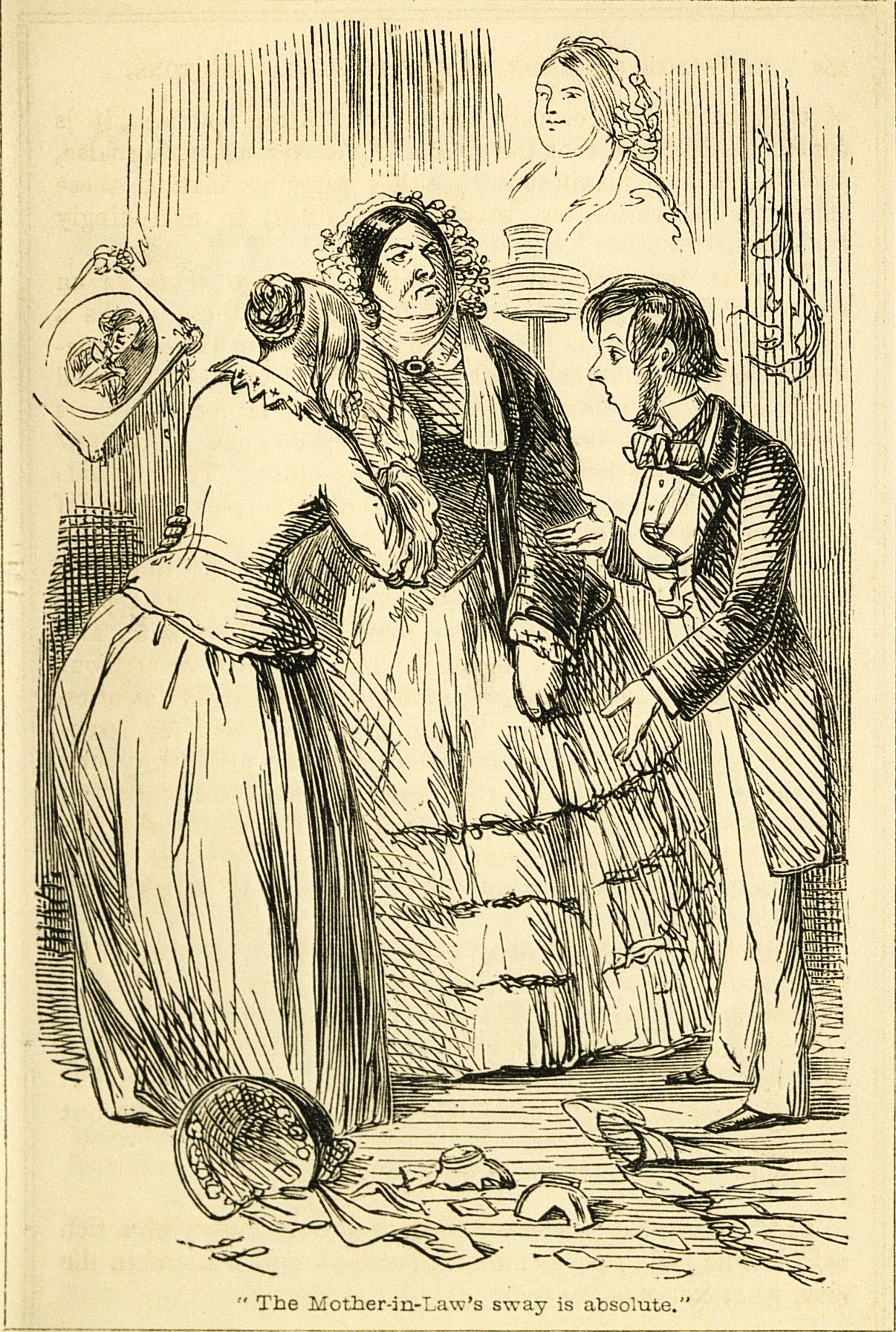
↑
- 155 -
{f.155}
 PUNCH GRAVIDUS PLENO JECORE AD FONTES LEAMINGTONIAS.[Comment by SL] : This poem parodies Horace’s Ode 3.13, playing upon the original poem’s eroticism. See Horace’s original poem via the Perseus Digital Library.
He never could address you now as dulci dignæ mero :
Like that which Horace sang, you gleam splendidiores vitro,
But ah ! his spring was not, like you, what’s call’d salino nitro.
Oft as he quaff’d the cooling draught, the Roman bard would vaunt his
Sweet stream had never felt the ray Caniculæ flagrantis ;
But I would bless that star if, like a dogstar in the manger, he
Would quite dry up those briny springs, which, doubtless, nescit tangere.
The Roman loved his stream so well, that he vowed, as once he drank of it,
Lascivi gregis soboles should die upon the bank of it,
But Mrs. Wood ! — from whose fair hand I take the horrid pocula,
Which, shamed by thee, I gulp in haste, hard striving to be jocular —
If thou wilt do, what every day to me a greater labour is,
Not with a kid, but with kid gloves in plenty cras donaberis.
Bandusia fessis tauris was beloved, et vago pecore,
And thou by Bulls dyspeptic fatigatis gravi jecore ;
But Punch has drawn the parallel as far as he is able, he
Can never say thy frigus is in any way amabile.
Then Fare thee Well ! Sweet Mrs. Wood ! had Punch the dura ilia
Messorum, these, his carmina, had been less atrabilia.
But though he leaves thee with regret, charm’d with thy many graces,
He dreads the cavos saxos whence desiliunt loquaces
Lymphæ, in which magnesium and calcium and sodium
Make up a mess that he must hold in everlasting odium.
↑
- 156 -
{f.156}
 LOVE’S RATIONAL DREAM.
And our hands will be united, as I trust our hearts are now.
We’re to make each other happy, like the lovers in a play,
Or a novel, at the end of it. My girl, I hope we may.
Let us see what lot awaits us, if that lot is to be bliss ;
The bliss all lovers talk about, though few know what they mean,
For the most are soft and green, my love, are very soft and green.
Nine evenings out of ten my love, you’ll be forced to stay at home.
Trees breathe carbonic acid gas, and dews strike damp and chill,
You’d be catching cold in the head, my love, and I should have you ill.
And sit admiring Jupiter, and contemplating Mars,
Folks abandon this amusement, after marriage, very soon,
And wife and husband cease to take an interest in the moon.
We shall not greatly feel disposed to blackbirds to attend :
Small pleasure shall we take in hearing linnet, lark, or thrush,
And for little Robin Redbreast we shall hardly care a rush.
Nor wander much among the groves, nor loll about in bowers,
- 157 - {f.157}
Nor give our ears to lowing herds, or our minds to fleecy flocks.
And thou wilt be too much engaged at home, the house to leave ;
On Sunday only shall we have, for exercise and air,
Supposing we are well enough, an hour or two to spare.
Thou wilt not often sing to me, I shall not hear thee play :
Most likely I shall fall asleep, and thou’lt be weary too ;
Besides, thou’lt not keep up thy music, — women never do.
And think that I am earning a subsistence for us there ;
And thine will be to render me that rare and happy man,
Whose wife his income makes to go as far as e’er she can.
Whilst both in peace and harmony partake their quiet meals ;
Of which by constant industry the substance I provide,
To be by thine economy, and thy housewifery applied.
That my egg is neither boiled too hard, nor yet too soft for me.
Whilst other men on cold meat dine, for me thou’lt always do,
Or have done, something relishing, — a hash, a broil, a stew.
My stockings thou wilt darn, love, and my linen thou wilt mend ;
Thou’lt see no button’s wanting to my collar, front, or wrist :
Thy happiness in kindly cares like these will much consist.
To get my physic for me in the middle of the night ;
To bind my brows with flannels, make my gruel and beef tea :
But I hope thou’lt have as little of this pleasure as may be.
Or run for him in time of need — and I will pay his bill ;
Thus one another’s troubles shall we lighten, as they say,
Enjoyment more than quite enough once only in a way.
Increased will in proportion be with our little girls and boys ;
At least if with prosperity sound health we shall combine,
And if thy temper turn out good, and my own prove sweet as thine.
A FEW IDLE THOUGHTS,
(By one who has nothing better to do.)
Promising actors who promise the most, generally perform the least.
A Sibthorp[Comment by SL] : Charles de Laet Waldo Sibthorp (1783-1855) was the Member of Parliament for Lincoln from 1826-1832 and from 1835-1855. He was on the extreme right-wing of British politics and vociferously opposed Catholic Emancipation, the Emancipation of the Jews in England, and the 1832 Reform Act. He was regularly caricatured in British periodicals, including Punch. His name also appears on pages 17 and 23 of this volume. For further information, see J. A. Hamilton and John Wolffe, ‘Sibthorp, Charles de Laet Waldo [known as Colonel Sibthorp] (1783–1855), Politician,’ Oxford Dictionary of National Biography, 23 Sep. 2004. in the House of Commons is like a man on the top of the Monument — everything appears small to him, and he appears small to everybody.
Persons who lose their tempers in arguing, and begin stamping, must imagine that the stamp will give their nostrums circulation in the same way that it does with a box of Quack Pills.
A Critic is a sign-post in the paths of literature, pointing out the way for others to go, but never following it himself.
The Links of affection require two flames before they will burn properly — and their burning depends entirely upon the way in which you pitch them.
The Cloak of Religion is too often the Cloak of Hypocrisy turned — but the turning is done so cleverly as even to deceive those who have the best knowledge of the Cloth !
↑
- 159 -
{f.159}
 Prophecy
For 1855.
Composed by the united labours of Zadkiel, Uriel, Gabriel, Ariel, and Raphael,[Comment by FB] : Zadkiel, Uriel, Gabriel, Ariel, and Raphael are archangels, or angels of the highest rank in the Christian hierarchy of angels. and revised by Mr. Punch.
stricken, sinks moaningly into an abyss of snow. The stars of November are silent, but over the dark tide comes a murmur, and spirits are wandering with candles in their hands along the now granulated Milky Way. Lastly, December, scowling, but with his hands full of silver and gold, passes moodily over the expanse, his blue garment revivified with styptics and his belt sparkling with the promise of the effulgent horizon.
[To be explained in our next.]
THE LONDON BOY.
Over bar and over railing,
Thorough kennel, thorough gutter,
Bread and cheese, or bread and butter,
Or a tatur all-hot, munching ;
Orange sucking, apple crunching,
Hardbake down his weasand ramming,
Lollipops or toffee cramming,
Mischief, prog, and dirt his joy,
Leaps and runs the London Boy.
In among the heels of horses,
Now he pelts him, and his missiles
Break a window : then he whistles.
Now he bids the tipcat[Comment by FB] : Tipcat (or tip-cat) is a traditional outdoor game in which a small piece of wood (the ‘cat’) is struck or ‘tipped’ at one end with a stick so as to spring up, and then knocked to a distance by the same player. For further information, see Oxford English Dictionary, 'tipcat (n.).' fly,
Putting out some person’s eye ;
Now he cheers some splendid marriage,
Then gets up behind a carriage.
Somebody he must annoy,
Beadle, thrash that London Boy !
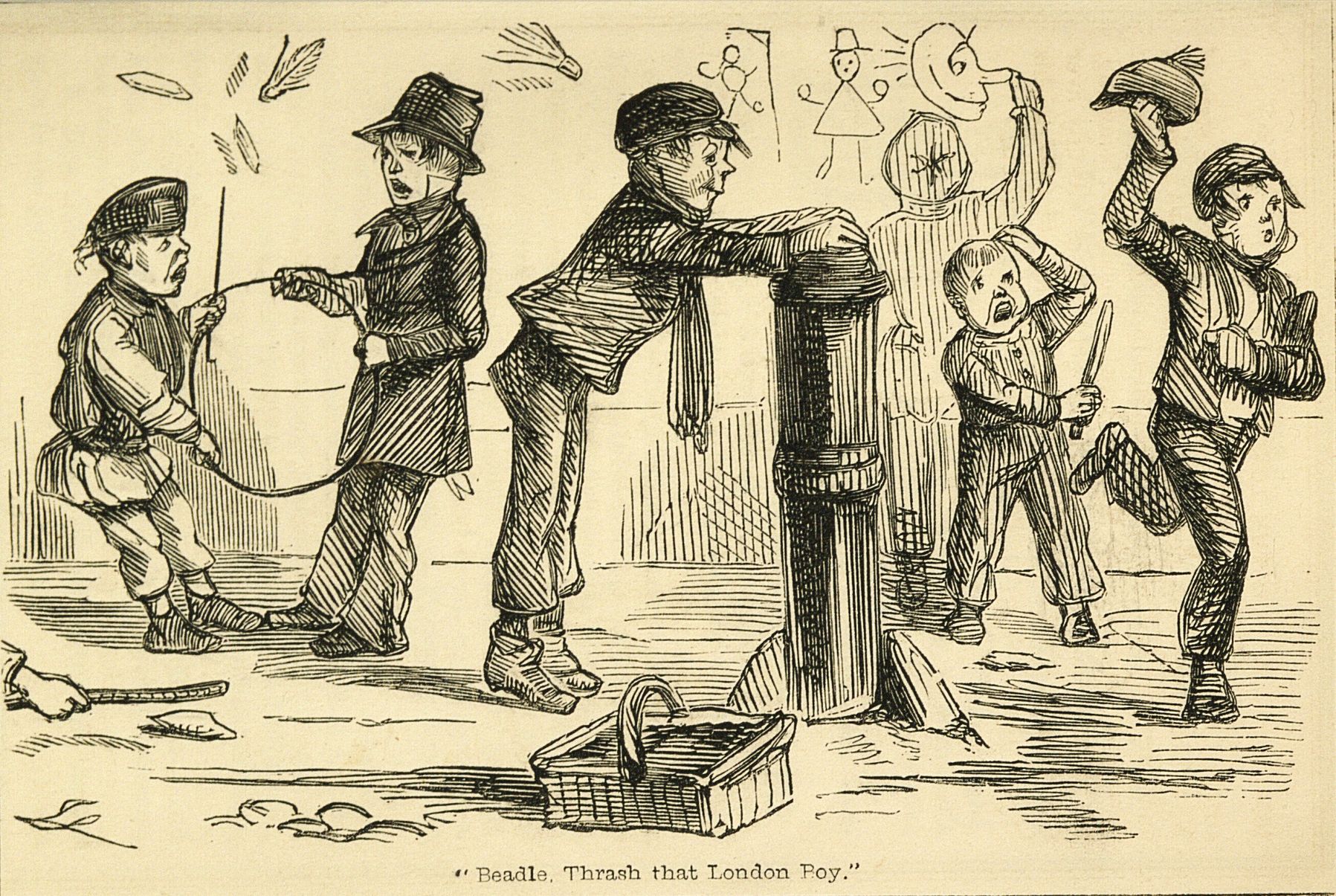
↑
- 161 -
{f.161}
 CHRONOLOGY OF THE PAST YEAR.
comprising all the most important events of 1854.
Carefully compiled from public and private sources.
4. John Richards, of Esher, barber, aged 45, for a trifling wager cuts a customer’s hair in five minutes, eleven seconds, and drinks his health immediately afterwards.
5. The Browns’ baby is vaccinated, from a child of their laundress, at Peckham.
7. Two panes of glass broken at the Polytechnic Institution, it is conjectured by a sudden escape of cats.
9. Fleet Street taken up to be repaved, for the first time since 1853.
24. Heavy rain fell in the neighbourhood of Chichester and Haverfordwest, and the oldest inhabitants got wet.
29. A remarkable meteor was seen over the north of London. It resembled a comet, ascended with a rushing noise distinctly audible, and appeared to burst, discharging a mass of coloured balls of fire, which speedily became extinct. Near the spot was next day discovered a deposit of wood, in the form of a lath about a yard long, which was sent to Professor Airy, who thrashed the messenger therewith.
31. Parliament meets, and both Houses pass unanimous resolutions that nothing shall be done until the 12th of August.
February 4. An exceedingly fine infant, aged six months, the child of poor but respectable parents resident in Southwark, falls out of bed into a basket of linen just home from the wash, and is unhurt.
5. Fogs prevalent. Mr. Williams, of the Paragon, Old Kent Road, runs against Mr. Samuels, of Rotherhithe Crescent, but escapes with the loss of his temper.
8. The new curb stones along Cannon Street are thrown open to the public.
- 162 -
{f.162}
17. The Browns’ baby begins to feel its feet.
20. Mrs. Edwards, of Stamford Street, has in her coals.
21–28. In consequence of the severity of the weather the police-magistrates receive several postage stamps for the poor-box, and expend the same in writing to thank the benevolent donors.
29. There is no such day.
March 2. The mercury in the thermometer of Professor Fuddles, of Hammersmith, suddenly falls from 32° to the oilcloth on the floor, in consequence, as is supposed, of a dig from the elbow of that eminent savant.
5. A Lascar, at Chelsea, in revenge for the refusal of a passer-by to give him anything, throws himself into the mud of the river, and then runs a muck into the next public-house.
7. The Browns’ baby walks with the aid of a chair.
17. Alderman Chawle, of Liltringham, his lady, and family, visit St. Paul’s Cathedral, and express much approbation of the architecture of that sacred fabric.
27. A life-guardsman, endeavouring to plumb the tepid bath in Holborn, before walking in, his foot slips, and he is precipitated to the bottom, a depth of nearly four feet.
April 1. The Chancellor of the Exchequer receives a cheque for £109 19s. 6d. as conscience money, being arrears of income-tax, and pays the same into his bankers’.
2. The Chancellor of the Exchequer acknowledges the cheque in the Times.
3. The Chancellor of the Exchequer is apprised by his bankers that the cheque is a hoax. He remarks that the sender is not such a fool as the right honourable gentleman imagined, when deeming the document genuine.
11. A copper coin bearing the legend “Georgius III. D.G.” is discovered in the drawer of an old washhandstand in Wardour Street. It is supposed to have been there for some time.
22. Mrs. Edwards, of Stamford Street, has much reason to complain of those coals.
23. The Browns’ baby tumbles down stairs.
29. The day seems likely to be wet, but clears up towards the afternoon.
- 163 -
{f.163}
May 9. Colonel Spilk, the veteran gastronomist, eats six oyster patties in six successive minutes, and is so little exhausted at the close of the feat that he swallows half a pint of Madeira, and an anecdote in the Morning Advertiser.
12. The Browns’ baby cuts its first finger.
22. 43,009½ persons walk over London Bridge. We learn from the Economist that of these 2134 wore white hats, 163 had wide-awakes, 4081 had caps, and the remainder the ordinary black beaver.
31. A country curate, visiting the city, and entering a mock auction-room, is severely bitten by a Jew silversmith, but recovers on the prompt application of a policeman.
June 8. A hen, in the possession of a respectable farmer in Glamorganshire, lays an egg, which upon examination is found to be perfectly sound, and which is actually eaten by its owner in the presence of credible witnesses.
9. Miss Smith, of the Grecian Saloon, is encored three times in the song, “I met him where the Bugles Blowed.”
18. The Browns’ baby cuts its fourth tooth.
21. The south wall of the yard of Wednesbury Workhouse whitewashed, and in celebration of the event every pauper inmate, male and female, including children, receives an order not to go near the wall until it is dry.
30. A tradesman in the Strand waits upon a barrister in the Temple, and requests payment of his bill, having a large account to make up on Tuesday. By a singular coincidence, the barrister has just reduced his balance at the bankers’ to next to nothing, and deeply regrets that his creditor did not call on the previous day.
July 1. Mr. Lobscouse, a highly respected inhabitant of Canterbury, finds a bad sixpence in his back garden. On the following Sunday he gives it to his youngest child to put into the poor’s box, but the latter, attempting an investment in goodies, the baseness of the coin and of the charitable party become simultaneously apparent, and the child is whipped.
7. The Browns’ baby throws its shoe into the fire.
29. The newly elected Mayor of Portington, Beds, proceeds
- 164 -
{f.164}
to dine with the Corporation. He goes in a state coach, and comes back in a state of intoxication.
August 7. Mrs. Edwards, of Stamford Street, finds that her coals are getting to the smalls, and orders more, in the meantime having them in by the sack.
12. Parliament meets, and the Houses having exchanged congratulations upon the fidelity with which they have adhered to the resolution of the 31st January, adjourn until February next.
20. Mr. Green having received three orders for the opera from a facetious friend, brings over his two rich old maiden aunts from Wandsworth to Covent Garden, and finds that the season having concluded, the house is shut up.
21. The Browns’ baby scratches a good deal.
28. Fight in Plumstead Marshes, between the Jewsbury Jobber and Lanky Sluggs, for £25 aside. A more dashing mill is not recorded in the annals of the Fancy. The Jobber fell every round, without a blow, but Lanky, who had sold the fight, in his extreme anxiety to “behave honourable” and lose it, hit foul thirty-seven times. In the thirty-eighth round, an exceedingly hard hit from Sluggs in the small of the Jobber’s back, was pronounced decidedly irregular, and the victory was adjudged to the Jewsbury pet.
11. A singular development of animal instinct is recorded at Margate. A visitor, resident in Hawley Square, takes out his favourite spaniel for a walk. When they reach the fort, rain comes on, and the faithful and sagacious animal instantly runs home again.
14. The Browns’ baby leaves off caps.
16. Collision on the river. The Citizen steamer Fishmonger bumps the coal-barge, Isabella and Bill, near Lambeth.
7. The driver of a cab finds a bracelet therein, which he puts into his pocket, intending to convert the produce to his own emolument. But while waiting for a fare, he reads the Family Herald,[Comment by FB] : The Family Herald or Useful Information and Amusement for the Million (1842-1940) was one of the most popular cheap and general interest magazines of the mid-nineteenth century. It was owned by George Biggs, edited by James Elishama Smith (known as ‘Shepherd Smith’), and printed by Bradbury & Evans, Punch’s owners and publishers. In 1855, the Family Herald’s circulation reached 300,000. See Laurel Brake and Marysa Demoor, eds., Dictionary of Nineteenth-Century Journalism in Great-Britain and Ireland (Academia Press and The British Library, 2009), 213-4. The Family Herald was also the first publication worked entirely by female labour on the pianotype, an image of which featured in the masthead of the journal. In his diary for the period, Henry Silver notes that Punch collaborators generally despised this publication. See the Complete Transcript of Henry Silver’s Diary by R. G. G. Price, Punch Archive, British Library, London. Entry for 18 November 1863. and is so struck by one of the moral adages in the exterior, Honesty and Poverty is better than Riches and Guilt, that he instantly drives to the Times
- 165 -
{f.165}
Office, advertises the article at his own expense, and refuses any reward but that of his approving conscience.
12-15. A fishmonger in the Haymarket attracts much custom by exhibiting an oyster which mews like a cat. The deception was long profitable, but it was finally discovered that the oyster was placed close to the slit made in the counter for passing the money into the till, and that a hungry kitten was imprisoned in the latter.
19. The Browns’ baby distinctly remarks “Adun.”
7. All the houses in Exmouth Street, Walford Road, Bermondsey, have their doors newly painted, and their knockers blackened.
9. The Browns’ baby grows a regular nuisance.
11. The Vestry of St. Brian the Bigger unanimously vote that the rector of the parish be requested to abstain from the Puseyite custom of wearing a flower in his button-hole, which renders it quite impossible for his parishioners to profit by his discourses. The rector assents, but insists, in return, that the parish shall have his surplice washed oftener than once in six weeks. On this a poll is taken, and the additional washing carried by 709 to 653.
20. An American engineer, self-educated, invents a vessel which will cross the Atlantic in a week, without coals, the motive power being supplied by galvanised gutta-percha.
December 1. Sir Alexander Balliol discontinues his shower-bath for the winter.
9. A large number of respectable families are plunged into affliction by the receipt of letters from scholastic establishments announcing that the vacation will commence on the 16th instant.
11. After to-day, no more to be heard of the Browns’ baby.
19, 20. Mrs. Wapples gives her husband cold meat two days running, and excuses herself by saying that the Christmas dinners are coming, when he will have all kinds of good things.
21. Mr. Wapples leaves town to spend the Christmas anywhere but with Mrs. Wapples.
22-24. Mrs. Wapples’s agony and remorse.
- 166 -
↑
{f.166}
25. An affectionate and penitent letter has brought Mr. Wapples home this Christmas day, but it is hoped that the lesson will not be lost upon his wife.
31. Publishing before that date, we decline recording what took place upon it.
MRS. FRISBEE ON THE FASHIONS.
To see a minx in all the jinks, which is considered now the fashion.
There’s half the head without a shred or scrap of anythink upon it,
So bold and gay and fly-away, with that ridicklus fall-off bonnet.
All back behind ! to speak my mind, I say they looks a deal too forrad.
I can’t abear them hats they wear, which is as bad on the contrairy,
With great broad brims ;[Comment by BQ] : In the 1840s bonnet brims extended forward beyond the sides of their wearer’s faces, blocking peripheral vision. However, in the 1850s bonnet brims shortened and bonnets themselves were worn further back on the head, exposing a woman’s hair. Here Mrs. Frisbee bemoans this change in fashion, commenting on specific elements she finds objectionable with the new styles. For more on women’s fashion in the 1850s, including bonnets like these, see FIT’s Fashion History Timeline. such silly whims quite puts me into a quandary.
Stuck on their heads so wide it spreads, it looks just like a wash-hand-basin.
This is their pride at the sea-side, at picnics and all them fine doings ;
I hate sich airs, and I compares their hats and them to musharooins.
Which, for our sect they’re incorrect, and suitable to no young person,
- 167 - {f.167}
What next, indeed ! I’d have them flea’d, the pusses, with their imperant faces !
It makes me mad, and wish I had a rolling-pin or broomstick handy.
Then, round about, their frocks plinn’d out, before as well, but chiefly arter,
Does worrit me to that degree, I feels as if I was a Tartar.
About with chains and chatterlanes, and crinkum-crankum and fandangoes :
But them long gownds all folly crownds — them nasty, dirty trapesing dresses,
That hides their feet, and sweeps the street, and mops up every kind of messes.
I’d try to sweep the streets more cheap : why don’t the hussies wear their pattens ?[Comment by BQ] : Overshoes meant to keep their wearers’ footwear from becoming wet or muddy outdoors. From the 1600s pattens often were made of wood soles and iron ring bases; by the 1850s they were not considered refined or fashionable. See a pair of pattens from this era via the Metropolitan Museum of Art.
That’s how I goes, thof, gracious knows, I
Suppose the men makes fun, what then ? — A fig, says I, for all sich fellers !
Walce a dew tong ; which I think wrong, with every kind of gallivanting.
In my young days all sitch queer ways would have made folks cry, Highty, tighty !
Ah ! — when they be as old as me, the gals p’raps wont be quite so flighty.
↑
- 168 -
{f.168}
 THE EXPERIENCES
OF A DISCONTENTED OLD BACHELOR. ÆTAT. 64.
I never wanted any gruel, or something hot, for my supper, but that the kitchen fire had always “just gone out.”
I never inquired at a Circulating Library for a particular book, but that they “expected it in directly.”
I never knew a joint at an eating-house that was not “in exceedingly good cut.”
I never went in a violent hurry to the City, but some of the streets were sure to be blocked up.
I never knew, or saw, anything more of any umbrella I had accidentally left behind me.
I never knew a horse, that was said to be “playful,” that didn’t kick ; and it is the same with a child.
I never knew a married couple who “my-loved,” and “my-deared” and “my-ducked” one another to a fulsome extent in public, who didn’t quarrel in private.
I never knew a man receive “private information” for a race, but he was sure to lose in betting upon it.
I never knew a lady, who said she would only take “five minutes” to put on her bonnet, who really took them.
I never knew a tradesman bother me for money, but he had “a little bill to make up.”
I never knew the dinner to be ready precisely to a minute, but it was sure to be kept waiting for some fashionable fool who was late.
And lastly, I never knew a young man keep the dinner waiting, but he was sure to be some conceited jackanapes, who thought considerably more about himself than the dinner.
↑
- 169 -
{f.169}
 ACCIDENTS
that do occasionally occur in the best regulated families.
Your wife having provokingly “a sick headache,” when you take a friend home with you to dinner.
The servant neglecting to say that “the tea is ready,” when the gentlemen have been sitting later than usual over a bottle of very old Port.
A young lady spraining her ancle, when a disagreeable humdrum partner goes up to ask her to dance.
The area-gate not being locked, just after a fresh barrel of beer has been taken in.
That “stupid servant” leaving her things behind her whenever a vulgar-rich woman is surprised with a stocking on her hand in the act of mending it.
The key of the piano being mislaid, if a professional, or first-rate singer happens to be in a house where the young ladies are musical.
There being no cheese in the house, when a gentleman expresses a wish for a Welsh-rabbit[Comment by SL] : A Welsh rabbit, also known as a Welsh rarebit, is a dish of hot cheese sauce served on toast, often made with ale, mustard, or Worcestershire sauce. about two o’clock in the morning.
There never being anything but cold meat, as often as a poor relative is pressed “to stay, and take pot-luck.”
Your wife having “no dress fit to go in,” whenever there comes an invitation she doesn’t care much about, but which you are most anxious, for particular reasons, she should accept.
The young ladies being “very poorly — in their bed-rooms” — in the event of a vulgar acquaintance (“that horrid Mrs. Elmore !”) happening to call.
There being a smell of tobacco-smoke in the dining-room, if the gentlemen have been stopping up rather late over-night.
The Doctor being sent for to see what is the matter with the children, the morning after Christmas Day.
The Cat being more than usually hungry and mischievous in the kitchen, where “followers” are allowed.
↑
- 170 -
{f.170}
 THE LOVELY GIRL.
A Narrative Poem of High Life.
by captain the hon. herbert c——.
With which Lord Jones the season crowned,
When Royal parties came in state,
And half the Peerage bowed around.
Her snow-white arm outflashed with gems,
Her jet-black hair was twined with pearl,
And priceless laces fringed the hems
Of silk that robed the Lovely Girl.
Lord Jones’s halls were bright with flowers,
And Weippert’s band, and Grisi’s song,
And Gunter’s ices, sped the hours.
And when they formed the third quadrille,
Her partner was an ancient Earl,
And, happy lot, ’twas mine to fill
A place beside the Lovely Girl.
With scorn she scarcely cared to hide —
And many a glance she ventured at
The pale young Guardsman by her side.
She knew me not, yet well I wot
For me she shook each glossy curl,
For me she said, “It’s very hot,”
With look piquante — the Lovely Girl.
“Why don’t you get presented, eh ?”
A mutual friend afforded aid,
And Herbert Clare knew Laura May.
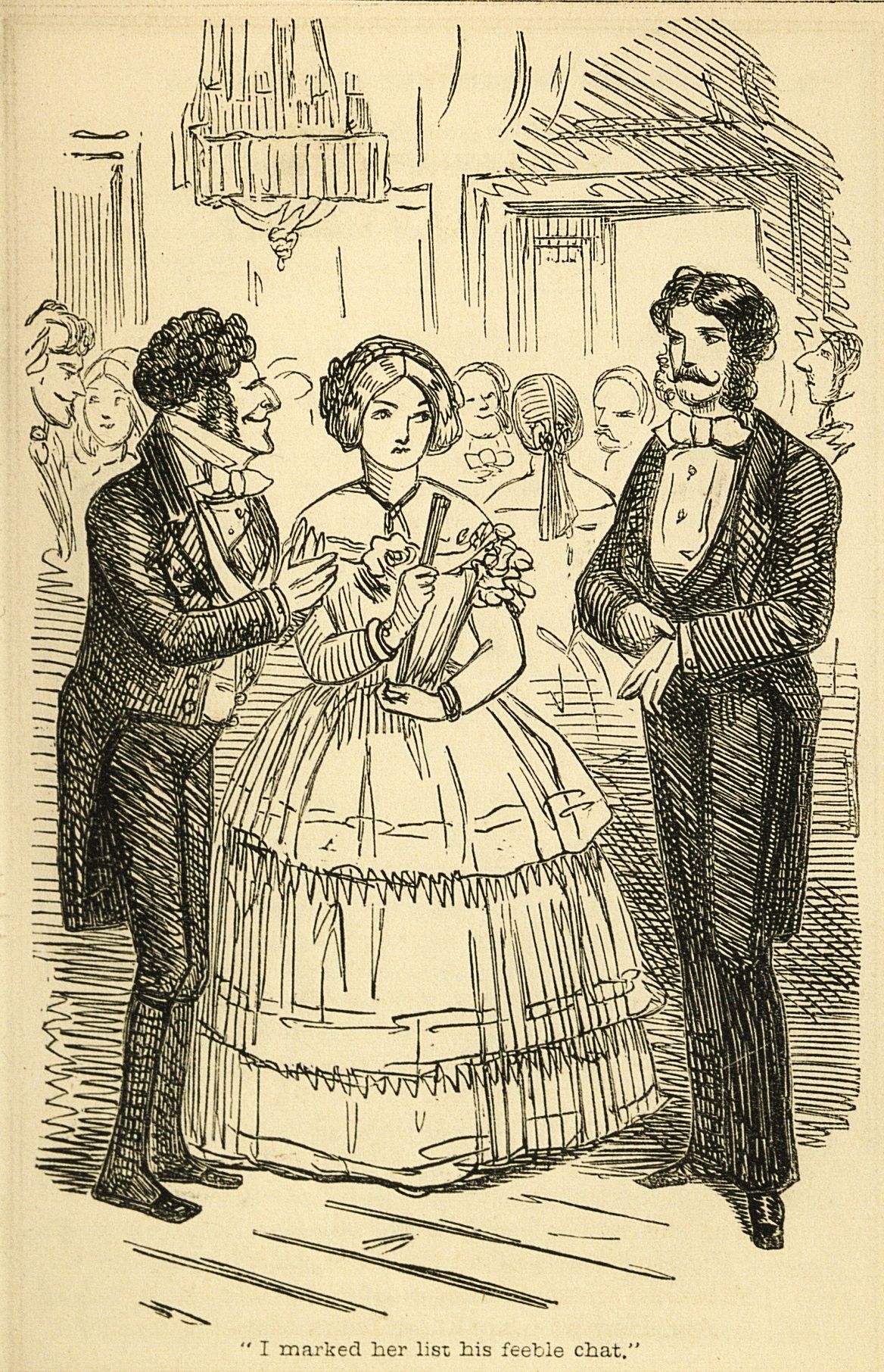
I bore her to the waltz’s whirl,
And at the supper’s glittering board
I sat beside the Lovely Girl.
A RELIC FROM THE TOMB OF MEMORY.
(Communicated by Mr. Anthony Furzewood, Bachelor.)
“My dearest, dearest Angelina !
“There surely is an influence — an emanation — an, I know not what — which permeates and transcends, and links together, and wraps in an invisible mantle all creation.”
“What nonsense have you got there, child ?” I said.
“I don’t know, Uncle,” she said, “there’s no name to it.”
“No, I should think not,” I said, “anybody in his senses would be ashamed to put one.” Then she read on —
“Dearest Angelina — last night I was looking at the moon” —
“Booby ! — hadn’t he anything better to do than that ?” I said.
“— looking at the moon : and that beautiful, that heavenly object strangely reminded me of You” —
“Strangely enough,” I said. “Wonder it didn’t remind him of green cheese.” She proceeded —
“Thou wilt believe me, dearest, when I tell thee this” —
- 172 -
{f.172}
“Thee and thou !” I said. “Why he was just before addressing her in the second person plural, and now he changes all at once to the second singular. Suppose he turned Quaker in the middle of his letter. Go on.” On she went again.
“— for the reflection of that lovely countenance in the mirror is symbolized by that fair, soft image of celestial brightness, glassed in the smooth and placid bosom of the tranquil stream.”
“What an ass with his adjectives !” said I. She continued :
“Beautiful moon ! Image of transcendent loveliness and unimaginable bliss !”
“Image of what’s unimaginable — here’s nonsense !” I said. She went on again —
“And yet, dearest, what an eccentric being is man. The most ludicrous ideas will intrude upon his loftiest musings. Whilst gazing on that lovely moon, the absurd thought of Mooncalves occurred to my mind.”
“Sympathy with his fellow creatures,” I said.
“And calves,” she proceeded, “remind me of something thou art fond of — and I love it too, the more for thy sake — and when — oh ! shall that happy time ever arrive ? — we will have it once a week, and always stuffed as we both like it, dearest — veal ; a fillet of veal. I wonder whether the beings who inhabit the moon are blessed with veal.”
“Give me the letter, child,” said I, “and bring me my specs.” I love veal, myself, and the word suggested a train of thought like that with which you hunt up a dream. I took the letter and put the spectacles on. Egad, Sir, the letter was in my own handwriting ! In fact, it was mine. I had written it between forty and fifty years ago ; but it was never sent ; for before it was finished, Angelina jilted me for Captain Scamp, of the 146th. I burnt the rest of my letters, which she returned, but forgot to burn this one : and in course of time forgot all about the matter.
What fools many of us have made of ourselves, Sir, when we were young men !
↑
- 173 -
{f.173}
 PATTERN PEOPLE.
(A leaf from the Note-book of our own Biologist.)
[Comment by BQ] : Compare this supposed biologist’s satiric tone and observations on gender and family norms with 'Marriage Ceremonies of the Great Britons' found earlier in this volume. The wife who doesn’t wash at home, and can manage a “cleaning” day without cold mutton : who is innocent of crochet, and will keep up her music as well after marriage as before it : who believes her husband when he tells her he has been “detained by business,” and will give him the latch-key rather than sit up for him : who doesn’t care for Chiswick, and considers that the opera is only meant for the aristocracy : who never bored her husband by making him go shopping with her, nor dragged him out at midnight to a remote “at home :” who does not object to the smell of a cigar, and can hear with equanimity that her husband has brought an old chum or two to dine with him : who never “for the children’s sake,” asks to go to the seaside, and when she travels can do so without fourteen band-boxes : must be a great blessing to her husband !
The young lady who doesn’t wear thin shoes, and will always rather walk than take a cab when shopping : who keeps an account-book in preference to an album, and will mend her stockings rather than do crochet : who thinks that ices and lobster salad disagree with her, and is blessed with a natural
- 174 -
↑
{f.174}
aversion to the polka : who will wear a pair of white gloves twice, and can even walk down Regent Street without wishing for a new bonnet : she is the girl for a bachelor to be polite to !
The medical student who prefers tea to beer, and eats penny buns in preference to oysters : who never plays pool, nor reads Bell’s Life[Comment by FB] : Bell’s Life in London and Sporting Chronicle (1822-1886) was a newspaper specialised in sports news. It also published pieces about politics, the royal family, the theatre and crime. It was lavishly illustrated, featuring woodcuts, engravings and cartoons. See Laurel Brake and Marysa Demoor (Eds.), Dictionary of Nineteenth-Century Journalism in Great-Britain and Ireland, Academia Press and The British Library, 2009, pp. 46-47. at Lecture : who is innocent alike of the inside of a station-house, and the outside of a horse, and couldn’t sing a comic song to save his life : who wears Bluchers as being less expensive than Wellingtons, and has never “put on” any gloves but those of Berlin : who is only acquainted with Cremorne by hearsay, and believes that they only draw cyder at the Cider Cellars : who never “blacked a cutty,” nor called his hat a “tile,” and is wholly unacquainted with the meaning of “tick :”[Comment by FB] : ‘To go on tick’ and ‘to run on/upon tick,’ were popular Victorian colloquial expressions meaning to buy on credit and to run into debt, respectively. must be a great comfort to his parents !
SONNET WRITTEN IN THE REFRESHMENT STALLS, CRYSTAL PALACE.
That triumph rare of glazerie and grub,
Where Smithfield Beeves in savoury sirloins smoke,
And Bulls of Babylon most people snub.
Here mind and body, both alike are fed
With food unmatched in quantity and kind,
And, after weeks of proof, it must be said
The body takes more stuffing than the mind.
Oh, glorious Paxton, knowing Laing and Geach !
Your mingled piles of Frescoes, Fawns, and mutton,
A studious youth, by grand examples, teach
Either to be an artist — or a glutton.
Blackwall with Baalbec, Rome with Richmond vies,
In rival wealth of monuments and pies.
↑
- 175 -
{f.175}
 VEGETABLE MUTTON ; OR BEEF WITHOUT A BUTCHER.[Comment by BQ] : Intended as absurd satire, this piece about the threat of vegetarianism and fake meat replacing beef proves oddly prescient with its formulas for creating meat substitutes, similar to products now being created and sold in the twenty-first century. More broadly, periodicals throughout nineteenth-century print culture railed against vegetarians, their eating habits, and philosophies. Take, for example, the 1860 review of The Principles and Practice of Vegetarian Cookery in The Athenaeum (no. 1729, 15 Dec 1860), which states that '[t]he vegetarian doctrine is not new; and it is only wonderful that enough people who believe in it survive to patronize a cookery-book intended for their particular service.' The writer then goes on to explain how morally there is no difference between an egg and a chicken, defend meat eating as vital for health, and finally states: 'We warn the public not to listen to the blandishments of stewed carrots and parsnips, fried cauliflowers and apple possets. These things may please the palate, they may fill the stomach, but they cannot supply to material of muscles and brains.' For more on the spread of vegetarianism in England, see Charles W. Forward, Fifty Years of Food Reform: A History of the Vegetarian Movement In England (1898).
The formula of flesh is C48 H39 N6 O15, that is to say, Carbon, Hydrogen, Nitrogen, and Oxygen in the proportions stated, plus an additional quantity of H and O in combination as water. Such are its ultimate elements. It does not follow that by putting water into a vessel, adding charcoal to it, and pumping into it hydrogen, nitrogen, and oxygen gas in the above proportions, you can make a quantity of meat, even if you galvanise the mixture ; but perhaps the discovery of some agent yet more subtle than electricity may one of these days enable us to compound venison itself out of air, water, and cinders.
By means, however, of commingling the proximate, or immediate constituents of flesh, there is good reason to hope that science will accomplish meat-making before long. It will only be necessary to determine, by accurate analysis, the exact proportions in which those substances united, constitute the different kinds of flesh, in order to be enabled to make any description of meat that may be desired. Then, suppose a family to be ailing, and a medical man to be called in, who discovers the cause of its illness to be want of proper nourishment
- 176 -
{f.176}
in the form of animal food, the doctor would quietly take pen, ink, and paper, and write off some such a prescription as the following : —
℞ : Fibrinæ ℔ iij
Albuminis,
Gelatinæ, a̅a̅ ℔ iss
Osmazom : q : s.
Sodæ et Potassæ Muriat :
Sodæ et Potassæ Carb :
Sodæ et Potassæ Phosph :
Sodæ et Potassæ Sulph : a̅a̅ gr : x
Calcis et Magnesiæ Carb :
Calcis et Magnesiæ Phosph :
Ferri Phosph :
Peroxid : ejusdem a̅a̅ gr ij
Adipis Agarici
Aquæ, a̅a̅ q : s. M : et optime comprime in vase idoneo, ut fiat Crus Carnis Ovillæ, pro prandio hodiè cum Pomis Terræ comedend :
That is to say, ladies, Take the various substances above enumerated, Fibrine, Albumen, Gelatine, Osmazome ; Muriate, Carbonate, Phosphate, and Sulphate of Soda and Potash ; Carbonate and Phosphate of Lime and Magnesia ; Phosphate and Peroxide of Iron ; Mushroom ; Fat and Water, in the quantities (conjecturally) specified. Mix and press well together in a proper vessel — a cheese-press of suitable shape would perhaps answer the purpose — so as to make a Leg of Mutton to be eaten up, with potatoes, this day for dinner.
The flavour of meat depends, in some degree, on its grain : and this peculiarity, in forming a given species of meat, might doubtless be imitated by the judicious graduation of the pressure applied to the materials. When it is a fact that the most delicious perfumes exhaled by the sweetest of flowers can be obtained by means of chemistry from substances the most unpleasant ; when, for instance, it is notorious that the hair and the handkerchief may be imbued with fragrance which
- 177 -
↑
{f.177}
chemical science has derived from “the nasty pitch and tar,” it may reasonably be hoped that by the nice admixture of the elements of flesh, the chemist may succeed in producing a material equivalent in taste, odour, and all other properties, to any part of any animal. For, if the stomach of the ox makes beef out of grass, why may not the Adept ? Thus the shambles will be exchanged for the laboratory, and the druggist will succeed to the butcher’s business.
STANZAS FOR THE SENTIMENTAL.
Thy prayer alas ! I dare not grant :
Though love would fain persuade “I may,”
Stern Reason darkly hints, “I can’t.”
That thus thy scissors I reject,
Nor that ’tis for some fairer friend
That I this love-lock keep, suspect.
Or hold the offering too dear :
Trust me, thy longing for that hair
Is sweetly grateful to this ear.
Tells me thy pang, for words too big :
’Tis sad to forfeit thy esteem,
Yet know the truth — I wear a wig !
↑
- 178 -
{f.178}
 EVERYDAY REFLECTIONS.
(By one who has Every day leisure to make them.)
If an ordinary man’s life is, as poets tell us, “but a span,” what fraction of an inch would describe correctly a frequent Railway traveller’s ?
As mud is to Eels, so is mutton to genius. Who shall say how much a poet’s “inspiration” is owing to his cook ?
Would any sentimental young lady know how perishable is love, let her look at her last season’s “love of a bonnet.”
Happy is the man who can hear the knock of the tax-gatherer without finding it necessary to instruct his servant that “master’s just stepped out !”
Let not the handsome over-congratulate themselves on their good looks. The possession of beauty has at least this drawback : they who have it cannot know “the pleasures of the plain.”
Even as a good dinner oftentimes turneth away wrath, so will cold mutton oftentimes provoke it.
Your cabman is the most aspiring of mortals. No matter what his rank may be, he is always looking for a hire.
Many a tradesman has been ruined by trusting to appearances. Were Archimedes now living, he would soon discover that a “respectable appearance” is the only που στῶ he would require to move the world of credit.
The Latin Grammar tells us that “Avida novitatis est gens humana.” Might not the Sage have written this in the inspiration of the moment when his wife discovered that she wanted a new bonnet ?
- 179 -
{f.179}
The man who is often “on a round of pleasure-going,” in the end generally finds it difficult to make things square.
Union is not always strength. Many an ill-matched couple have found their affections anything but strengthened by their Union.
The disadvantage of having a haunch of Venison sent you is, that you are forced to give a dinner-party to get rid of it.
There is one secret at least a woman can keep, and will : let Governments and census papers do their worst to worm it out of her. Where is the husband who can so far get admitted into his wife’s confidence as to know her real age ?
Our butcher’s bills would not be so heavy in the holidays, if our wives reversed the fashion of putting on the puddings after meat. How many a slice of mutton might be saved by the simple prefix of a hard dumpling !
The man who lives upon his “expectations,” generally dies in debt.
Even a puffing tradesman may sometimes understate himself. How frequently has cheap port “warranted 20 years in bottle,” turned out on drinking to be elder !
Happy is husband whose wife can exist without change of air in August !
How dependent is Nature upon the appliances of Art ! what were Beauty without the assistance of soap ?
There is a twofold advantage in wearing an old coat. It protects you from beggars ; and in wet weather will often save you cab-hire, as you’re not afraid the rain should spoil it.
The game of speculation is like that of snapdragon.[Comment by SL] : Snapdragon was a popular parlour game, described by Samuel Johnson in the eighteenth century as a game “in which brandy is set on fire, and raisins thrown into it.” It became particularly associated with Christmas festivities in nineteenth-century England. See Samuel Johnson, 'snapdragon,' A Dictionary of the English Language (1755), A knowing hand will often manage to pick up a plum, while a hasty one only burns his fingers.
Let not the frequenter of shilling ordinaries be envious. They who live well are the doctors’ best patients. Else how happy were the Aldermen who could eat pork chops for supper, and expect to sleep after them !
[2 liner]
It’s a Fact that you never met with a Cabman yet, who refused to take a cigar, or something to drink.
↑
- 180 -
{f.180}
 LOBLOLLY’S ODE TO THE SEA.
Thou doleful, dreary, dull, and dismal Sea !
Bosh ! who can any patience keep,
“Open” to hear thee called, that art the Deep ?
And then they say that thou art “blue,”
Which isn’t true.
As far, at least, as I have seen,
Thy common colour is a muddy green.
“Fresh,” too they call thee : that’s another flam,
For thou art salt as any ham.
“The Free” they term thee likewise — silly souls !
What would they have us understand ?
How has the Sea more freedom than the Land ?
Free ? don’t we make thee carry coals ?
Dost thou not serve us merchandise to float ?
Dost thou not burdens bear, in ship and boat ?
The slave of drink’s not free because he rolls.
Upon thy bosom — pooh ! the term’s absurd,
Bosom ? — no — back of course should be the word,
I say, of course,
In speaking of thee, Sea, as a Sea-horse.
Thou always dost disquiet mine inside.
I do not care to watch thy spray,
Or gaze upon thy sparkling foam,
I sit and wish I was away,
Or lie and long to be at home.
Meanwhile a dread sensation o’er me steals ;
They who have suffered it can only know
Nelson himself was ever so,
For some time after setting sail.
Thou Sea, how horrid art thou in a gale !
Make the heart bound, indeed ! I think
That thou dost rather make the stomach sink ;
The dizzy brain to whirl and swim,
And every sense, but that of misery, dim.
Oh ! talk not to me, I beseech
My friends — and they, good sailors all,
Perhaps are Eating in a squall ! —
They offer me a lump of fat
Bacon — or something bad as that —
Ugh ! Bacon ! — basin ! — none in reach —
I rush unto the vessel’s side,
(Out upon Bacon — and all dishes !)
And bending o’er the waters wide,
Preach
To the fishes !
I know not a remark that’s more profound,
When thou a ship didst briefly thus define,
“A prison, with the chance of being drowned.”
Rudders, and paddlewheels, and sails,
Make all the difference between ships and gaols,
Except that gaols are sweeter far ;
Because, of those abodes of crime,
At least the inmates don’t begrime
Their fingers with the “nasty pitch and tar.”
How can a man of any mind
Bear to “be cabined, cribbed, confined :”
Squeezed in a berth to sleep upon a shelf,
With but another board his nose between,
And some one else perched close above himself,
As in a catacomb at Kensall Green ?
You gasp, you pant for want of air,
You’re stifled — smothered — you declare,
- 182 - {f.182}
Oh, for a fox’s hole, a badger’s lair !
Oh, for the cave of an unsavoury bear !
Oh, how much pleasanter it would be there !
It isn’t very likely — is it ? —
That Somnus ever such a den should visit :
But just suppose
That you for forty winks your eyelids close,
A sudden squall half oversets the ship,
All kinds of lumber from their lashings slip,
Barrels above you roll, and boxes rattle,
And chests and hencoops tumble o’er your head,
There’s a terrific cry and roar of cattle,
You start — and flounder from your narrow bed.
And some few moments you enjoy
Of freedom, anyhow, from qualms.
Then do you like the sea, my boy ?
Not I ; for my part I am never fond
In any of its phases, of the ocean,
When still, ’tis only an extensive pond,
And antimonial when it is in motion.
Besides, it is as treacherous as the Czar,
You cannot trust it for a single minute ;
Assembled in the cabin say you are,
For dinner, and just going to begin it,
There comes what sailors name a swell —
I think — I don’t quite understand these matters —
And then the vessel lurches, and, pell-mell,
Over go dishes, knives and forks, and platters.
A basin of hot soup, right smack,
Is pitched into your stomach — at the pit —
The bottles smash, and glasses go to wrack,
Spoiled are your victuals, every bit.
Ocean, these horrors are the least of thine,
Thy storms, thy tempest, waterspouts and such,
Are themes for me too frightful, and too fine,
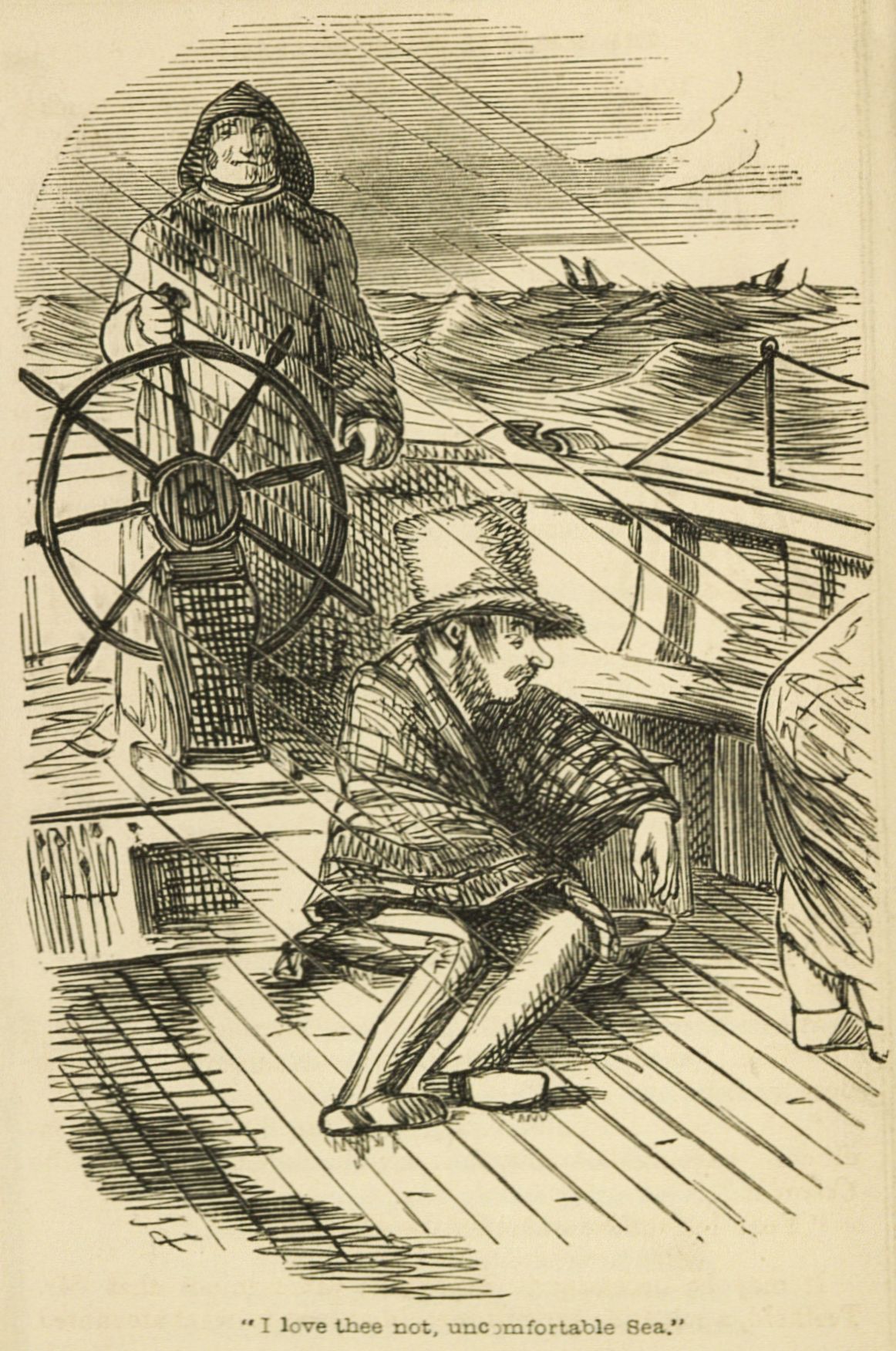
They must have stomachs stronger far than mine,
Wherewith, as yet, thou never didst agree,
I love thee not, uncomfortable Sea !
THE WEATHER MADE INTERESTING.
“The temperature is low to day.”
“Hum ! Not so very. About 43.”
“Really ? Well I declare I should have guessed it at 32. In what direction is the current of air ?”
“From East to West.”
“Both strata, I suppose ?”
“Yes.”
“Wind East ! — ah ! — that explains it.”
“Air negatively electric.”
“Dry — robs every pore of moisture.”
“Evaporation — caloric given off by the skin.”
“No condensation of aqueous vapour probable ?”
“Barometer maintains elevation.”
“And in what state is Mrs. Pumpwell’s economy ?”
“Well, about mean. Ozone in the atmosphere — never does for her.”
“Ah ! — Mr. Testfield, I hope you are in a normal condition. Favourable atmospheric conditions, these, Sir, for the Cerealia.”
“Yes ; but unfavourable for the Siliquosæ.”
It may be necessary to explain to some minds that Mr. Testfield, a scientific agriculturist, in answer to what amounted
- 184 -
↑
{f.184}
to the remark that it was fine weather for the corn, meant to say that it was bad for the turnips. The weather, everybody complains, is the only thing people can talk about on first meeting in company ; there is no other than that, and that is a bore. May not the colloquy above quoted suggest a method to render it a smaller bore, by taking advantage of the mutability of our British climate, and, aided by meteorology and its kindred sciences, deriving from the discussion of the weather’s endless changes, the charm of interminable variety ?
A CABMAN’S LAMENT.
Which groan’d with luggage, piled upon the roof ;
My bosom had sustain’d a vital stab,
For when I ask’d my fare — I got reproof.
Beyond the wretched tariff of the law ;[Comment by BQ] : Hackney cabs were licensed and their fare rates strictly regulated. These laws changed over the course of the Victorian era, including the two London Hackney Carriage Acts of 1853, passed in June and August respectively. While this Pocket Book includes an overview of these laws in part 1, passengers could verify regulations and find specific fares via volumes such asThe London Hackney Cab Fares and Distances (1853). If a cab driver, such as the narrator here, asked for more than the ‘proper’ fare, they were liable to pay fines or face imprisonment. For more, see the text of the London Hackney Carriage Act of 1853 and London Hackney Carriage (No. 2) Act of 1853.
But if the cabman’s tipped his legal fare,
Famine must sit upon his jaundiced jaw.
To make me thus of circumstance the sport,
And place upon my breast that iron plate
By which I’m known, and am to justice brought.
Meanness had seal’d a fellow-creature’s hand ;
So with my highest aspirations smash’d,
I took my way to an adjacent stand.
And to the neighbouring tavern we departed,
Where six of us did soon mop up a pound,
Drinking confusion to the stingy-hearted.
↑
- 185 -
{f.185}
 A DUMBFOUNDED BORE.
S CENE. — A Railway Train in Motion. Inside of a First Class Carriage, full of Passengers. Opposite each other, near the Window, Traveller of thoughtful appearance reading Newspaper, and Stout Gentleman with florid countenance, prominent eyes, and a bamboo cane. Traveller lifts his eyes from his paper in meditation. Stout Gentleman, who has been watching him for some time, seizes the opportunity to address him.Stout Gent.Fine weather, Sir !Trav.(in a tone of mental absence).Eh ?Stout Gent.Very beautiful weather this, Sir !Trav.Weather — Oh ! — ah ! — certainly — yes.Returns to his paper.Stout Gent.Whif-if-f-f-f-f (whistling impatiently). Tat, tat, tat, tat, tat.Tapping the floor of the carriage with his cane : then shuffles in his seat, as though to attract attention.Trav.Humph !Again looking up from paper, musingly.Stout Gent.Sanguinary conflict in the Crimea,[Comment by SL] : The Crimean War of 1853-1856 was one of a series of wars fought between the Russian Empire and the Ottoman Empire. Britain and France joined the war as allies of the Ottoman Empire in 1854, with the Kingdom of Sardinia-Piedmont also joining the alliance in 1855. The Treaty of Paris ended the war in 1856. Sir !Trav.(looking him abstractedly in the face, and answering as if mechanically).Eh ?Stout Gent.Unscrupulous ambition of one man, Sir !Trav.Oh ! very improper — scandalous.Begins reading again.Stout Gent.Whif-if-f, &c. (as before).Train stops at Station.Trav.(putting aside paper).Yawns.Heigho !Stout Gent.Stupendous contest, this war, Sir !Trav.(handing paper).Perhaps you’d like to see the Times ?Stout Gent.Thank you, Sir ; thank you : forgot my glasses ; can’t read without glasses : much obliged to you.- 186 - {f.186}Trav.
(to himself, looking at his watch).Twelve thirty — and arrive at two ten. Humph !Takes out volume of Railway Library and begins reading again. Train starting, he looks out of window.Stout Gent.Wonderful thing, steam, Sir !Trav.(putting down his book, apologetically, and with an air of serious attention).I beg your pardon. You made some remark —Stout Gent.Steam, Sir : very wonderful thing.Trav.(mildly, yet firmly).I differ with you, Sir.Stout Gent.(in amazement).Steam, Sir, — steam, I said (raising his voice) I said steam was a wonderful thing.Trav.Yes, Sir ; and I am of a contrary opinion.Stout Gent.Cont — (puff) — opin — (puff) — Sir, you don’t say so !Trav.Yes, I do.Stout Gent.Say steam’s not a wonderful thing, Sir !Trav.Yes. It’s one of the commonest things in the world.Stout Gent.Well, but, Sir ! — bough ! wough ! wough ! (uttering expressions of astonishment, intermediate between barking and coughing) wough ! ough !Trav.Steam ! — why it issues from every tea-kettle.Stout Gent.Wough, wough, wough !Trav.Before tea-kettles were invented it arose from every saucepan.Stout Gent.Yes — bough ! but the wonderful — wough ! — motive — bough wough ! — power — ough !Trav.Wonderful ? Water ; heat ; expansion ; steam ; cold ; contraction ; what can be simpler ? The only wonder is it wasn’t discovered before.The Stout Gentleman is seized with paroxysms of coughing, in the midst of which, mingled with roars of laughter from the Passengers, the Train arrives at another Station.
↑
- 187 -
{f.187}
 A WATERING-PLACE CORRESPONDENCE.
P arties — Charles, No. 1, Marine Promenade. Emma, No. 2, ditto. Post Office. A stone vase adorning the parapet of the leads in front of the drawing-rooms of both houses. Post Hour. When nobody was looking. Hour of Receipt. Ditto.1. Charles to Emma.Pray do not be offended at my addressing you thus. How can I speak to you on the sands, or in the library, or at the raffle ? Are your affections disengaged ? One word.2. Emma to Charles.You are offended. Yet you have taken my note. If I am too bold in asking you to write, leave something in the vase as a token to show that I am not doomed to hopeless despair and agony.3. Charles to Emma.Again my note is gone. Yet there was nothing in the vase but half a cigar. This is some insolence of your long-legged cousin the Cadet. He and I shall meet ere long.4. Emma to Charles.Does sincerity take pleasure in frightening persons ?5. Charles to Emma.O forgive me. I know not what I write. I would not annoy you for worlds. The vine-leaves you put into the vase I accept with rapture. Vine — that twines round the oak — sweet symbol of woman’s love clinging to man’s strength. Bless you, bless you !6. Emma to Charles.Bless me, indeed, I may say ! I put vine-leaves into the vase ! It was your servant who emptied the dessert dish in which you had had grapes.- 188 - {f.188}7. Charles to Emma.Cruel Emma. But you cannot deprive me of my joy, for we have had nothing but filberts and captain’s biscuits for a week. At the raffle last night I won a China ring-stand for the toilet. O, if I might put it into the vase.
8. Emma to Charles.Better present it to the young lady who dresses in such sweet taste to walk with you on the pier — yellow bonnet and red roses, and who steps so gracefully, allowing for the limp.9. Charles to Emma.O, Emma, she’s my cousin. As ugly as possible, and no more idea of dress than a bathing-woman. Besides, she is twenty-eight, if a day.10. Emma to Charles.What can it concern me ? Fortunately I also have a cousin who is not as ugly as possible, dresses beautifully, and, curiously, is also twenty-eight, an age I adore, for I dislike boys.No letters on either side for five days.11. Charles to Emma.I can endure this no longer. My heart is at your feet. Grant me an interview. It will be low water at two to-morrow. Wander with your book along the sands beyond the East cliff.12. Emma to Charles.Impossible. Besides, it rained in the night, and your note got quite wet. I can’t read a word of it.13. Charles to Emma.I beg your pardon. I have intruded. You properly punish me. Doubtless the long-legged Adonis in the short-tailed jacket, who looks like a discharged steward of a steam-packet, is more fortunate. Once again, I beg your pardon. I could add more, but my cousin Jane requires my escort.- 189 - {f.189}14. Emma to Charles.How unreasonable men are, if every whim is not complied with at the instant. I do not think I shall be at the end of the south jetty at ten minutes to three to-morrow, because it is so lonely. Nobody ever goes there at that time.
15. Charles to Emma.One man will be there at that hour, dearest Emma.16. Emma to Charles.I am in a dream — a dream of golden light, roses, and music. Is it possible that the world can be so lovely ? Mind you go to the library for a new novel at four o’clock.17. Charles to Emma.Is it come to this already ? The first appointment made, and broken ! Faithless Emma ! Wretched Charles !18. Emma to Charles.Aunt Wiggles came in, and there was no getting away from her — silly.19. Charles to Emma.Forgive me. I will never doubt you more. I never doubted you. I doubt my own worthiness to possess your affections. When shall I see you ?20. Emma to Charles.You terrify me by your language. What dreadful mystery does it enshroud ? Why are you unworthy ? If your guilt is too dark to be written down, leave a book in the vase, with a leaf turned down at the record of some wickedness like your own. Is Lara strong enough — is Monte Christo ?21. Charles to Emma.My dearest Emma has strangely misconstrued my meaning. As regards the world I am sans reproche. It was only of her transcendent merits that I said I was unworthy.- 190 - {f.190}22. Emma to Charles.How ridiculously you write. As my cousin says, there is nothing more boyish than the use of words too strong for the meaning.
23. Charles to Emma.I had thought in my ignorance, that a right minded girl would rejoice in learning that her lover’s character was higher than she had supposed. As my cousin says, there is nothing more like a milliner’s apprentice than the pretending to find romance in guilt.24. Emma to Charles.Is your cousin’s comparison derived from her profession ? I should think not, or she would know a little more about dress, and perhaps not much less of good manners.25. Charles to Emma.My cousin, having £500 a year in her own right, happens to have no need of a profession, and is not compelled to dress in order to entrap the affections of others.26. Emma to Charles.[This was merely a packet containing all Charles’s previous notes, a turquoise ring, and a scrap torn from the “Correspondence” of the Family Herald : —“When a gentleman breaks off an engagement with a lady it is dishonourable in him not to return her letters.”]27. Charles to Emma.The printed rule with which C.C. has been favoured, does not apply. No breaking off from any engagement has proceeded from him. It may be his misfortune that he is not a Lara, but he is a man of honour, and true to his plighted faith.28. Emma to Charles.I had not intended to trouble you with another note. But common justice obliges me to say that I have misunderstood your cousin. She is the most delightful and darling creature in the world. I made her acquaintance on the beach this morning. My cousin says that she is the most superior girl he - 191 - ↑ {f.191}has met for years. I think that with his military enterprise he will manage that our families shall become acquainted.
29. Charles to Emma.Any relative of yours is entitled to any civility it is in my power to offer him. Without taxing your cousin’s military enterprise too far, if he should be smoking a cigar on your leads this evening about eight, I shall probably take that opportunity of asking him whether he likes Turkish tobacco, and of showing him my narghilé,[Comment by SL] : Also known as a hookah, i.e. “A pipe for smoking, of Eastern origin, having a long flexible tube, the smoke being drawn through water contained in a vase, to which the tube and the bowl are attached; the narghile of India.” For full definition, see Oxford English Dictionary, 'hookah (n.).' and German pipes.30. Emma to Charles.That will do delightfully. But you will give up smoking, won’t you, when ——MORAL.Married. — On the 12th instant, at St. Timothy’s, Barnsbury Park, by the Rev. Alb Chasuble, assisted by the Rev. Spillikin Bounce and the Rev. Ignatius Blinkers, Charles, elder son of Peter Calveley, Esq. of Little Britain, to Emma, only child of the late Colonel Swansdown, R.E. And at the same time, Slasher Longshanks, of Addiscombe, Esq. to Jane, daughter and heiress to the late Erasmus Buffins of Wolverhampton, and niece to the Archdeacon of Slangbury.
FORTUNE KNOCKS ONCE AT EVERY ONE’S DOOR.
↑
- 192 -
{f.192}
 AN OLD MAN’S DEFINITION OF LOVE.
| * | * | * | * | * |
| * | * | * | * | * |
| * | * | * | * | * |
| * | * | * | * | * |
| On my word the above is the only definition I can give of Love. I might make it longer or shorter, but still the information given would be precisely the same. |
A Merry Christmas and a Happy New Year.